Two in the morning. That is when the math happens.
You are sitting on the edge of a cold kitchen floor, the refrigerator light spilling a pale yellow rectangle across the linoleum, staring at a glucometer screen that reads 3.2 mmol/L. Your hands are shaking—not from fear, though fear is always hovering just outside the doorframe, but from the sheer biological panic of a brain starved of glucose. You drink a juice box. You wait fifteen minutes. You check again. Now you are swinging upward, destined to wake up at 14.0 mmol/L with a headache that feels like wet concrete behind your eyes, already exhausted before your feet even touch the floor. If you found value in this article, you should read: this related article.
For anyone living with Type 1 diabetes, this nocturnal tightrope walk is not an occasional crisis. It is a Tuesday.
Yet for decades in Alberta, if you wanted access to the single piece of medical technology capable of turning that terrifying, manual tightrope walk into an automated, steady bridge—an insulin pump—you couldn't just ask the people who actually fit, program, and teach you how to use them. You had to wait for a permission slip. You had to sit in a queue for a family doctor, beg for a referral to an endocrinologist, wait six to eighteen months for that specialist appointment, and hope your case looked desperate enough on paper to get pushed through the bottleneck. For another angle on this story, see the latest coverage from National Institutes of Health.
A clinic in Edmonton just tore up that permission slip.
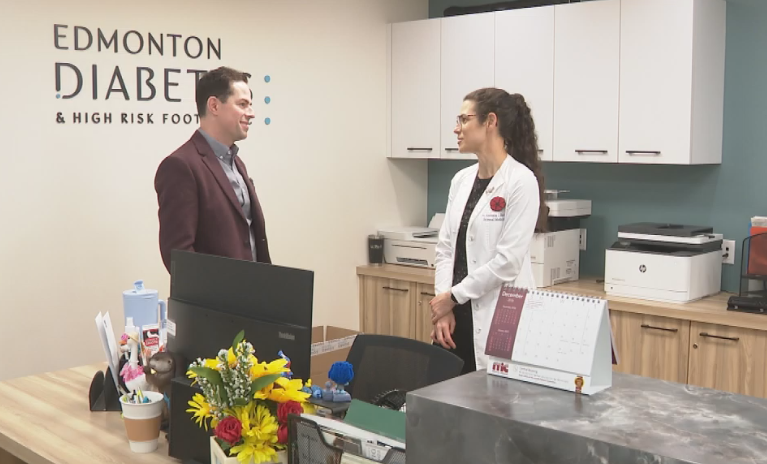
With the launch of Alberta’s first self-referral insulin pump program, an Edmonton diabetes clinic has quietly dismantled one of the most frustrating bureaucratic walls in provincial healthcare. Patients living with diabetes can now bypass the traditional gatekeeping maze, pick up the phone, and refer themselves directly to a specialized pump team.
It sounds like a simple administrative tweak. An intake form. A change in routing.
It isn't. To understand why this matters, you have to understand the exhausting, invisible arithmetic of living without a functioning pancreas—and what happens when a healthcare system treats life-saving autonomy like a luxury item that requires three layers of approval.
The Invisible Full-Time Job
Imagine, as a thought experiment, that you are handed a manual gearbox in a car with no speedometer, no fuel gauge, and a steering wheel that occasionally locks up in traffic. Now imagine you are told to drive that car across Edmonton in January—through black ice, sudden blizzards, and rush-hour gridlock—and if you crash, you could end up in a coma or lose your eyesight twenty years down the road.
That is multiple daily injections.
When a healthy pancreas works, it acts like a silent, hyper-intelligent thermostat. It drips microscopic amounts of insulin into your bloodstream every few minutes, adjusting instantly when you walk up a flight of stairs, feel a surge of stress before a meeting, or eat a bowl of pasta. You never think about it. You just live.
When you have Type 1 diabetes, or insulin-dependent Type 2 diabetes, you become the thermostat. You inject a long-acting insulin once or twice a day to cover your baseline needs, and you inject rapid-acting insulin every time you eat.
Here is the catch: a syringe or an insulin pen is a blunt instrument. Once you inject a dose of long-acting insulin under your skin, you cannot take it back. If you unexpectedly have to shovel wet snow for forty minutes, or if you catch a stomach flu, or if your body simply decides to absorb that dose faster than usual, you are locked into a downward spiral. You have to eat to feed the insulin, even when you aren't hungry, just to keep your blood sugar from bottoming out.
According to Diabetes Canada, hundreds of thousands of Albertans are living with diabetes, with tens of thousands relying on daily insulin to survive. Clinical research consistently shows that managing blood glucose manually requires an estimated 180 extra health-related decisions every single day. Decide how many grams of carbohydrates are in that homemade soup. Decide how much stress hormones will spike your glucose during a job interview. Decide how much insulin to take before bed so you don't slip into severe hypoglycemia while asleep.
Burnout isn't a risk. It is a certainty.
How an Insulin Pump Actually Changes the Equation
An insulin pump does not cure diabetes. Let's be clear about that, because false hope is cruel. You still wear a device attached to your body via a tiny flexible cannula under the skin, or a tubeless pod adhered directly to your arm or abdomen. You still count carbohydrates. You still change your infusion site every two to three days.
What changes is precision—and, increasingly, intelligence.
Think of the difference between watering a delicate garden with a bucket versus a programmed drip-irrigation system connected to a weather sensor. With injections, you are dumping buckets of insulin into your body and hoping the weather doesn't change. With a pump, rapid-acting insulin is delivered in micro-doses—sometimes as small as 0.025 units per hour—all day and all night.
Modern automated insulin delivery systems go even further. They pair with a continuous glucose monitor, a tiny sensor worn on the skin that reads interstitial glucose levels every five minutes. Using predictive algorithms, the pump communicates directly with the sensor. If your blood sugar starts drifting downward at 3:00 AM, the pump automatically suspends insulin delivery before you ever hit a dangerous low. If your blood sugar starts creeping up after dinner, it delivers micro-boluses to gently nudge you back into range.
The clinical data is overwhelming. Studies published in journals like The New England Journal of Medicine and Diabetes Care have repeatedly demonstrated that automated insulin pump therapy significantly increases "time in range"—the percentage of the day a person's blood glucose stays within a safe, target window—while drastically cutting the frequency of severe hypoglycemic events and lowering long-term A1C levels. Lower A1C levels translate directly to fewer amputations, less kidney failure, less blindness, and fewer emergency room visits.
In Alberta, the financial barrier to this technology has largely been addressed through the Alberta Insulin Pump Therapy Program, which provides government coverage for insulin pumps and basic supplies for eligible Albertans living with Type 1 diabetes who meet clinical criteria.
So if the technology works, and the provincial program exists to fund it, why are so many Albertans still stuck using syringes and pens?
The Bottleneck Nobody Talks About
Consider a hypothetical patient—let's call her Maya. Maya is twenty-eight, works as a graphic designer in north Edmonton, and was diagnosed with Type 1 diabetes when she was nineteen.
For nine years, Maya managed her condition with insulin pens. She did everything right. She tracked her meals, carried glucose tablets in every coat pocket, and tried to keep her A1C under control. But her work schedule was erratic, and her blood sugars swung wildly between stressful deadlines and late-night work sessions. She kept waking up drenched in sweat from nocturnal lows.
Maya wanted an insulin pump. She had done the research. She knew about the Alberta Insulin Pump Therapy Program.
So she did what the system told her to do. She booked an appointment with her family doctor. That took three weeks. Her family doctor, well-meaning but stretched thin across thousands of patients, admitted they didn't manage insulin pumps and couldn't sign off on the specialized provincial paperwork. They faxed a referral to an endocrinologist.
Maya waited. Months passed.
In Alberta, specialist wait times for non-emergent endocrinology consultations routinely stretch from six months to well over a year, particularly as population growth in Edmonton and Calgary has outpaced specialist recruitment. During those nine months of waiting, Maya ended up in an urgent care clinic twice for severe hypoglycemia. When she finally sat across from the endocrinologist for a fifteen-minute appointment, she learned she didn't even need the specialist to manage her daily pump settings—she needed a certified diabetes educator, a specialized nurse, and a dietitian to train her on the device. The endocrinologist was simply the tollbooth she had to pass through to get to the people who actually did the training.
This is the quiet tragedy of gatekept healthcare. When primary care is overwhelmed—with hundreds of thousands of Albertans struggling to find or see a family physician—requiring a doctor's referral for a specialized, educator-led program doesn't protect patients. It strands them.
Patients who move to Edmonton from another province with an existing pump prescription get caught in limbo when their supplies run low and they don't yet have a local physician. Adults diagnosed later in life—often misdiagnosed initially with Type 2 diabetes before antibody testing proves otherwise—lose precious months of metabolic protection while waiting for referrals to bounce between fax machines.
What Self-Referral Really Means on the Ground
When the Edmonton clinic announced Alberta's first self-referral insulin pump program, they attacked that tollbooth with a sledgehammer.
Under a self-referral model, the patient is recognized as an active, capable participant in their own chronic disease management rather than a passive recipient waiting for permission. If you live in Alberta, use insulin, and want to explore whether an insulin pump is right for you, you no longer need a family doctor or an endocrinologist to initiate the process. You contact the clinic directly.
Once a patient self-refers, the clinic's specialized multidisciplinary team—typically comprising Certified Diabetes Educators, registered nurses, pharmacists, and registered dietitians working alongside supervising physicians—conducts the comprehensive assessment.
They look at the real questions that matter:
- Is the patient clinically eligible? Under Alberta's provincial guidelines, coverage through the Insulin Pump Therapy Program requires a confirmed diagnosis of Type 1 diabetes (or specific forms of pancreatogenic diabetes), demonstrated commitment to blood glucose monitoring, and completion of structured diabetes education. The clinic's team handles the diagnostic verification and clinical screening directly.
- Is the patient psychologically and practically ready? Wearing a pump 24/7 is a profound lifestyle shift. The team walks patients through the realities of infusion sites, adhesive allergies, troubleshooting occlusions, and backup injection plans if a pump ever fails.
- Which system fits their actual life? Not all pumps are built the same. Some offer waterproof tubeless pods ideal for swimmers or tradespeople working around heavy machinery; others integrate with specific continuous glucose monitors and offer customizable algorithm targets for athletes or pregnant women.
By bringing the intake, education, and clinical oversight under one roof without requiring an external referral, the clinic compresses a timeline that used to span a year into a matter of weeks.
The Weight of Trusting Patients
There is a lingering, paternalistic anxiety in traditional medicine that asks: If we let patients refer themselves, won't the system be flooded with people who aren't ready or don't qualify?
History—and practical reality—says otherwise.
Nobody casually decides they want to attach a medical device to their body, undergo hours of intensive carbohydrate-counting and basal-rate testing, and prick their skin every seventy-two hours just for fun. People who seek out an insulin pump are motivated. They are tired of feeling sick. They are tired of living in fear of going to sleep. They are actively trying to prevent the devastating long-term complications that cost Alberta's public healthcare system hundreds of millions of dollars every year in hospitalizations, dialysis, and emergency interventions.
Think about the economics alone. A single preventable hospital admission for diabetic ketoacidosis—a life-threatening complication that happens when the body runs out of insulin—costs the provincial healthcare system thousands of dollars per stay. Compare that to the cost of paying a Certified Diabetes Educator to sit down with a motivated patient, review their glucose logs, and transition them onto an automated pump that prevents the crisis from happening in the first place.
Self-referral doesn't lower clinical standards. Every patient still has to meet the strict medical criteria required for provincial pump coverage and safe device operation. What changes is who gets to open the door.
I remember the first night I slept through until morning without waking up to a glucose alarm after starting on an automated pump system. It felt unsettling at first, almost suspicious, like waking up in a house where a loud, rattling furnace has suddenly gone quiet. You lie there in the dark, listening to the silence, waiting for something to go wrong. And then you realize nothing is wrong. The machine handled the 3:00 AM drop while you dreamed. You simply slept.
You cannot put a billing code on what it feels like to wake up rested after years of fractured nights. You cannot quantify the relief of sitting down at a restaurant with friends and bolusing for dinner with three quiet taps on a screen instead of excusing yourself to a cramped bathroom stall to draw up a syringe under fluorescent lights.
A Blueprint for a Smarter System
What is happening in Edmonton is more than a local clinic update. It is a test case for how Canada's strained healthcare systems can evolve when they stop treating chronic disease patients like acute-care emergencies.
Across the country, millions of people live with complex chronic conditions—diabetes, asthma, heart failure, autoimmune disorders—where day-to-day survival depends entirely on patient self-management. Yet our referral pathways are still designed around a 1950s model of medicine, where a single physician holds all the keys and every specialist service sits locked behind a referral letter.
When family doctors are burning out under mountains of administrative paperwork, forcing them to write routine referrals for specialized diabetes education programs makes no sense for anyone. It wastes physician appointments that could go to undiagnosed patients. It delays care for people who already know what they need. And it sends a subtle, demeaning message to patients who manage a lethal hormone every waking hour: We don't trust you to know when you're ready for help.
By opening a self-referral pathway, this Edmonton clinic has handed the keys back to the people actually driving the car.
For the parent in St. Albert whose teenager is struggling with erratic blood sugars during hockey season, the path to help just got shorter. For the shift worker in Mill Woods whose rotating nights make fixed insulin injections a daily gamble, the waiting room just disappeared. For anyone in Alberta living with insulin-dependent diabetes who has put off asking about a pump because the thought of navigating another six-month referral loop felt too exhausting to bear, the excuse is gone.
The refrigerator light doesn't have to be the brightest thing in your life at two in the morning. Sometimes, all it takes to change the trajectory of a chronic illness is removing the person standing in the doorway asking for a permission slip.