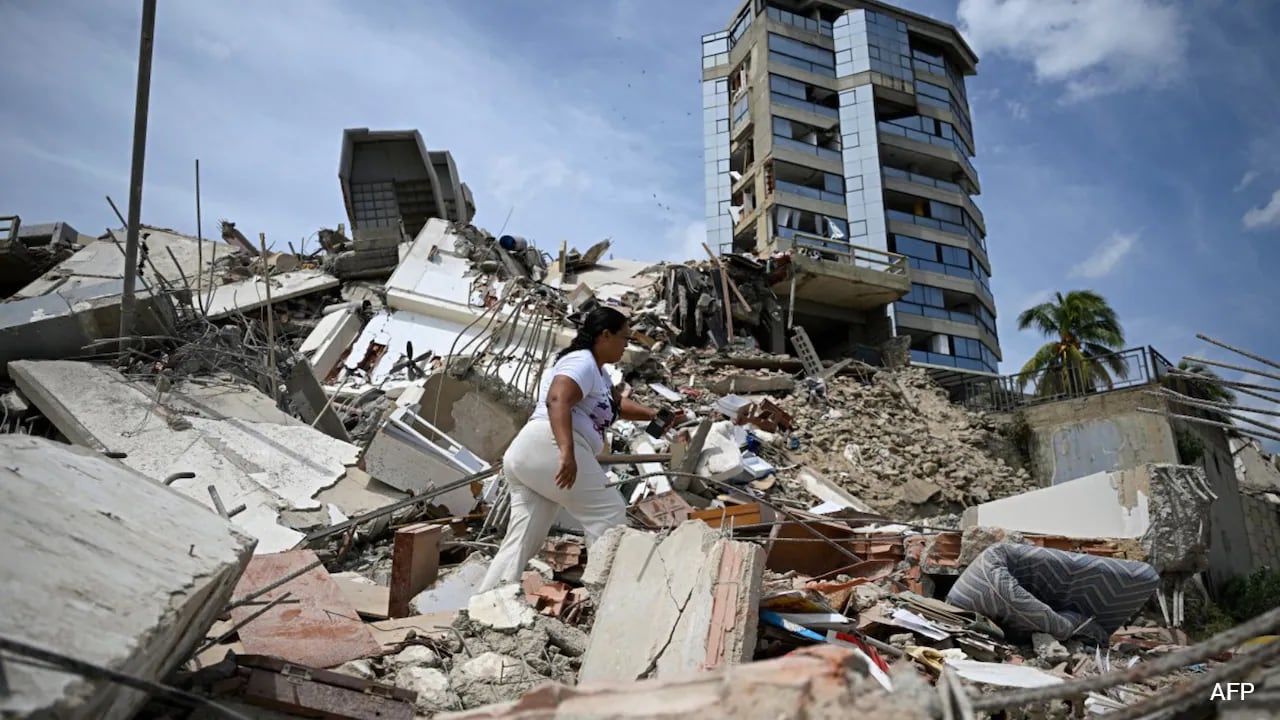
Mainstream journalism thrives on the currency of helplessness. When a Venezuelan mother is photographed digging through a collapsed, illegal gold mine with her bare hands searching for her missing son, the media apparatus knows exactly which levers to pull. The headlines write themselves. They weaponize raw maternal grief to elicit a predictable cycle of clicks, digital hand-wringing, and shallow condemnation of systemic collapse.
It is a masterful exercise in emotional manipulation. It is also entirely useless.
The lazy consensus dominating this coverage frames the tragedy as a localized failure of state infrastructure or a simple lack of rescue equipment. The narrative suggests that if we just shipped enough excavators to Bolívar state, or if international human rights organizations issued enough sternly worded press releases, the horror of illegal mining would dissipate.
This perspective misses the entire economic engine driving the devastation. It treats a violent, highly lucrative geopolitical meat grinder as a sad local accident. Shaming an authoritarian regime or weeping over a shovel does not alter the brutal calculus of survival in a hyperinflationary economy.
The Economics of Inevitable Risk
Let's look past the heartbreaking imagery and analyze the structural reality. The focus on bare hands is a deliberate distraction from the real story: the absolute failure of top-down economic sanctions and the predictable rise of a black-market resource state.
When a formal economy collapses under the weight of hyperinflation and international isolation, the labor market does not just vanish. It mutates. Gold mining in southern Venezuela is not a choice made out of ignorance of the dangers. It is a rational, calculated gamble for individuals facing literal starvation.
Formal Economy Collapse -> Capital Flight -> Hyperinflation -> Rise of Informal Resource Extraction (Illegal Mining) -> High-Risk, Low-Regulation Labor Pool
I have spent years analyzing resource supply chains in high-conflict zones. The pattern is always the same. When the cost of compliance and formal labor exceeds the value of the raw commodity, production moves underground. Literally.
- The Incentive Structure: In a region where the monthly minimum wage in the formal sector buys less than a gallon of milk, a single gram of gold represents months of survival.
- The Labor Pool: The miners entering these unstable, hand-dug shafts are not unaware that the earth might swallow them. They have simply calculated that the slow death of poverty is a statistical certainty, while a mine collapse is merely a high probability.
Chastising the Venezuelan government for lacking a robust mine-safety response team is laughable. The state isn't failing to regulate these mines because it is incompetent; it is actively profiting from the informal distribution of blood gold to evade international banking restrictions. The lawlessness is a feature, not a bug.
Dismantling the Aid Industrial Complex
The standard response to these viral stories of tragedy is an immediate call for international intervention or humanitarian aid. Western audiences, driven by a need for quick moral resolution, demand that non-governmental organizations (NGOs) "do something."
This impulse is actively harmful. It fuels what I call the Aid Industrial Complex, an industry that capitalizes on imagery of desperation to sustain its own funding cycles while doing nothing to disrupt the underlying mechanics of exploitation.
Imagine a scenario where a well-funded international NGO manages to bypass local military cartels and delivers heavy excavation equipment to a collapse site. What happens the moment the cameras turn off and the bodies are recovered? The equipment is seized by the local sindicatos (the armed gangs controlling the mines) or corrupt military commanders. The machinery is then used to increase the speed and scale of the extraction, digging deeper, more dangerous shafts, and accelerating the cycle of collapse.
NGO Equipment Intervention -> Cartel Seizure -> Accelerated Mechanical Extraction -> Deeper, More Dangerous Shafts -> Higher Scale Casualties
Your empathy is being monetized to subsidize the infrastructure of the very cartels exploiting these families.
The Illusion of "Awareness"
"We need to raise awareness about the conditions in Venezuelan gold mines."
This is the standard refrain of the comfortable observer. But let's look at the actual data. The global market already knows. Refiners in Miami, Dubai, and Zurich are well aware of the origins of the untraceable gold entering their supply chains. It is laundered through neighboring countries, mixed with legitimate scrap, and stamped with clean paperwork long before it hits a consumer's smartphone or investment portfolio.
Awareness does not change supply chain logistics. Only economic friction does.
The Counter-Intuitive Reality of Blockades
If you want to understand why mothers are digging with their bare hands, you have to look at the unintended consequences of broad-based economic blockades.
When international policy cuts off a nation's ability to sell its primary, formalized export (in Venezuela's case, oil) through legitimate channels, it creates a massive liquidity vacuum. The state doesn't stop needing hard currency. Instead, the economy pivots to unmonitored, decentralized commodities. Gold becomes the ultimate alternative currency because it is physical, easily smuggled, and impossible to track once melted down.
Broad Oil Sanctions -> Formal Foreign Exchange Starvation -> Decentralized Gold Push -> Weaponization of Informal Mining Sector
By cheering for broad economic restrictions that target entire nations, the international community effectively forces the poorest segments of the population into the jaws of illegal mining operations. The woman digging for her son with her bare hands is the direct economic collateral of a foreign policy strategy designed by people who sit in pristine offices in Washington and Brussels.
The Fatal Flaw in the "Human Rights" Premise
Mainstream coverage constantly asks: Why won't the international community step in to protect these workers?
The question itself is fundamentally flawed because it assumes human rights frameworks hold sovereignty over economic survival vectors. They do not.
When a territory is controlled by an amalgamation of guerrilla groups, indigenous defense forces, and corrupt military units, the concept of statutory labor laws is a fiction. The people working these mines are completely decoupled from any legal framework. They operate in a state of pure nature, where the only law is the immediate transaction of labor for gold.
To believe that a treaty or a United Nations declaration can penetrate the jungle of Bolívar and dictate the structural integrity of an illegal mining pit is a delusion of the highest order. It ignores the reality of hard power on the ground.
The Real Cost of Clean Supply Chains
The ultimate hypocrisy lies at the end of the line. The same consumers who share these tragic articles on social media demand cheap electronics, jewelry, and stable investment hedges.
The push for "ethical sourcing" has largely become a marketing gimmick. Companies claim their gold is certified conflict-free, but any supply chain auditor worth their salt knows that gold laundering is an uncrackable problem. Once gold is melted into a bar, its atomic structure does not tell you if it was extracted by an industrial mining corporation in Canada or by a teenager in a collapsing pit in Venezuela.
If we were to enforce absolute, un-launderable traceability on global gold supply chains, the price of consumer goods and financial reserves would spike dramatically. The global market has zero appetite for this. The current system relies on the existence of these lawless, high-risk extraction zones to maintain the baseline pricing of global commodities.
We look at the image of a mother digging with her bare hands and feel a detached sense of pity, refusing to acknowledge that her desperation is a necessary input in the global economic equation that keeps our own lives predictable and affordable.
Stop treating these events as isolated human interest stories. Stop pretending that more visibility or more aid will solve a problem rooted in global economic design. The woman digging in the dirt isn't a victim of a lack of tools; she is the predictable, mathematical output of a world that demands cheap commodities and punishes formal economies into starvation.
If you want to stop the digging, stop cheering for the economic blockades that leave people with no other choice but to mine, and stop pretending your clean consumer devices aren't powered by the dirt under her fingernails. Anything less is just moral theater.