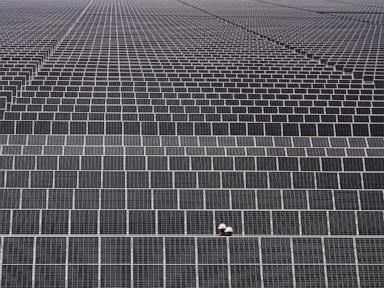
Turkey is breaking records for solar installations while simultaneously doubling down on coal-fired power plants. Look at the numbers from Ankara ahead of global UN climate negotiations, and you'll spot a massive contradiction.
On one hand, Turkey has become one of Europe's fastest-growing solar markets, doubling its solar capacity in just a couple of years and smashing its own 2025 renewable targets way ahead of schedule. On the other, fossil fuels still generate well over half of the country's electricity, with state-backed subsidies propping up aging lignite coal plants and imported natural gas terminals. If you want to understand the real story behind Turkey's energy transition, you can't just look at the shiny new solar farms in Konya. You have to follow the money, the grid bottlenecks, and the geopolitics of a nation trying to host a UN climate summit while refusing to set a coal phase-out date. Expanding on this topic, you can also read: South Korea's Hormuz Deployment Has Nothing To Do With Pirates.
How Turkey Actually Pulled Off Its Solar Surge
Most Western analysts missed why Turkey's solar growth exploded so quickly. It wasn't driven by green idealism or sudden climate panic in Ankara. It was pure economics and survival.
Between 2022 and 2024, Turkey's solar capacity surged past 18 gigawatts, driven largely by factories and commercial businesses desperate to escape volatile electricity tariffs and currency inflation. When industrial power prices spiked after Russia's invasion of Ukraine, Turkish textile mills, cement factories, and automotive suppliers realized that slapping solar panels on their roofs paid for itself in under three years. Unlicensed rooftop and self-consumption projects accounted for the vast majority of this boom, bypassing the slow, bureaucratic tender processes that used to stall utility-scale renewable energy. Experts at Reuters have shared their thoughts on this matter.
The Karapınar Solar Power Plant in central Anatolia gets all the press, and rightfully so—at 1,350 megawatts, it's one of the largest single-site solar installations in Europe. Built on arid, non-arable land in Konya, Karapınar alone generates enough electricity to power roughly two million people. Kalyon Energy even built a vertically integrated factory in Ankara to manufacture the solar ingots, wafers, cells, and modules domestically, cutting reliance on Chinese supply chains.
Here's the catch nobody talks about.
Turkey's transmission grid wasn't built for this. By late 2024 and into 2025, grid operators began hitting the brakes on new solar connection approvals because high-voltage lines couldn't handle the midday surges of clean power. You can manufacture all the panels you want, but if the grid can't move those electrons from sunny central Anatolia to industrial hubs around Istanbul and Izmir, the boom hits a wall.
The Coal Problem Refuses to Die
Walk away from the solar headlines, and the reality of Turkey's power mix looks very different. According to energy think tank Ember, coal still accounts for roughly a third of Turkey's total electricity generation, rivaling or surpassing solar and wind combined depending on seasonal hydro output.
Why hasn't cheap solar killed off Turkish coal? Because the market isn't a level playing field.
Ankara relies heavily on domestic lignite—a dirty, low-calorie brown coal mined largely in regions like Afşin-Elbistan and Soma—to reduce its dependence on imported natural gas from Russia and Iran. To keep those coal plants running, the government funnelled hundreds of millions of dollars into capacity mechanism payments. Basically, power plant owners get paid just to keep coal turbines on standby, even when solar and wind could supply the electricity cheaper.
- Domestic coal protection: State policies mandate that distribution companies buy power from local lignite plants at guaranteed prices, shielding them from market competition.
- Imported coal reliance: Private operators still run massive plants burning high-grade imported coal along the Mediterranean and Black Sea coasts, which often prove more flexible than aging domestic lignite units.
- Gas as the fallback: Whenever hydro reserves drop during dry Anatolian summers, Turkey cranks up imported natural gas plants to keep the lights on.
I've watched energy analysts debate Turkey's net-zero by 2053 pledge for years, and the consensus among people actually tracking grid dispatch data is blunt. You cannot hit net-zero by 2053 without a concrete coal phase-out timeline, yet Turkey remains one of the few G20 economies without a plan to retire its coal fleet. In fact, capacity payments for coal plants were extended rather than scrapped, sending mixed signals to international climate finance institutions.
Geopolitics and the UN Climate Summit Push
Hosting a UN climate summit—specifically the push to host COP31 in partnership or competition with Australia—puts a massive spotlight on Turkey's split personality on energy. Ankara wants the diplomatic prestige of leading global climate talks, positioning itself as a bridge between developed Western nations and developing economies in the Global South.
Diplomatically, it's a smart play. Turkey spent years refusing to ratify the Paris Agreement because it was classified as a developed Annex I country, which blocked it from accessing green climate funds meant for developing nations. Only after securing a multi-billion-dollar climate finance package from France, Germany, and the World Bank in 2021 did parliament finally ratify the accord.
Now, Turkish officials point to their 2035 renewable energy roadmap—which aims to quadruple wind and solar capacity to 120 gigawatts—as proof they deserve the climate spotlight. That target requires adding roughly 7 to 8 gigawatts of new wind and solar every single year for a decade.
It's an ambitious number. Too ambitious, maybe, if transmission upgrades and battery storage don't keep pace.
What Is Holding Back the Next Phase of Clean Power
If you're an energy investor or policy watcher looking at Turkey right now, three bottlenecks matter far more than the political speeches:
- Grid modernization delays: TEİAŞ, the state transmission operator, needs billions in capital upgrades to build out high-voltage direct current lines and substations. Without transformer capacity, developers sit on approved licenses they can't connect.
- Storage regulations: Turkey issued gigawatts of "storage-integrated" solar and wind pre-licenses to solve the intermittency problem, yet high financing costs and strict local-content rules have slowed actual construction.
- Fossil fuel subsidies: As long as state budgets subsidize coal capacity payments and keep residential electricity tariffs artificially low, private capital faces distorted price signals.
What You Should Watch Next in Turkey's Energy Market
If you want to know whether Turkey is genuinely transitioning away from fossil fuels or just adding clean energy on top of a dirty grid, stop reading press releases about new solar groundbreakings. Watch three concrete metrics instead.
First, track TEİAŞ transformer capacity allocations and grid investment budgets. When transformer capacity opens up in industrial zones, rooftop and utility solar deployment surges immediately; when it freezes, everything stalls.
Second, watch annual coal capacity mechanism payouts in Turkey's Official Gazette. Until Ankara cuts off guaranteed standby subsidies for domestic lignite plants, coal will continue crowding out renewable generation during off-peak hours.
Third, pay attention to utility-scale battery commissioning over the next 18 months. The moment those pre-licensed storage projects actually start pouring concrete and connecting lithium-iron-phosphate batteries to the grid, Turkey's solar boom will finally have the backbone it needs to push coal into permanent decline.


