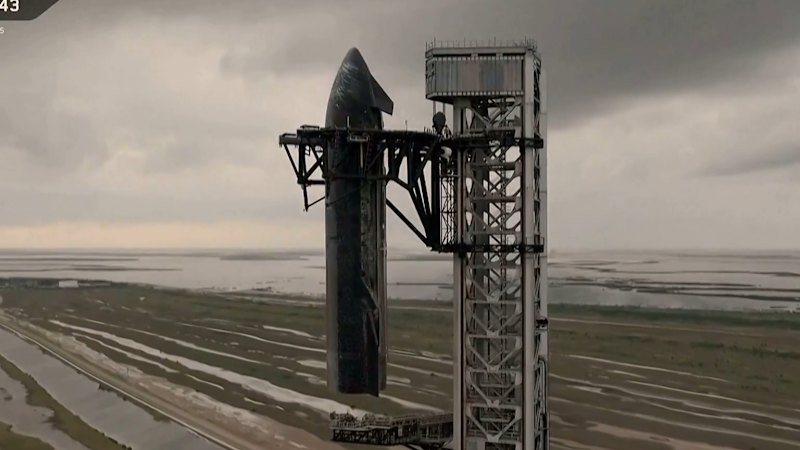
Most headlines treated SpaceX’s November 14, 2026 launch tower catch as a simple highlight reel moment. They showed the giant mechanical arms closing around Ship 42 in South Texas, quoted Elon Musk calling it an "epic day", and moved on.
That completely misses why this specific catch changes spaceflight economics forever.
Catching a booster is hard. Catching an upper-stage spacecraft after 14 laps around Earth is an entirely different beast. On Flight 15, SpaceX proved that a 171-foot orbital spacecraft can survive atmospheric reentry, drop out of the sky in a controlled belly-flop, flip vertical at the last second, and hang suspended in midair from its launch tower.
Why Catching the Upper Stage Matters More Than the Booster
You've probably seen SpaceX catch Super Heavy boosters before. The company pulled off its first booster catch back on Flight 5 in October 2024, and it had already completed three successful booster catches before Flight 15 even left the pad.
Boosters have an easy job by comparison. They climb to the edge of space, peak at roughly 3,700 mph, separate, and turn right back around.
Ship 42 didn't just hop up and down. It blasted off from Starbase in Boca Chica, Texas, on Friday evening, November 13, 2026, reached an orbit 165 miles (265 kilometers) above Earth, deployed 26 next-generation Starlink satellites, and stayed in space for roughly 22 hours before coming home.
The Physics of Coming Back From Orbit
To stay in orbit, Ship 42 had to travel faster than 17,600 mph. Coming down from that velocity means slamming into Earth's upper atmosphere and turning extreme kinetic energy into searing plasma heat.
If even a handful of thermal protection tiles fail during reentry, the stainless steel hull can burn through or warp. On earlier test flights, heat shield damage melted flaps and forced controlled ocean splashdowns.
Yet Ship 42 held together. It bled off orbital velocity, transitioned into a horizontal belly-flop to use its entire body as an airbrake, and then fired its Raptor engines to swing vertical right beside the 480-foot Orbital Launch Integration Tower.
Why SpaceX Ditched Landing Legs
If you're wondering why SpaceX doesn't just put landing legs on Starship like it does on Falcon 9 boosters, look at the mass penalty.
Landing legs strong enough to support a 171-foot spacecraft add dead weight. Every single kilogram of landing hardware you bolt onto an upper stage subtracts directly from the payload you can carry to orbit, the Moon, or Mars.
By transferring the landing hardware from the rocket to the ground tower—nicknamed "Mechazilla"—SpaceX leaves the heavy lifting on Earth. The tower's "chopstick" arms grab fittings mounted just below the ship's forward flaps, letting the vehicle hang in midair without ever touching the concrete.
What Actually Happened on Flight 15
Flight 15 wasn't a flawless victory. Honestly, calling it an unqualified triumph ignores half the mission data.
SpaceX originally planned an audacious double catch. The goal was to bring the Super Heavy booster back to the tower minutes after liftoff, and then catch the Ship upper stage 22 hours later.
Minutes after the 124-meter rocket cleared Orbital Launch Pad 2 on Friday afternoon, things went sideways for the booster.
- The booster abort: Following stage separation, Super Heavy's flight computers detected that the vehicle was out of position for a safe tower approach.
- The safety diversion: Rather than risk smashing a 71-meter rocket into the launch tower, the autonomous guidance system aborted the catch and diverted the booster offshore over the Gulf of Mexico, where it exploded.
- The upper stage rebound: While the booster failed its recovery, Ship 42 kept flying cleanly. It completed 14 full orbits—a massive leap from the one or two laps managed on previous flights—and streamed live video back to Earth via Starlink.
On Saturday, November 14, Ship 42 announced its arrival over South Texas with a sharp sonic boom. It banked around South Padre Island, executed its landing burn, and settled gently into the waiting chopstick arms as crowds at Starbase erupted.
The Hidden Imperfections Nobody Mentioned
Even the successful catch came with engineering caveats.
Elon Musk climbed the launch tower afterward to inspect the scorched spacecraft up close and famously hugged the hull. However, he also acknowledged that the ship's engines showed slight underperformance during the flight.
And despite designing Starship for rapid turnaround, SpaceX won't be reflying Ship 42. Musk announced that the company will retire the historic vehicle and put it on display, largely because SpaceX's iterative manufacturing at Starbase—which already churns out a new ship every two weeks—has moved on to upgraded designs.
Why NASA and the Space Industry Are Watching Closely
When NASA Administrator Jared Isaacman called the catch "almost magic", it wasn't just polite applause. NASA has billions of dollars riding on Starship.
Under the Artemis program, SpaceX is contracted to use a modified Starship as the human lunar lander, with NASA targeting as soon as 2028 for Artemis IV to return astronauts to the lunar surface.
The Orbital Refueling Bottleneck
You can't fly a Starship to the Moon on a single tank of propellant. To escape Earth's gravity with a heavy lunar payload, SpaceX has to launch a depot ship into orbit and fill it up using multiple Starship tanker flights.
That architecture falls apart economically if you throw away the upper stages after every tanker run.
Think about the math. If sending one lunar lander to the Moon requires launching a fleet of tanker ships in rapid succession, burning up a 171-foot stainless steel spacecraft on every trip destroys the budget and bottlenecks factory output. Recovering the upper stage intact at the launch pad is the single prerequisite that makes orbital refueling viable.
Scaling Up Production and Launch Sites
SpaceX is pairing this flight milestone with aggressive industrial expansion. Alongside its South Texas Starbase facility, the company has outlined plans to shift major Starship operations to a massive new Starbase Louisiana complex, while simultaneously developing an even larger next-generation V4 Starship architecture.
Musks's stated long-term ambition—launching roughly 10,000 Starship missions per year by 2030 to build a self-sustaining city on Mars—sounds wildly optimistic when you look at current launch cadences. Yet the core mechanics of full reusability just moved from theoretical animation to physical reality.
What You Should Watch on the Next Starship Flights
If you follow spaceflight, don't get distracted by flashy tower hugs or viral slow-motion clips. Judge SpaceX's progress over the next year by four concrete technical milestones:
- The first simultaneous double catch. SpaceX still has to prove it can catch both Super Heavy and Ship on the exact same mission without an offshore booster abort.
- Actual upper-stage reflight. Catching Ship 42 and retiring it to a display stand proves recovery works. Reflying a recovered orbital ship without rebuilding its heat shield proves rapid reusability works.
- Engine performance fixes. Watch whether SpaceX resolves the slight engine underperformance Musk noted during Ship 42's descent.
- In-orbit propellant transfer. Until SpaceX docks two Starships in orbit and pumps supercooled methane and liquid oxygen between them, the Artemis lunar landing timeline remains on the ground.
SpaceX finally solved the hardest part of getting a spacecraft home intact. Now comes the hard part of turning a miracle catch into a routine airline schedule.