When you think of physics geniuses, names like Isaac Newton, Albert Einstein, or Richard Feynman probably spring to mind. You don't usually picture a man wearing a white cassock, sitting in the Vatican, drafting letters in Latin. Yet, Pope Leo XIV's recent encyclical, Magnifica Humanitas, lays down a truth about human interaction that is as much a law of physics as it is a moral decree.
If science is fundamentally about identifying and proclaiming structural truths about reality, the Vatican just dropped the most important paper on physical human bandwidth in a century.
We live in an era where tech corporations want us to believe that digital life is identical to real life. They want you to think a Zoom call, a VR hangout, or a text thread is a perfect substitute for sitting across from someone at a coffee shop. It's a lie. It isn't just a philosophical lie; it's a physical one.
The Physical Truth About Magnifica Humanitas
When Pope Leo XIV issued Magnifica Humanitas, he wasn't just offering a quaint, religious warning against spending too much time on your phone. He was taking a stand against technological determinism. He argued that human dignity relies on physical, unmediated interaction—touch, direct sound, presence.
Look at this through the lens of data transmission. Your body is a massive sensory antenna. When you sit in a room with another human being, you aren't just processing text or audio. You're reading micro-expressions. You're tracking subtle shifts in posture. You are processing infrasound, pheromones, and the physical vibrations of their voice bouncing off the walls.
In physics, vibrations are everywhere. When we analyze the nervous system mechanically, it operates on what physicists call eigenmodes—specific frequencies of structural vibration. When you sing in a choir, bow, kneel, or simply shake someone's hand, your body experiences real, measurable mechanical resonance.
Digital platforms can't replicate this. When you interact through a screen, a massive amount of physical data gets discarded. Algorithms compress your voice, flatten your image into 2D pixels, and strip away the sensory backdrop.
The Ideal Snake Thought Experiment
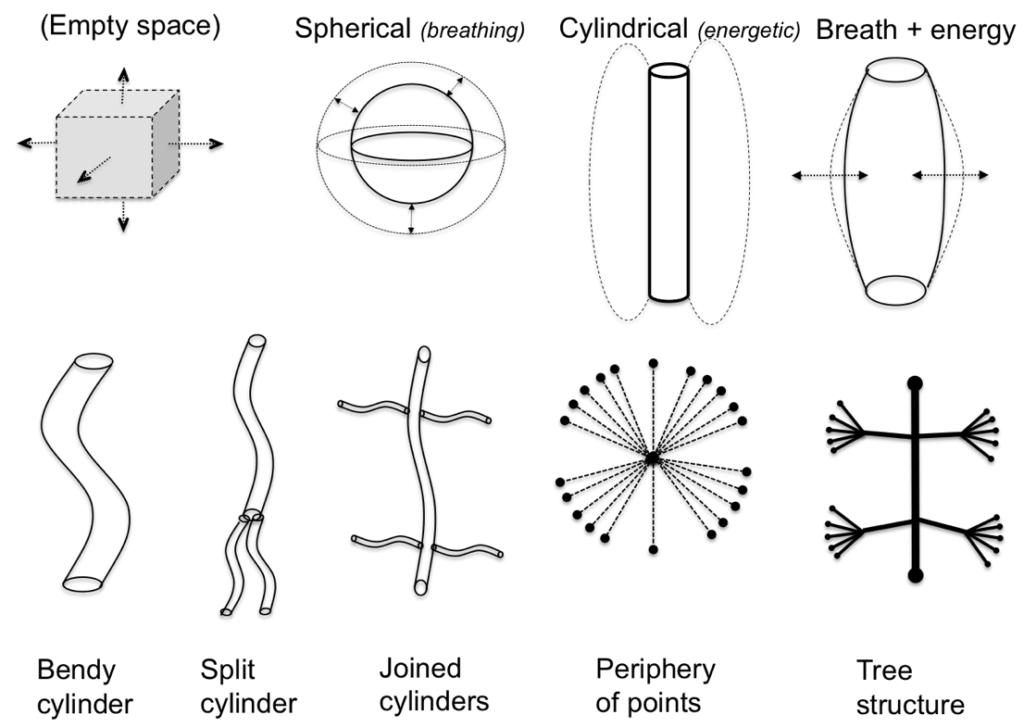
To understand how massive this information loss is, we can look at a famous hardware thought experiment known as the Ideal Snake. Imagine a frictionless, purely data-driven creature engineered to move and interact with the world based entirely on digital signal processing.
When you calculate the information-carrying bandwidth required for a physical organism to navigate, survive, and socially engage in the real world, the numbers are staggering. The human body processes a factor of a million more data points through physical existence than it receives from a pixelated glass screen.
Our nervous systems evolved over millions of years to live outdoors and interact in three dimensions. We didn't evolve to stare at blue light. When a corporate entity tells you that their new headset or chat app offers a "seamless" connection, they are ignoring basic biology and physics. They're trying to feed a creature that requires a massive stream of physical data through a tiny digital straw.
Why Technical Experts Stopped Fighting for Truth
The tragedy of modern science is that the people who have the equations to prove this have mostly stayed quiet. Computer scientists, signal processors, and physicists understand bandwidth limitations better than anyone. They know exactly how much data is lost in transmission.
Yet, many have abdicated their authority to speak on what is fundamentally good for human biology because they are too busy holding down corporate jobs. They build the compression algorithms. They optimize the apps that keep you hooked. They ignore their own battle-tested formulas regarding sensory bandwidth because tech monopolies pay well.
Lawyers and judges do the same thing. They pretend that clicking an "I Accept" box on a 50-page Terms and Conditions document means a consumer has truly given informed consent to have their data harvested and their attention monetized. It's a collective hallucination.
Because the technical crowd stepped back, a man with a background in mathematics who happens to lead the Catholic Church had to step up. Pope Leo XIV used his global moral platform to state what the data already shows: physical reality cannot be replaced by corporate code.
How to Reclaim Your Physical Bandwidth
You don't need to convert to Catholicism to see the practical utility of this message. You just need to look at how your own body responds to the digital world. If you feel exhausted after a day of remote meetings, it isn't just mental fatigue. It is your brain working overtime to fill in the missing 99% of the sensory data that the screen failed to deliver.
Fixing this doesn't mean smashing your smartphone and moving to a cave. It means recognizing the physical premium of real life and adjusting your habits accordingly.
- Audit your meetings. If a conversation matters, do it in person. Stop settling for a video call when a walk around the block with a colleague is physically possible.
- Embody your day. Pay attention to your posture, your breathing, and physical movement. Get outside. Your nervous system craves raw, uncompressed environmental data.
- Protect your friction. Tech companies want to eliminate friction to make transactions faster, but human relationships require friction to build trust. Put down the device, look people in the eye, and embrace the high-bandwidth reality of being physically present.