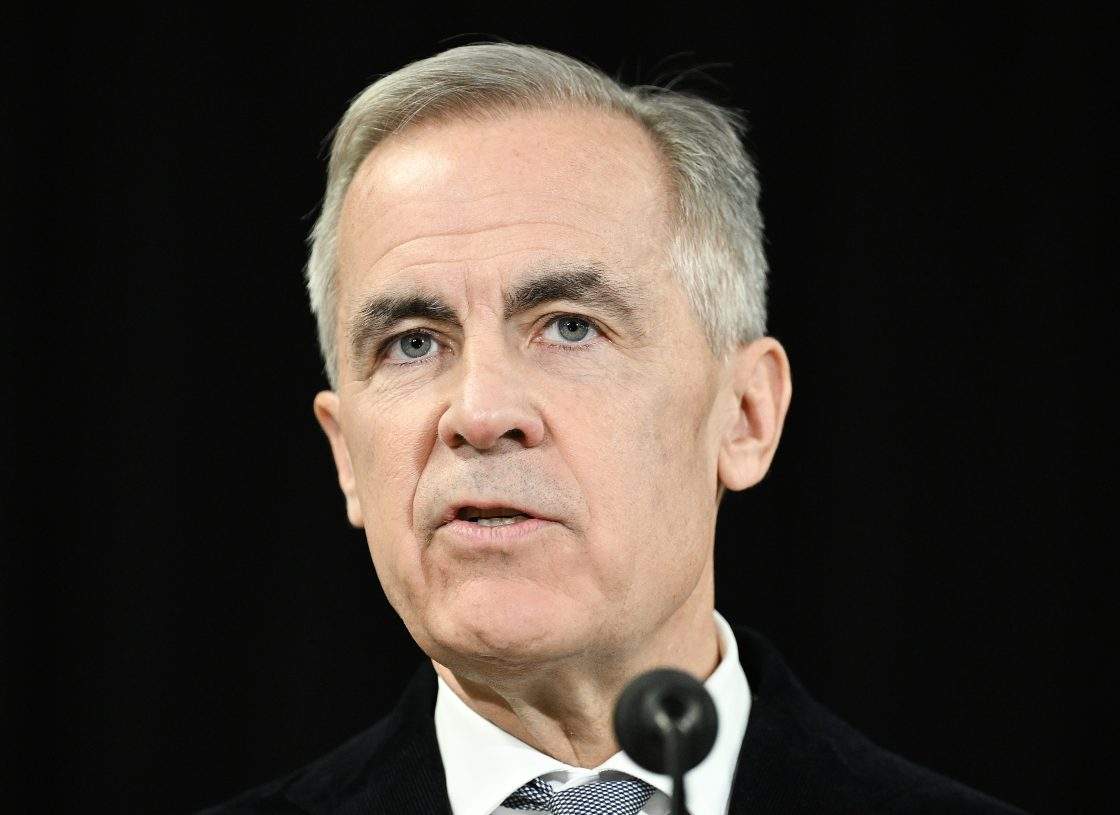
Most headlines treat the news that Paul McCartney officially reached billionaire status as a cute victory lap for Beatlemania. They're wrong. The Beatles didn't make Paul McCartney a billionaire. If he had relied solely on his 1960s record deals, he'd be comfortable, sure, but nowhere near the ten-figure club.
In November 2026, Forbes officially valued the 84-year-old's individual net worth at $1.4 billion. That puts him in third place among the world's richest musicians, trailing only Jay-Z at $2.8 billion and Taylor Swift at $2 billion. While the UK's Sunday Times Rich List had already pegged the combined fortune of McCartney and his wife, Nancy Shevell, at £1 billion back in 2024—and £1.055 billion by May 2026—the Forbes valuation is different. It isolates McCartney's personal wealth. And when you actually look under the hood of that $1.4 billion figure, you find one of the sharpest intellectual property plays in modern entertainment history.
The Early Beatles Contracts Were a Financial Trap
People assume that selling hundreds of millions of records automatically prints generational wealth. It doesn't. During the height of Beatlemania, McCartney and his bandmates signed what he later called "basically a slave contract". According to Forbes, the group's initial deal paid them less than a penny per album sold.
Think about that math for a second. You're the biggest cultural phenomenon on the planet, filling stadiums and reshaping pop music, and your royalty rate is fractions of a cent. Worse still, Lennon and McCartney lost publishing control over their own songs early on. When Northern Songs went public and was eventually sold, the men who actually wrote "Yesterday" and "Hey Jude" found themselves locked out of owning the underlying copyrights.
McCartney spent the next fifty years fighting to fix that mistake. He sued, negotiated, and waited out copyright reversion laws in the United States to claw back his U.S. publishing rights. Today, his share of Beatles songwriting copyrights brings in at least $10 million every year. Separately, Apple Corps—the company that manages the band's recordings, merchandise, and licensing—generates over $50 million annually, split four ways between McCartney, Ringo Starr, and the estates of John Lennon and George Harrison. Forbes values McCartney's 25% slice of Apple Corps at more than $150 million.
Good money? Obviously. Enough to make him a billionaire? Not even close.
How MPL Communications Built the Real Fortune
If you want to understand why Paul McCartney officially reached billionaire status, stop looking at Liverpool and start looking at a business decision he made in 1969.
Months before The Beatles officially broke up, McCartney set up a private publishing company called MPL Communications. At first, the goal was simple: hold onto the rights to his post-Beatles solo work so nobody could ever take his songs away again. Then he realized something that wouldn't become Wall Street dogma for another four decades.
Music copyrights are predictable, inflation-resistant cash machines.
While other rock stars in the 1970s and 1980s were burning cash on private jets, bad movie deals, and vanity record labels, McCartney quietly went shopping. Through MPL, he bought up the publishing catalogs of other songwriters at prices that look laughable today.
His most famous acquisition was the catalog of his childhood hero, Buddy Holly. Every time "That'll Be the Day" or "Peggy Sue" plays on a classic rock station, gets streamed on Spotify, or lands in a movie soundtrack, MPL collects a check. He didn't stop at rock and roll, either. McCartney bought up the rights to massive Broadway stage musicals, including Grease and Annie. Every single time a high school drama department in Ohio or a community theater in London licenses Grease for a spring production, McCartney gets paid.
Then there's December. McCartney owns the publishing rights to dozens of classic holiday songs, including "It's Beginning to Look a Lot Like Christmas" and "The Christmas Song (Chestnuts Roasting on an Open Fire)". For roughly six weeks every winter, retail stores, radio stations, and streaming playlists turn into a nonstop royalty funnel for MPL Communications.
Forbes estimates that MPL Communications alone is worth at least $250 million, and it remains the single largest business engine in his portfolio. He even famously gave Michael Jackson the tip to invest in music publishing during the early 1980s—advice Jackson took so seriously that he outbid McCartney for the ATV catalog containing The Beatles' own songs in 1985. Painful irony, yes, yet it proved McCartney's thesis right. Catalogs were gold.
Touring, Real Estate, and Blue-Chip Art
You can't build a $1.4 billion net worth on passive royalties alone without compounding your active income. And McCartney has never really stopped working.
Between 2022 and 2025, he played 79 dates on his Got Back global tour, packing arenas and stadiums across North America, South America, Europe, and Australia. Legacy touring at that scale prints massive margins because the audience already knows every word and merchandise sales run wild. In 2024, he also caught a fresh cultural wave when Beyoncé covered his 1968 civil rights ballad "Blackbird" (stylized as "Blackbiird") on her Cowboy Carter album, driving millions of new streams back to his catalog.
Even in 2026, at age 84, he hasn't slowed down. He dropped a new studio album, The Boys of Dungeon Lane, in May 2026, appeared in the Morgan Neville documentary Man on the Run, and even made headlines over the summer performing "I Want to Hold Your Hand" with Taylor Swift at her New York wedding to Travis Kelce.
Outside of music, McCartney parked his cash in hard assets that appreciate quietly. His portfolio includes prime real estate across the United Kingdom—including a 160-acre farm near Rye in East Sussex—alongside properties in the United States, such as the Hamptons. He also owns a museum-grade art collection featuring works by Pablo Picasso and René Magritte. Notice a pattern? Songs, land, blue-chip art. None of these are speculative tech bets or trendy consumer brands. They're scarce assets that hold value across decades.
How McCartney Stacks Up Against Other Musician Billionaires
The billionaire musician club is tiny, and every member got there through a completely different playbook.
Jay-Z sits at the top at $2.8 billion, largely because he used hip-hop as a launchpad for high-margin consumer brands like Armand de Brignac champagne and D'Ussé cognac, alongside early equity stakes in Uber and Block. Rihanna and Dr. Dre crossed the $1 billion mark through Fenty Beauty and Beats Electronics, respectively—consumer products that scaled far beyond record sales.
Taylor Swift ($2 billion) and Bruce Springsteen ($1.2 billion) sit closer to McCartney's lane. Springsteen cashed out his masters and publishing to Sony Music in 2021 for roughly $500 million. Swift re-recorded her albums to reclaim ownership of her masters and turned the Eras Tour into a multi-billion-dollar economic event.
McCartney's path is the exact opposite of Springsteen's. Instead of selling his catalog to a private equity fund or major label during the 2020s catalog boom, McCartney spent fifty years being the buyer. He didn't cash out at the top; he accumulated the underlying pipes that feed the entire music industry.
What Creators and Investors Can Actually Learn From This
Most people read celebrity net worth stories as pure trivia. That's a wasted opportunity. Whether you're an independent musician, a software developer, a writer, or someone managing a standard investment portfolio, McCartney's climb to $1.4 billion exposes three hard truths about wealth building:
- Distribution deals won't make you rich; ownership will. The Beatles moved more units than almost any act in human history, yet their early label contract left them with crumbs. If you create work—code, music, writing, video—and hand over the underlying intellectual property in exchange for upfront attention or a tiny royalty split, you're building someone else's balance sheet.
- Buy boring, durable cash flow before it gets trendy. When McCartney started buying Buddy Holly songs and Broadway scores in the 1970s, music publishing wasn't considered a sexy asset class. By the time private equity firms like Hipgnosis and Concord started paying 20x to 30x annual royalties for catalogs in the 2020s, McCartney had already owned his library for decades. Look for unglamorous, repeatable cash flows in your own industry before institutional money bids up the price.
- Time in the market beats timing the market. McCartney started compounding his earnings in his twenties and never stopped. Sixty years of reinvesting tour profits into publishing rights, land, and art turned a working-class kid from Liverpool into a billionaire without ever needing a single Silicon Valley exit.
If you own any creative work, brand assets, or side projects right now, audit your contracts this week. Check who actually owns the master rights, the publishing, or the underlying code—and stop signing deals that trade permanent ownership for short-term exposure.