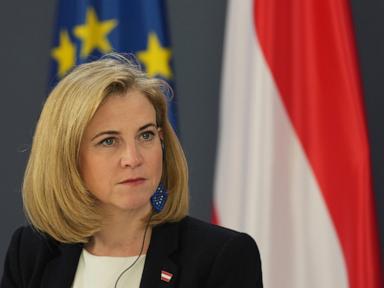
Most world leaders ignore internet conspiracy theories. They let the noise die down on its own because fighting mud in the public square usually just gets you dirty.
Emmanuel and Brigitte Macron decided they'd had enough.
When the French President and his wife filed a new legal action against American podcaster Candace Owens, headlines exploded across the Atlantic. People immediately framed it as a classic clash between European speech restrictions and American First Amendment bravado. That framing misses the point entirely. If you actually look at how cross-border defamation works—and why the Élysée Palace shifted its legal strategy—you realize this isn't just about hurt feelings over a viral podcast series. It's a calculated legal stress test against the monetization of political disinformation.
Why the Macrons Went After Candace Owens Now
For years, Brigitte Macron dealt with bizarre rumors originating in obscure French fringe blogs claiming she was born male under the name Jean-Michel Trogneux. In France, she already fought that battle in court. Two women who pushed the claim on YouTube were convicted of defamation by a Paris court in September 2024 and ordered to pay damages to Brigitte Macron and her brother, the real Jean-Michel Trogneux.
Case closed in Paris. Then the rumor crossed the ocean.
Candace Owens picked up the narrative and turned it into a multi-part series for her massive American audience, complete with merch, promotional teasers, and aggressive social media marketing. Suddenly, a debunked French fringe theory had millions of English-speaking views.
Here's the problem the Macrons faced. A French court ruling means very little to a commentator based in Tennessee who earns her living from American platforms and direct-to-consumer subscriptions. Ignoring Owens meant letting a fabricated story calcify into accepted "alternative fact" across the English-speaking internet. Filing a new lawsuit changes the financial math for anyone profiting off the claim.
The Massive Legal Hurdle in American Courts
If you've ever followed celebrity or political defamation suits in the United States, you know the deck is stacked heavily in favor of the speaker. Unlike France, where privacy laws and defamation statutes strictly protect individuals from false reputational harm, U.S. law treats public figures as fair game unless they clear a towering legal bar.
That bar is called actual malice.
Established by the U.S. Supreme Court in New York Times Co. v. Sullivan back in 1964, actual malice doesn't mean the speaker hated the subject. It means the plaintiff has to prove the defendant published a false statement either knowing it was false or with reckless disregard for the truth.
Think about how hard that is to prove. A podcaster can always claim, "I was just asking questions," or "I genuinely believed my sources." Even if those sources are completely unhinged, proving someone's internal state of mind in court takes years of brutal discovery.
So why would the Macrons' legal team step into a ring where the rules favor Owens?
Proving Reckless Disregard Isn't Impossible Anymore
Legal strategies have evolved since the early days of social media. Look at what happened in the Dominion Voting Systems case against Fox News, or the Sandy Hook cases against Alex Jones. Courts are increasingly willing to look at internal communications, production notes, and financial incentives to establish reckless disregard.
When a media personality packages a claim as a serialized investigation, sells products around it, and ignores publicly available court records that already debunked the exact same rumor, plaintiffs have a much stronger paper trail. The Macrons aren't walking into court empty-handed. They have:
- Official birth, marriage, and family records already vetted in French litigation.
- Prior criminal and civil defamation verdicts in France proving the falsity of the core claim.
- Documented public notices sent to Owens' team before and during her broadcasts putting her on notice that the claims were demonstrably false.
Once you put a publisher on formal notice with verifiable proof and they double down anyway to drive subscriptions, "I didn't know" starts sounding a lot less convincing to a judge.
French Privacy Law vs. the American First Amendment
To understand why this case feels so jarring to observers on both sides of the Atlantic, you have to look at the cultural chasm in how the two countries define free speech.
In the United States, the First Amendment is nearly absolute when it comes to political commentary. You can say outrageous, demonstrably untrue things about a sitting president, and the government can't stop you. Civil liability only kicks in when specific, provable lies cause quantifiable damage under the actual malice standard.
France operates on a completely different philosophy. Under French law—specifically the Law on the Freedom of the Press of 1881 and strict provisions in the French Civil Code—personal reputation and private life carry legal weight equal to free expression. In France, truth isn't even always an absolute defense if a publication violates someone's intimate private life without legitimate public interest.
When a sitting French head of state uses the courts, critics in the U.S. often cry censorship. Honestly, from an American perspective, a president suing a podcaster looks heavy-handed. From a French perspective, allowing someone to monetize blatant lies about the First Lady's identity without legal pushback is an abdication of basic civic dignity.
Neither side is going to convince the other. That's why jurisdiction matters more than rhetoric.
What Happens During Discovery Could Change Everything
Most people focus on whether the Macrons will win a massive financial judgment. That's the wrong thing to watch. In high-profile media lawsuits, discovery is the real battlefield.
If a judge denies an early motion to dismiss—or a motion under state anti-SLAPP statutes designed to toss out frivolous speech lawsuits—both sides get subpoena power. That means lawyers get to look under the hood of the business.
In a case involving a major independent podcaster, discovery typically targets:
- Internal messages and emails between producers, researchers, and the host discussing whether the claims were actually credible.
- Monetization metrics showing how much revenue, ad spend, or subscriber growth was directly tied to the specific episodes about the Macrons.
- Editorial standards—or the total lack of them—used to verify sources before publishing.
This is why so many media figures settle before trial. Even if you think you can win in front of a jury, having your private text messages about chasing clicks read aloud in a public court filing is a nightmare for any brand. On the flip side, Owens' legal team would get the right to demand documentation from the plaintiffs to prove falsity—something the Macrons have already shown they're willing to put on the record.
The Streisand Effect Risk Is Very Real
Let's be honest about the biggest danger facing Emmanuel and Brigitte Macron here. Suing a polarizing media figure almost always guarantees them a massive promotional boost.
Candace Owens built her entire career on positioning herself as an outsider fighting powerful institutions. Being sued by the President of France isn't a PR crisis for her. It's a marketing dream. She gets to tell her audience that global elites are trying to silence her, drive traffic to her independent platform, and rally supporters around free speech talking points.
The Élysée Palace obviously knows this. French political advisors aren't naive about American media dynamics. Their calculation comes down to long-term containment versus short-term noise.
If you let a lie sit unchallenged on the internet for five years, it stops being a fringe rumor and becomes an automated autocomplete suggestion on every search engine. By forcing the issue into a formal legal record, the Macrons create an authoritative counter-weight. Future journalists, platforms, and advertisers have to take notice when active litigation is on the docket.
How to Read the Next Phase of This Legal Battle
As court filings start rolling in, ignore the cable news shouting matches and social media victory laps. Both sides will claim total vindication after every minor procedural motion. If you want to know who actually has the upper hand, watch three specific legal milestones over the coming months.
First, look at jurisdiction and venue motions. Owens' attorneys will almost certainly challenge where the suit was filed or seek dismissal under anti-SLAPP laws, arguing the episodes are protected commentary on a public figure. If the Macrons survive that initial hurdle, the leverage shifts dramatically.
Second, pay attention to how the complaint defines the defendant's role. Treating Owens strictly as a traditional journalist gives her maximum shield protections. Framing her operation as a commercial enterprise selling merchandise and subscriptions off knowingly false statements narrows her defense.
Third, watch platform responses. Major tech companies rarely remove content over political disputes, even heated ones. Once formal defamation litigation clears initial judicial review, though, trust and safety teams often quietly demonetize or restrict algorithmic amplification on the specific disputed episodes to avoid secondary liability headaches.
Keep an eye on the public court dockets rather than podcast clips if you want the real story. When lawyers have to sign their names under penalty of perjury, the theatrics disappear fast, and the actual evidence is all that's left on the table.