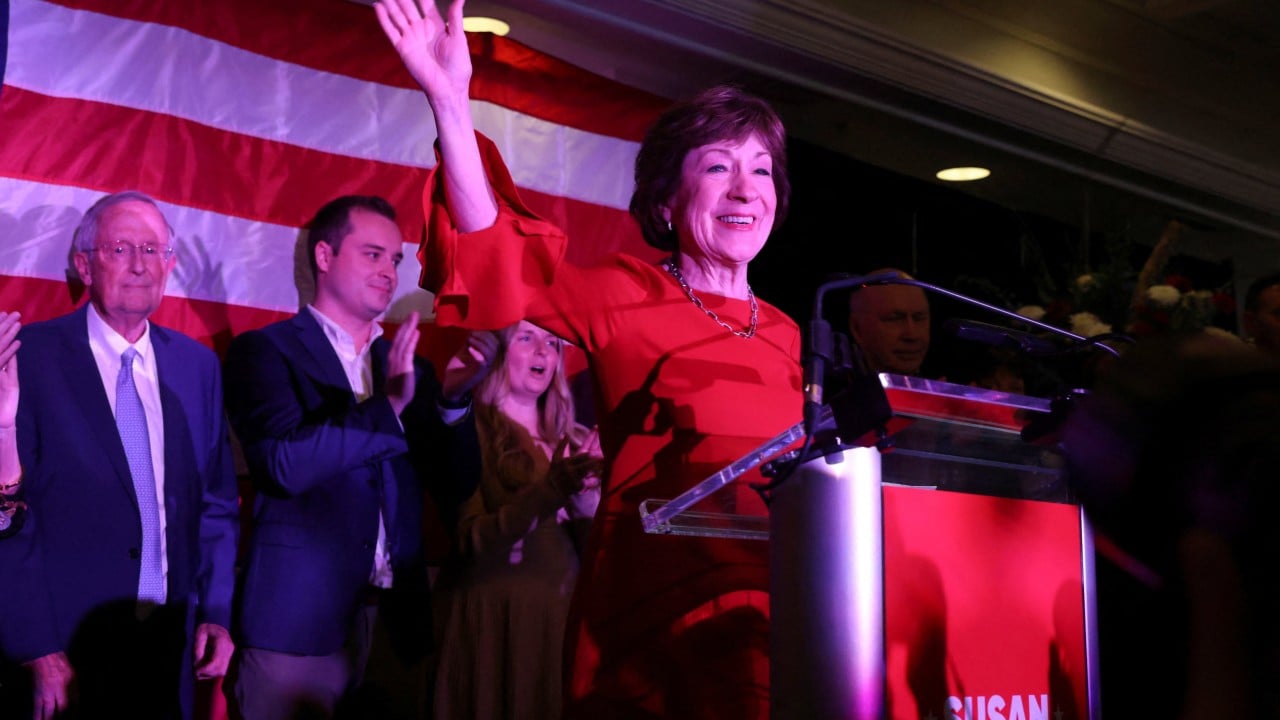
Beijing doesn't have a ballot box, yet Chinese state media and diplomats spend an enormous amount of energy picking winners and losers during every American election cycle. Look closely at the 2026 US midterms, though, and the story gets weird fast. While Washington pundits obsess over control of the House and Senate, observers in China have been tracking two wildly different American political fixtures to gauge where US-China relations are actually headed—moderate Republican Senator Susan Collins of Maine and local American firefighters.
It sounds like a bizarre pairing. Why would analysts in Beijing care about municipal fire departments in the Midwest or a veteran senator from New England? Because in 2026, big-picture ideology doesn't tell you much about how tariffs, supply chains, or security bans actually play out on the ground. You have to look at the pressure points.
How Beijing Actually Reads the US Midterms
Most Americans assume Chinese leaders root for one political party over the other. That's a massive misconception. Ask any seasoned China watcher at the Center for Strategic and International Studies (CSIS) or the Brookings Institution, and they'll tell you the same thing—Beijing views both Democrats and Republicans as fundamentally hostile to China's rise.
Instead of cheering for a blue wave or a red wave, Chinese analysts treat the US midterms like a stress test for American political dysfunction.
When gridlock hits Washington, foreign policy gets messy. A divided Congress means the White House has a harder time passing sweeping industrial subsidies or coherent trade packages, yet it also forces presidents to look tough on Beijing to appease hawkish lawmakers on both sides of the aisle. In Chinese state-affiliated outlets like Global Times and academic journals out of Tsinghua University, the consensus around the 2026 midterms isn't about who "won" in a traditional sense. It's about whether the election paralyzes domestic governance while accelerating economic decoupling.
Honestly, Beijing's real interest lies in the friction between national security hawks in DC and the economic realities facing specific US states and local governments. Which brings us directly to Maine.
Why Susan Collins Matters in the US-China Equation
If you want to understand how domestic American politics collide with geopolitical rivalry, look at Susan Collins. Representing Maine in the US Senate since 1997, Collins has built an entire brand on surviving razor-thin races in a state that leans blue in presidential years while fiercely guarding its local industries.
In the 2026 midterm cycle, Collins's political survival—and the broader battle for Senate control—became a case study for how moderate swing-state lawmakers handle China policy. You can't run for Senate in Maine without talking about manufacturing, shipbuilding, and trade. Bath Iron Works, one of the Navy's premier shipbuilders, sits right in her backyard, making naval readiness and countering China's maritime expansion a direct local jobs issue.
At the same time, Maine's lobstermen, blueberry farmers, and paper mills get hammered every time a tariff war erupts.
When Beijing watches a figure like Collins, they aren't looking at a firebrand ideologue. They see a pragmatic appropriator—someone who sits at the center of federal spending decisions through the Senate Appropriations Committee. For Chinese diplomats and trade officials, moderate Republicans and vulnerable Democrats represent the few remaining voices in Washington who still calculate the local economic cost of blanket tariffs and supply chain bans.
Here's the catch, though. Even pragmatic senators can't afford to look soft on Beijing during a midterm year. Over the past few election cycles, the political center of gravity on China has shifted so far toward confrontation that voting against a China-targeted restriction feels like political suicide. Collins and her fellow moderates end up walking a tightrope—backing defense spending aimed squarely at the Indo-Pacific while quietly trying to carve out exemptions so local businesses don't get crushed by retaliatory tariffs.
The Strange Case of Local Firefighters and Chinese Tech
Now, what do local firefighters have to do with any of this? Everything, if you follow federal procurement rules and drone bans.
Over the last several years, one of the sharpest battlegrounds in US-China tech decoupling hasn't been in Silicon Valley boardrooms. It's been in small-town firehouses and municipal police stations across America. Chinese drone giant DJI commands an overwhelming share of the global commercial drone market—often estimated at over 70 percent—because its hardware is cheap, reliable, and easy to fly out of the box.
For local fire departments fighting wildfires in California, searching for missing hikers in Maine, or inspecting burning warehouses in Ohio, DJI drones became standard gear. Then Congress stepped in.
Citing national security risks and data transmission concerns, federal lawmakers pushed aggressive measures—including the Countering CCP Drones Act and provisions tucked into annual National Defense Authorization Acts—aimed at cutting Chinese-made drones off from federal grant money and eventually banning new models from operating on US communications infrastructure.
If you've ever talked to a small-town fire chief about this, you know how furious they get. A basic thermal-imaging drone from a Chinese manufacturer might cost a few thousand dollars. An American-made equivalent compliant with the Pentagon's Blue UAS list can easily run three to four times that amount, often with shorter battery life and clunkier software.
Local firefighters didn't ask to become foot soldiers in a superpower tech war. Yet during the 2026 midterm campaigns, municipal first responders found themselves lobbying their congressional representatives—including lawmakers like Collins—warning that sudden bans without massive federal replacement grants would blind them during emergencies.
The Gap Between DC Rhetoric and Main Street Reality
This tension exposes a huge blind spot in how Washington talks about China. In committee hearings on Capitol Hill, voting to ban Chinese technology is effortless. It scores easy headlines and costs a congressperson zero political capital at home—until the bill comes due at the local level.
Consider what happens when federal bans hit everyday municipal operations:
- Fire and rescue departments face sudden equipment grounded by grant restrictions, forcing them to choose between grounding aerial thermal units or blowing up tight town budgets.
- Rural telecom providers spend years waiting on billions of dollars in federal "rip and replace" reimbursements just to strip Huawei and ZTE gear out of cell towers.
- Port authorities and local utilities scramble to audit cranes, transformers, and battery systems after intelligence warnings about embedded cellular modems.
Chinese state media loves highlighting these friction points. Whenever American firefighters, farmers, or local mayors push back against Washington's decoupling mandates, Beijing points to it as proof that US containment policies hurt ordinary Americans more than they hurt China.
Did China Actually Win Anything in the 2026 Midterms?
So let's answer the core question directly. Did China win in the US midterms?
No. Nobody in Beijing is popping champagne over the 2026 results. The structural trajectory of US-China rivalry hasn't reversed, and it won't reverse regardless of which party holds a narrow majority in either chamber of Congress. Export controls on advanced semiconductors remain locked in place. Scrutiny over Chinese electric vehicles, batteries, and biotech firms continues to tighten. Both parties still treat strategic competition with Beijing as the defining foreign policy consensus of our era.
What Beijing did get out of the 2026 midterms, however, is clarity on where America's internal fractures lie.
First, Chinese analysts saw once again that domestic economic pain limits how fast Washington can decouple. When tariffs hit agricultural exports or tech bans ground local fire department drones, elected officials—especially pragmatic veterans like Susan Collins who answer directly to constituent industries—feel immediate pressure to slow down, grant waivers, or fund costly transition periods.
Second, midterm gridlock reinforces Beijing's belief that American long-term strategy is inherently unstable. Chinese officials routinely argue to developing nations in Southeast Asia, Latin America, and Africa that Washington cannot guarantee consistent trade or infrastructure commitments because every two years, a new election cycle threatens to upend funding and regulatory priorities.
What This Means If You Follow Markets or Policy
If you're trying to read the tea leaves on US-China relations after the 2026 midterms, stop listening to stump speeches and start watching local friction. Big ideological declarations from Washington rarely tell you what will actually get enforced six months later.
Pay attention to three concrete indicators over the next year:
- Appropriations carve-outs and waiver extensions. Watch how senior appropriators like Susan Collins handle defense and commerce spending bills. The real policy isn't in the headline ban—it's in the fine print granting two-year delays or transition funds for local agencies and domestic industries.
- State and municipal pushback. Keep an eye on associations representing local firefighters, police chiefs, farm bureaus, and port operators. Whenever these groups testify on Capitol Hill or lobby statehouses, they signal where federal decoupling rules are hitting a wall of practical reality.
- Retaliatory targeting by Beijing. China's Ministry of Commerce doesn't impose tariffs at random. It targets agricultural and industrial goods tied directly to swing districts and vulnerable senators, maximizing political pain ahead of the next federal election cycle.
The 2026 midterms didn't hand China a victory, nor did they deliver a knockout blow from Washington. Instead, they proved that the real battle over America's China strategy isn't just happening across the Pacific—it's playing out in Senate appropriations markups and small-town fire stations across the United States.