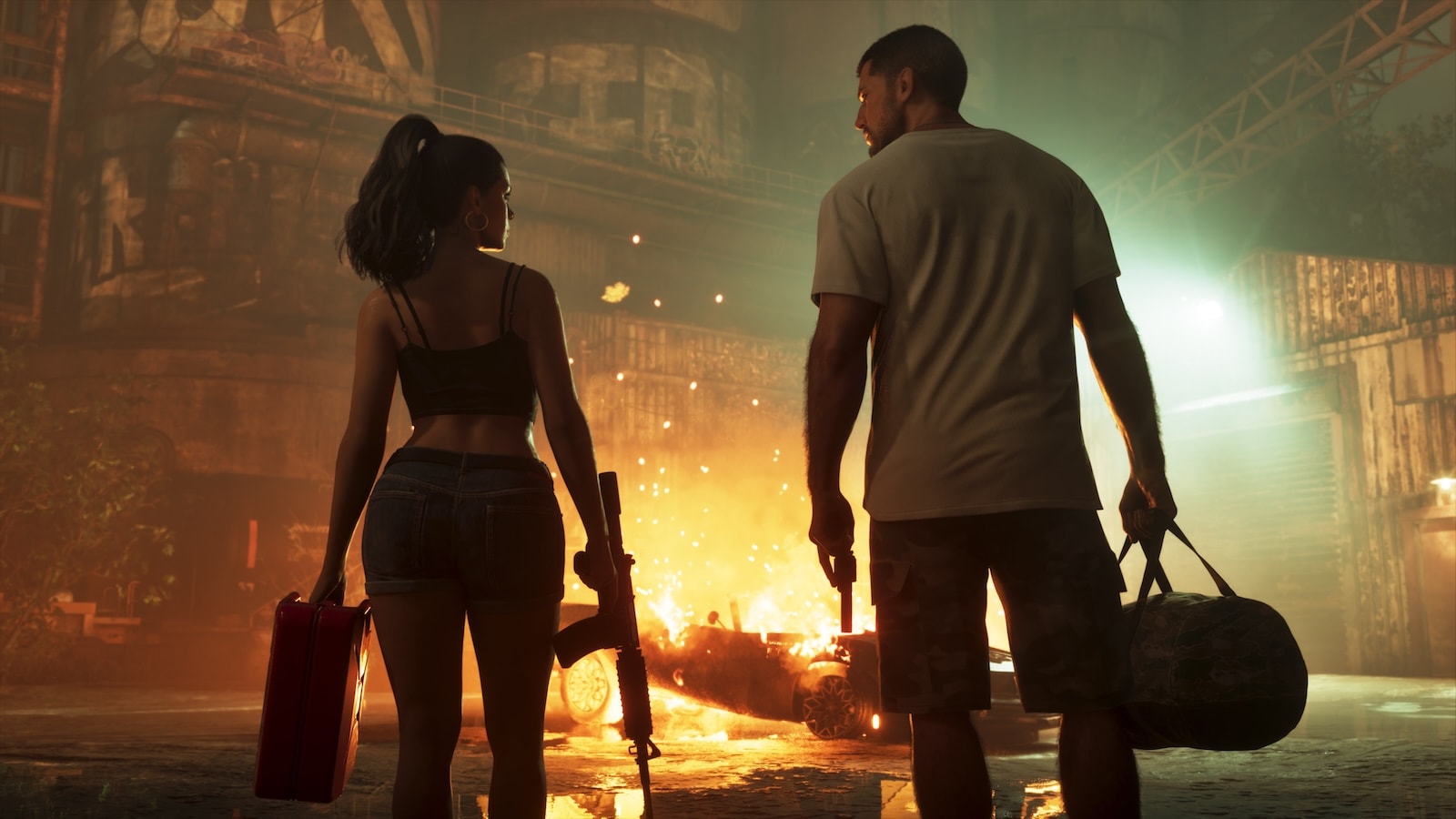
Spending a billion dollars on a single video game sounds insane until you actually look at the spreadsheet. Most people hear that number and picture bloated executive salaries or wasted marketing cash, yet the reality behind the GTA VI budget is much simpler and way more calculated. Take-Two Interactive isn't gambling here. They're funding the single most predictable entertainment windfall in modern history, with industry analysts projecting $3 billion in revenue within the first four months alone.
If you've ever tracked AAA development cycles or worked anywhere near software production, you know how quickly burn rates spiral when timelines stretch past a decade. Rockstar Games started laying the groundwork for this title shortly after Red Dead Redemption 2 shipped in 2018, and the sheer scale of modern asset creation eats capital at an alarming pace. Every texture, every dynamic weather pattern in Vice City, and every line of NPC dialogue requires thousands of specialized engineering hours.
Why GTA VI Costs More Than Hollywood Blockbusters
Compare this to Hollywood. Avengers Endgame cost roughly $356 million to produce, and Avatar The Way of Water hovered around $350 million to $460 million before marketing. Those are two-to-three-hour linear experiences. Rockstar is building a living, reactive digital state that players will inhabit for over ten years.
The math breaks down into three massive buckets that most casual observers completely miss:
- Global Studio Labor: Rockstar doesn't operate out of one office anymore. Thousands of developers across Rockstar North, Rockstar New York, Rockstar San Diego, Rockstar India, and other global branches have touched this codebase. Paying senior engine programmers, technical artists, and QA testers across high-cost cities like Edinburgh and New York for eight years easily clears half a billion dollars before you even buy a single billboard.
- Custom Engine Architecture: Rockstar refuses to license Unreal Engine 5 because third-party tools can't handle their specific brand of open-world physics and streaming density. Upgrading the proprietary RAGE engine to handle next-generation console hardware, ray-traced global illumination, and dense crowd AI is practically building a specialized operating system from scratch.
- Global Marketing Blitzes: Even though the first trailer shattered YouTube records without a dime spent on traditional ad buys, Take-Two still allocates hundreds of millions for physical takeovers, digital ad networks, and launch partnerships across every major territory.
Honestly, calling it a $1 billion game might even be conservative once you factor in post-launch server infrastructure and the immediate transition into the next iteration of Grand Theft Auto Online.
How Take-Two Plans to Make $3 Billion in Four Months
Wall Street doesn't care about art. Investors care about return on invested capital, and the financial projections floating around institutional desks explain why Take-Two's stock commands such a steep premium. Making $3 billion in 120 days sounds impossible when you compare it to traditional media, yet gaming operates on completely different unit economics.
Think back to September 2013. Grand Theft Auto V generated $800 million in its first 24 hours and crossed $1 billion in just three days. That happened when the global console install base was significantly smaller and digital downloads were still a minority share of total sales. Today, digital storefronts allow Take-Two to capture roughly 70% to 80% of the retail price directly, bypassing physical disc manufacturing, shipping logistics, and retail middleman cuts.
The Digital Pricing Advantage
Standard AAA games moved to a $70 baseline a few years ago, and Take-Two was one of the first publishers to push that boundary with NBA 2K. For GTA VI, $70 is just the floor. The real revenue engine lies in tiered digital editions.
History shows that massive portions of the launch audience will gladly pay $90 or $100 for a Deluxe or Ultimate edition if it includes early access, exclusive vehicles, or starting cash for the online mode. When you sell 30 million copies at an average selling price closer to $80 rather than $70, you hit $2.4 billion in box sales alone.
The GTA Online Multiplier
Box sales are only half the story. Grand Theft Auto V stayed on the monthly best-seller charts for over a decade because GTA Online turned into a recurring revenue machine via Shark Cards and GTA+ subscriptions.
Analysts tracking Take-Two's financial guidance point out that the new online ecosystem won't take months to ramp up this time. Rockstar learned from the rocky 2013 launch of GTA Online. By integrating the online economy smoothly into the launch window, Take-Two expects hundreds of millions in high-margin microtransaction revenue within that critical four-month window. Pure profit. Almost zero distribution overhead.
What Investors and Gamers Actually Miss About the Timeline
Whenever Rockstar announces a release window or tweaks a schedule, internet forums melt down and short-term traders panic-sell the stock. That reaction completely misunderstands how Take-Two operates. Strauss Zelnick, Take-Two's CEO, has repeatedly emphasized that Rockstar only ships when the product hits their internal standard of perfection.
Rushing a game of this magnitude would be financial suicide. Look at what happened to Cyberpunk 2077 in 2020. CD Projekt Red lost over a billion dollars in market cap in a matter of days because the console versions were broken at launch, forcing refunds and tarnishing their reputation for years. Rockstar can't afford a stumble because their entire business model relies on multi-year tail sales.
If a game launches cleanly, players stick around, tell their friends, buy Shark Cards, and keep the ecosystem alive until the 2030s. If it launches broken, the multiplayer economy collapses before it even starts. Take-Two knows this, which is why they willingly absorb extra quarters of development burn to protect that $3 billion launch window.
Lessons You Can Apply From Rockstar's Production Model
You don't need a ten-figure budget to use the exact same principles that make Rockstar dominant. Whether you're building software, launching a consumer brand, or managing high-stakes projects, their playbook exposes massive flaws in how most companies operate today.
- Kill the MVP Mentality for Flagship Products: Silicon Valley loves preaching that you should ship fast and fix things later. That works for B2B SaaS tools, not flagship consumer experiences. When your brand reputation rides on a single launch, releasing an unfinished product destroys long-term customer lifetime value. Hold the line on quality until the core experience is undeniable.
- Control Your Distribution and Infrastructure: Rockstar refused to rely on third-party game engines, and Take-Two leaned aggressively into direct digital sales and their own launcher ecosystem. Whenever you build your business entirely on someone else's platform, you surrender your margins and your roadmap. Own your core technology wherever possible.
- Design for the Ten-Year Tail, Not Day One: Most companies blow their entire budget acquiring a customer once, then wonder why growth stalls. Rockstar treats the $70 initial purchase as an onboarding fee for a decade-long ecosystem. Build recurring value into your product architecture from day one so your best customers never have a reason to leave.
If you're tracking Take-Two as an investor or studying the business of gaming, stop focusing on the sensationalized $1 billion price tag. Watch the average revenue per user, track digital attach rates during launch week, and pay close attention to how quickly players migrate into the online ecosystem. The budget isn't a risk—it's the moat that ensures nobody else in the industry can compete on the same playing field.