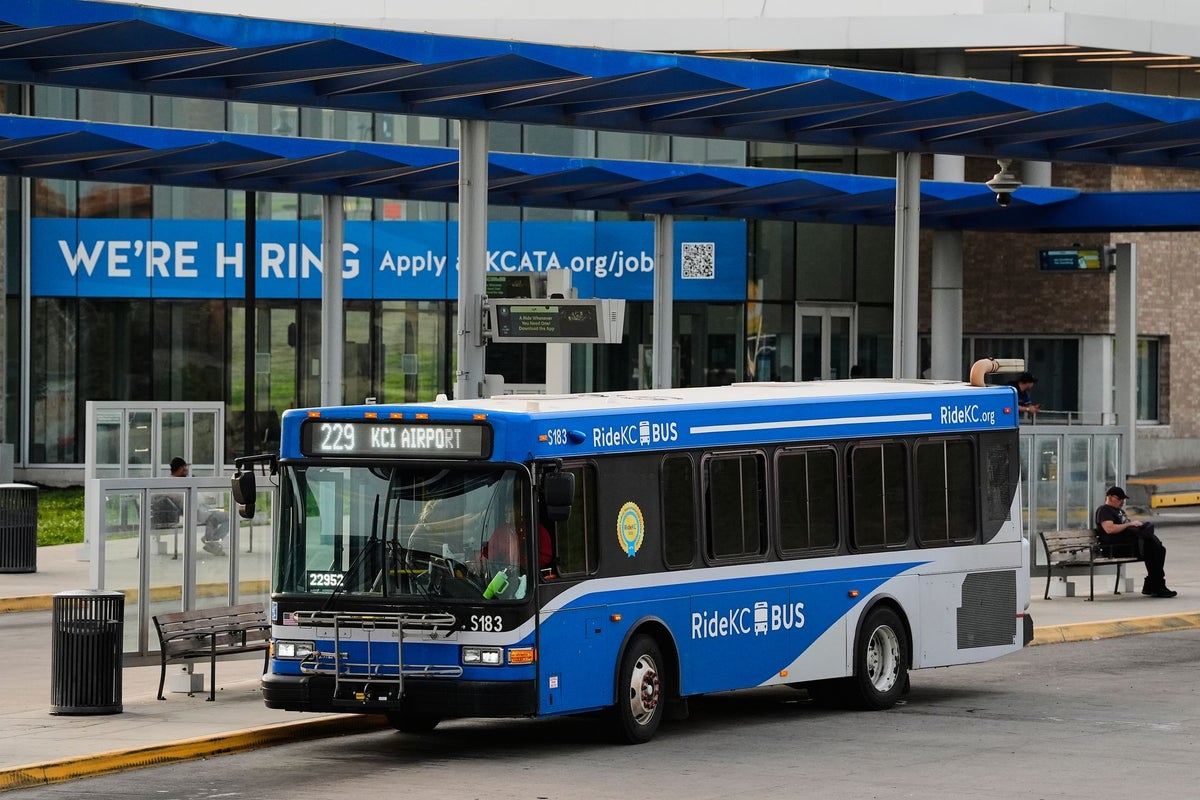
Public transit debates in America are trapped in a time warp. The recent uproar in Kansas City over implementing facial recognition software on public buses is a textbook example of misplaced outrage. Mainstream commentators are wringing their hands over a fictional Orwellian dystopia, completely missing the operational reality of modern municipal transit.
They want you to believe that scanning faces on a city bus is the first step toward a digital police state. It isn't. The lazy consensus screams about privacy rights while ignoring a brutal reality: public transit systems are failing because they cannot guarantee basic physical safety and operational efficiency.
The fear isn't just exaggerated. It is mathematically and logically backward.
The Surveillance Illusion: You Already Gave Up the Data
The core argument against Kansas City’s proposed biometric rollout is that it violates the sanctity of public anonymity. This argument is about fifteen years too late.
Every passenger boarding a bus carries a trackable supercomputer in their pocket. Your cellular carrier logs your location via cell towers. Your transit app tracks your commute down to the meter. The high-definition, non-biometric security cameras already bolted to the ceiling of every city bus are recording your face in 1080p anyway.
If a bad actor or a government agency wants to track your movements through Kansas City, they do not need to build a complex, expensive biometric database of bus commuters. They just need to buy location data from a data broker for pennies on the dollar.
Anonymity in public spaces is a twentieth-century myth. Pretending that adding a layer of algorithmic processing to existing video feeds suddenly crosses a sacred line is pure theater.
The Real Cost of the "Privacy First" Delusion
When municipal agencies back down from deploying advanced tech due to public backlash, there are real, measurable consequences. I have watched transit authorities burn millions of dollars on manual security patrols and bloated, retroactive video review processes that solve exactly zero crimes in real time.
Imagine a scenario where a known offender, who has a history of violent assaults against transit operators, boards a bus. Under the current status quo, the driver is entirely on their own. The existing camera records the assault, and police use the footage hours later to identify the suspect. The damage is done. A driver is injured. A route is disrupted.
Biometric matching changes the equation from reactive post-mortem to proactive prevention. The system alerts dispatch the moment a barred individual steps onto the vehicle. It protects the labor force.
According to data from the National Transit Database, assaults on transit workers have surged dramatically over the last decade. Yet critics argue that protecting these workers with modern software tools is too high a price to pay for an abstract concept of privacy that does not exist anywhere else in modern society.
Dismantling the Technical Fallacies
The opposition loves to cite the National Institute of Standards and Technology (NIST) studies out of context, claiming that facial recognition algorithms are inherently biased and inaccurate.
Let's clarify the technical mechanics. There is a fundamental difference between one-to-many (1:N) identification and one-to-one (1:1) verification. Transit security does not require a nationwide dragnet matching every rider against the entire population of the United States. It requires localized, closed-loop databases of specific individuals who have active warrants for violent crimes or explicit transit bans.
Modern commercial algorithms, when trained on diverse datasets, achieve accuracy rates exceeding 99%. The argument that the technology is too flawed to use is outdated tech-journalism dogma. Is it perfect? No. No security measure is. But human memory—the current standard used by police officers viewing BOLO ("be on the lookout") flyers—is notoriously unreliable and deeply subject to implicit bias. Replacing a flawed human eye with a auditable, calibrated algorithmic check actually reduces arbitrary policing.
The Hidden Downside No One Wants to Admit
To be absolutely fair, a contrarian approach requires acknowledging the genuine risk. The risk is not "Big Brother." The risk is administrative incompetence.
The danger of deploying facial recognition in Kansas City is not that the software will work too well and create a police state. The danger is that the local government will contract the work to the lowest bidder, fail to secure the data storage infrastructure, and allow a third-party vendor to leak the localized database to hackers.
Security is only as strong as the data governance policy behind it. If the transit authority does not enforce strict data retention limits—purging non-matching faceprints within 24 hours—they create an unnecessary honeypot for cybercriminals. That is the debate we should be having. We should be arguing over data deletion schedules and encryption protocols, not wasting time on whether the technology should be used at all.
Fix the Wrong Question
People constantly ask: "How do we stop tech surveillance from ruining public transit?"
That is entirely the wrong question. The real question is: "How do we use technology to make public transit viable enough that people actually want to use it?"
Public transit in mid-sized American cities is dying. Ridership declines create a doom loop of reduced funding, degraded service, and increased safety concerns. If integrating automated security systems can lower operational liabilities, protect drivers, and make riders feel safe enough to ditch their cars, it is a net positive for urban mobility.
Stop romanticizing a version of public space that has not existed since the invention of the smartphone. Turn the cameras on, secure the data, and protect the people moving the city.