The fluorescent lights of a hospital delivery room do not care about constitutional law. They cast the same harsh, sterile glow over every newborn, whether the parents hold blue American passports or visa documents stamped with expiration dates. In those quiet seconds right after a first cry, the world shrinks to a mother, a father, and a child.
But outside that room, a massive legal apparatus immediately clicks into gear. For over a century, a single sentence in the Fourteenth Amendment has acted as an invisible, unbreakable shield over that bassinet. It guarantees that if you are born on American soil, you are an American. Period.
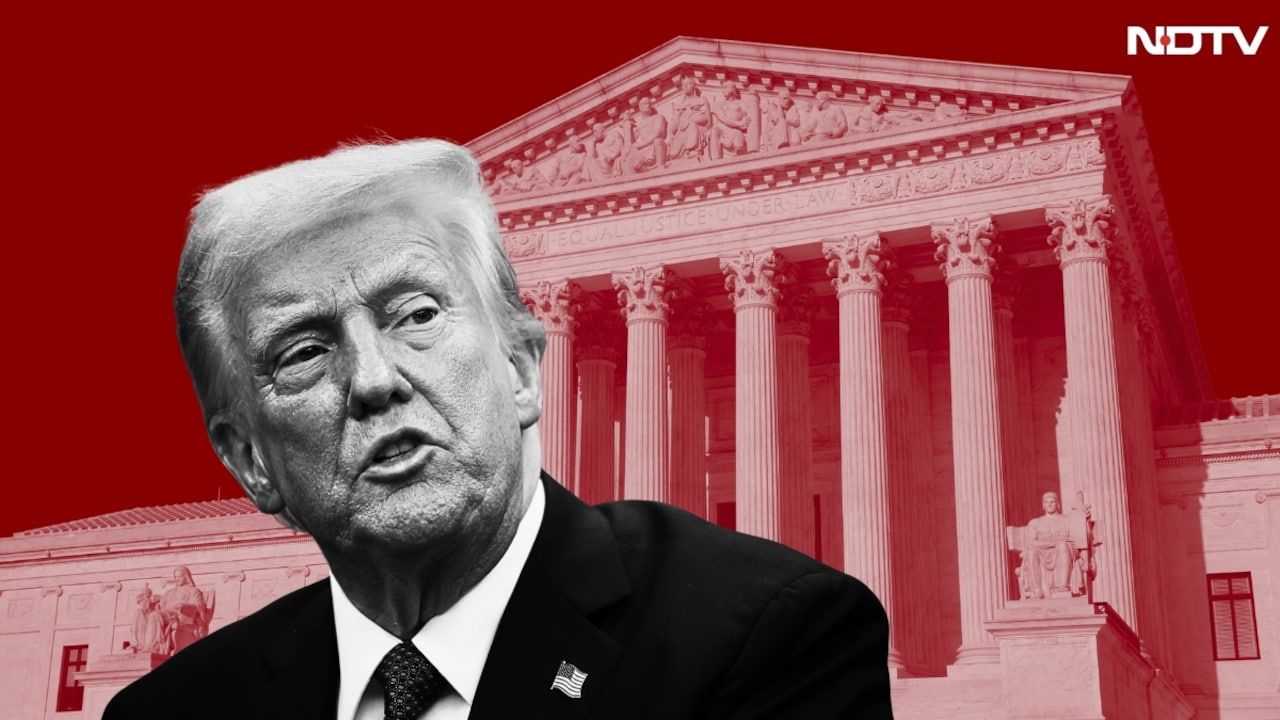
Recently, that shield faced its most aggressive legal challenge in decades. The executive branch attempted to dismantle birthright citizenship through targeted restrictions, aiming to reshape the very definition of who belongs. The legal battle climbed all the way to the highest court in the land. When the gavel fell, the US Supreme Court upheld the status quo, flatly rejecting the administration's curbs.
To the legal scholars scrolling through the PDF of the decision, it was a victory of precedent. To millions of families, it was the difference between breathing out and suffocating.
The Weight of an Accent
To understand the stakes, look away from the marble columns of Washington and consider a hypothetical mechanic named Carlos. He has lived in Ohio for twelve years. He pays his taxes using an Individual Taxpayer Identification Number. He fixes the brakes on the minivans that take local kids to Little League. His English is heavily accented, a fact that makes him cautious when speaking to strangers.
His daughter, Sofia, was born at a community hospital in Cleveland.
Before the Supreme Court’s ruling, a cloud hung over their garage. The policy proposals aiming to curb birthright citizenship weren't just abstract political talking points; they were an existential threat to Sofia’s reality. Under the proposed changes, because Carlos lacked permanent legal status, Sofia’s American birth certificate would have transformed into a piece of paper under interrogation.
Imagine the administrative nightmare that nearly came to pass. A sub-class of children born inside the United States, yet legally untethered. Stateless in the only home they have ever known.
The human mind does not handle that kind of prolonged uncertainty well. Chronic stress alters brain chemistry. It makes parents hyper-vigilant. They pull back from their communities. They stop visiting the doctor. They avoid the grocery store. The proposed legal curbs sought to draw a border line straight through the American sandbox, separating children not by their actions, but by the paperwork of their ancestors.
The Ghost of 1868
The debate over who gets to be an American did not start with a tweet or a modern campaign rally. The roots go deep into the blood-soaked soil of the post-Civil War era.
When the Fourteenth Amendment was ratified in 1868, the authors were not thinking about modern immigration debates. They were looking at millions of newly freed Black Americans. The infamous Dred Scott decision of 1857 had declared that Black people could not be citizens. The Fourteenth Amendment was a massive, deliberate erasure of that cruelty.
The text is deceptively simple. "All persons born or naturalized in the United States, and subject to the jurisdiction thereof, are citizens of the United States."
That phrase—subject to the jurisdiction thereof—became the battleground. Critics of birthright citizenship argued that the phrase was meant to exclude the children of undocumented immigrants, claiming that foreign nationals owe allegiance to another country, meaning their children are not fully under US jurisdiction.
But history tells a more stubborn story. In 1898, the Supreme Court solidified this exact issue in United States v. Wong Kim Ark. Wong Kim Ark was born in San Francisco to Chinese parents who were permanent residents but legally barred from ever becoming US citizens under the exclusionary laws of that era. When he traveled to China and tried to return home, he was blocked at the port.
The Supreme Court stepped in then, just as it did now. The Justices ruled that the Fourteenth Amendment applied to almost everyone born on US soil, with very narrow exceptions like the children of foreign diplomats or invading armies.
The recent challenge attempted to bypass this century of law by arguing that modern migration patterns create an entirely different context. They argued that the system was being exploited. But the high court chose stability over political volatility. They looked at the text, looked at history, and decided that the definition of an American cannot be rewritten by executive whim.
The Invisible Castes
What happens to a society when you remove the floor of birthright citizenship? You don't have to guess. You can look across the ocean.
In several European nations, citizenship is dictated strictly by bloodline (jus sanguinis), rather than by the soil where you are born (jus soli). In those systems, third-generation youth can grow up speaking only German or French, yet remain legal foreigners in the towns where their grandparents settled. This creates a permanent, restive undercurrent. A demographic that lives in a society but is never permitted to belong to it.
Without birthright citizenship, the United States would rapidly develop its own internal caste system.
The numbers are staggering. Had the curbs been upheld and retroactively applied, millions of children would have been plunged into legal limbo. Schools would become battlegrounds of documentation. Pediatricians would have to ask for parental identity papers before administering a measles vaccine.
The ripple effects would hit the economy like a slow-moving physical trauma. When a segment of the population lives in constant fear of deportation, they do not buy houses. They do not start small businesses. They do not invest in higher education. They hoard cash, live in the shadows, and try to remain invisible. You cannot build a stable economic future on a foundation of terrified neighbors.
The Supreme Court’s rejection of these curbs wasn't a partisan favor; it was an act of systemic self-preservation. It stopped the creation of a vast, legally vulnerable underclass that would have fractured the social cohesion of American towns from coast to coast.
The Paperwork of Belonging
There is a distinct vulnerability in navigating a system that views your existence as a legal debate. Anyone who has ever waited in an immigration line knows the specific coldness of that environment. The bulletproof glass. The mechanical sorting of human lives into folders. The knowledge that a single typo can derail a life.
The push to end birthright citizenship relied heavily on the argument that it acts as a magnet for undocumented immigration. But demographers have repeatedly shown that people cross borders for survival and economic opportunity, not for a nuanced reading of the Fourteenth Amendment. Stripping citizenship from babies wouldn't stop migration; it would just ensure that the children who grow up here are broken before they even reach adulthood.
The Supreme Court's decision keeps the delivery room sacred. It ensures that when Carlos looks at Sofia, he doesn't have to wonder if her crib is sitting on solid ground or a legal trapdoor.
The shield remains in place. The text written in the shadow of the Civil War still holds the line, declaring that belonging is not a privilege to be rationed out by the political faction of the month. It is a birthright, anchored in the dirt beneath our feet.


