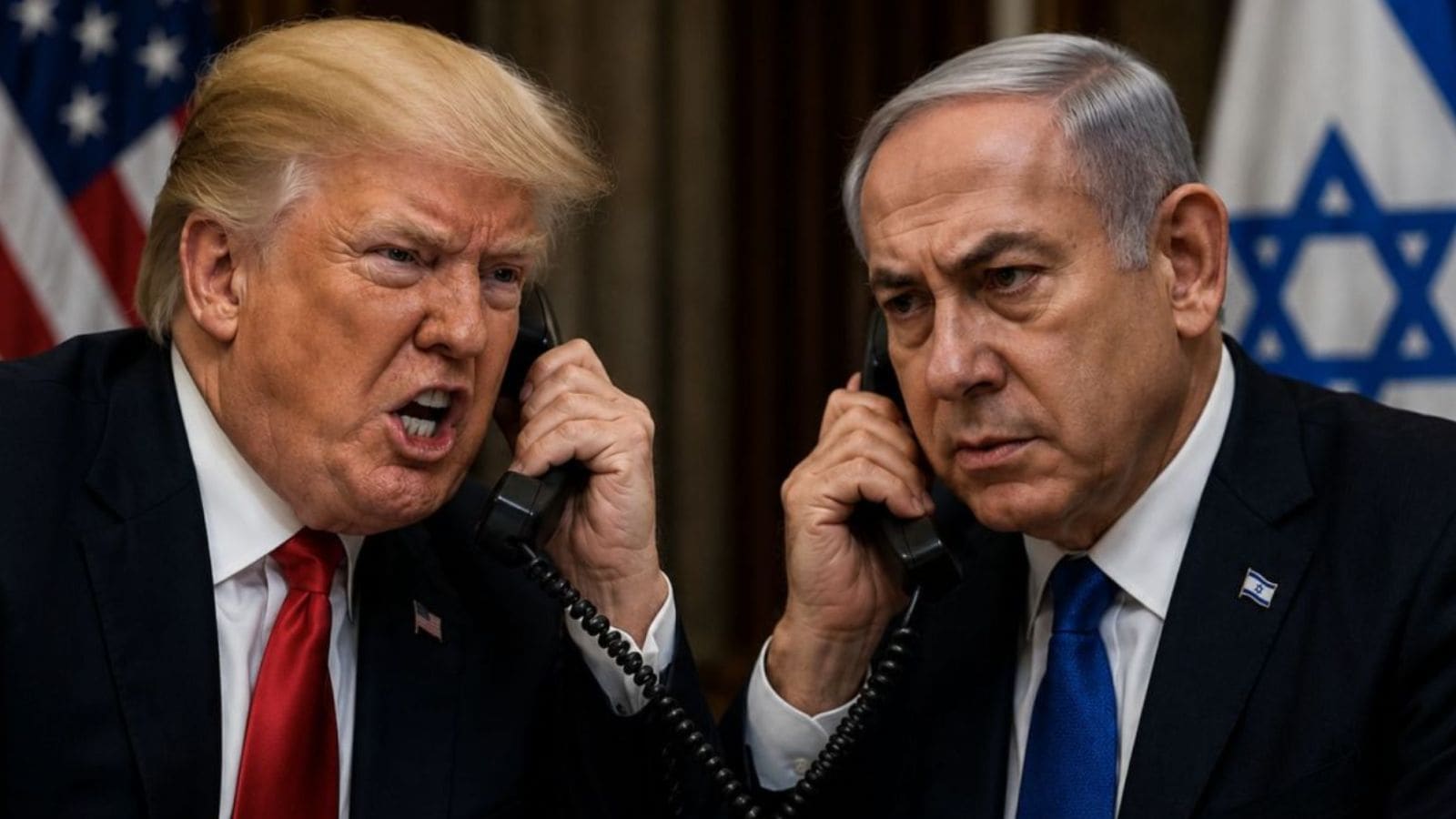
The foreign policy establishment is having another collective meltdown. The catalyst? Donald Trump told Benjamin Netanyahu to "be careful" because further military strikes on Iran could lead to international isolation.
Mainstream commentators rushed to their keyboards to spin the standard narrative. They claim this signals a massive rift, a sudden shift toward isolationism, or a warning that Israel is about to lose its most powerful ally.
They are misreading the room entirely.
The media loves a dramatic falling-out. It sells clicks. But viewing these comments through the lens of a conventional diplomatic dispute is a fundamental error. This is not a fracturing of an alliance. It is a masterclass in leverage, theater, and strategic ambiguity. The lazy consensus assumes public warnings equal policy shifts. Decades of observing geopolitical posturing reveal that the loudest public statements are often smoke screens for entirely different private calculations.
The Illusion of the Isolation Threat
Let us dismantle the core premise of the panic: the idea that further action against Tehran will uniquely isolate Tel Aviv.
Israel has operated under the threat of diplomatic isolation for decades. The United Nations passes resolutions against it routinely. The International Criminal Court issues warrants. European capitals issue sternly worded condemnations. Yet, the core security architecture holding the Middle East together remains intact.
Why? Because geopolitics runs on hard power and mutual self-interest, not popularity contests.
Gulf states like Saudi Arabia and the United Arab Emirates do not coordinate security or engage in back-channel diplomacy with Israel because they love the country. They do it because they fear a nuclear-armed Iran. A few more airstrikes will not suddenly make Riyadh view Tehran as a trustworthy partner. The underlying security imperatives do not change because of a public warning from a U.S. leader.
Imagine a scenario where Israel completely halts all operations against regional proxies tomorrow to please global public opinion. Does its strategic position improve? No. It weakens. It signals vulnerability to adversaries who operate on the principle of maximum pressure. The true danger is not the abstract concept of isolation; it is the tangible loss of deterrence.
Decoding the Transactional Warning
To understand the warning, you have to understand the speaker. This is not traditional statecraft rooted in ideological alignments or institutional treaties. It is transactional diplomacy.
When a warning is issued about isolation, it is not a moral judgment on the strikes themselves. It is a tactical move designed to achieve three specific outcomes:
- Establishing Preemptive Blame Control: If the situation escalates into a wider regional conflict that disrupts global oil markets or drags western forces into a prolonged engagement, the groundwork has been laid. The administration can say, "We warned them." It protects domestic political capital.
- Creating Strategic Ambiguity: By publicly signaling restraint, it keeps adversaries guessing. If Iran believes the U.S. is pulling the leash back on Israel, it might lower its guard or miscalculate, creating a tactical opening for the very strikes that were publicly discouraged.
- Maximizing Negotiating Leverage: Every public disagreement is a chip to be traded later. It signals to Tel Aviv that American support is asset-backed, not an open checkbook. It forces the beneficiary to come to the table ready to offer concessions on other fronts, such as post-conflict governance or regional trade routes.
I have watched political analysts misinterpret this dynamic for years. They treat public statements as binding policy documents. In the real world, public rhetoric is just a tool to manipulate the negotiating environment.
The Flawed Premises of Middle East Analysis
The "People Also Ask" columns and cable news segments are currently flooded with variations of the same flawed questions. Let us answer them directly by exposing the faulty logic behind them.
Will the U.S. abandon Israel if strikes continue?
No. The defense relationship is structural, not emotional. It is hardcoded into intelligence sharing, joint missile defense development, and industrial supply chains. No administration can unplug that network overnight without severely damaging its own intelligence architecture in the region. The relationship changes shape, but it does not break.
Can diplomacy alone contain Iran?
The premise that words or economic carrots can permanently halt a regional power's nuclear ambitions is fundamentally flawed. Sanctions have slowed the timeline, but they have not altered the strategic objective. The only thing that has historically paused the program is the credible threat of overwhelming military force. Public warnings that soften that threat actually increase the likelihood of miscalculation.
The Real Risk Nobody Wants to Discuss
The real danger here is not that Israel gets isolated. The danger is the erosion of clear deterrence thresholds.
When the superpower signals hesitation—even as a tactical ploy—it creates a vacuum. In the Middle East, vacuums are filled immediately by actors who do not play by western diplomatic rules. Moscow, Beijing, and Tehran thrive in the gray zones created by ambiguous public signaling.
If the goal is stability, the current approach of public scolding paired with private reassurances is highly inefficient. It creates confusion among allies and emboldens adversaries. The downside to this contrarian view is obvious: it requires accepting a higher level of public tension and dismissing the comfort of diplomatic niceties. It requires acknowledging that peace in the region is kept by a balance of fear, not a consensus of opinion.
Stop looking at the headlines as a sign of a collapsing alliance. Start looking at them as a high-stakes negotiation broadcast in real-time. The warning is not a stop sign. It is a price tag.