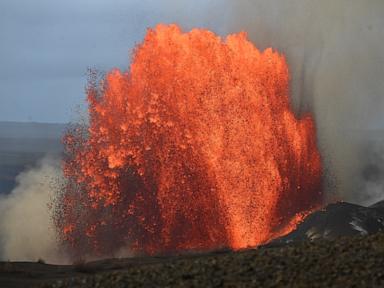
The media loves a good fire-and-brimstone headline. Every time Kilauea pushes a plume of molten rock into the Hawaiian sky, the press rushes to declare a historic crisis, counting "record-breaking" lava fountaining episodes like they are boxes of cereal on a conveyor belt. They paint a picture of an unprecedented geological anomaly, a volcano spiraling out of control, and a travel destination on the brink of erasure.
It is a spectacular exercise in missing the point.
The obsession with counting individual fountaining episodes as isolated "records" is bad science. It applies human bureaucratic metrics to an open-system basaltic volcano that operates on continuous, fluid dynamics. By focusing entirely on the visual theatre of high-pressure bursts, commentators ignore the fundamental plumbing of the East Rift Zone and the Halemaʻumaʻu crater. They are treating a perfectly normal pressure-release valve like a ticking bomb.
If you want to understand what is actually happening on the ground in Hawaii, you need to stop looking at the sparks and start looking at the plumbing.
The Flaw of the Episode Count
The current mainstream narrative relies on a lazy consensus: more frequent fountaining episodes must mean a more dangerous, unstable volcano. This stems from a basic misunderstanding of how shield volcanoes function.
Volcanologists at the Hawaiian Volcano Observatory (HVO) have documented for decades that Kilauea is an open-vent system. Magma moves relatively freely from the summit reservoir down the rift zones. When you see a rapid succession of lava fountains, you are not witnessing an escalation toward a catastrophic explosion. You are witnessing a highly efficient, self-regulating pressure release.
Think of it as a plumbing system with a slightly sticky relief valve. As magma ascends, dissolved gases—primarily water vapor, carbon dioxide, and sulfur dioxide—expand rapidly due to the drop in confining pressure. This process, called exsolution, drives the lava upward.
- The Media View: Ten distinct fountaining episodes in a month means ten separate volcanic crises.
- The Volcanological Reality: Ten episodes in a month means the magmatic conduit is open, clear, and successfully venting gas before it can build up to a devastating, closed-system overpressure event like the 1980 eruption of Mount St. Helens.
When we look back at the historical data, particularly the landmark 1983–2018 Puʻu ʻŌʻō eruption sequence, we see that episodic fountaining is a standard phase of early-to-mid-stage eruptive cycles. Calling a high number of episodes a "record-breaking threat" is like saying your car engine is breaking records for heat because the radiator is doing its job on a hot summer day.
The Danger of Misinterpreting Volcanic Hazards
The hyper-fixation on lava fountains creates a dangerous distortion in public perception. Lava fountains are highly localized. They look terrifying on evening news broadcasts, but their physical footprint is remarkably small. Unless you are standing directly on the rim of the active crater—which is heavily restricted by the National Park Service anyway—a 100-foot or even a 500-foot fountain poses almost zero direct threat to human life.
By focusing the public's attention on the visual spectacle of the fountain, the real, insidious hazards are completely ignored.
Vog and Gas Emissions
The true disruption during high-fountaining phases isn't the molten rock; it is the invisible gas. Sulfur dioxide ($SO_2$) emissions react with oxygen, moisture, and sunlight in the atmosphere to produce volcanic smog, or "vog." Vog drifts downwind, wrapping around the southern and western sides of the Big Island. It triggers respiratory distress, ruins agricultural crops, and contaminates catchment water systems. Yet, because a hazy sky doesn't generate clicks like a wall of liquid fire, it gets relegated to a footnote.
Pele's Hair and Tears
High-velocity fountains shred liquid lava into the air, where the wind stretches it into fine, aerodynamic glass fibers known as Pele's hair. These glass shards can drift for miles. They settle in pastures where livestock ingest them, causing internal bleeding, and they clog residential water filtration systems. This is a tangible, economic hazard happening miles away from the crater, completely ignored by tourists chasing a photo of the fountain.
| Hazard Type | Media Coverage | Actual Geographic Footprint | Economic/Health Impact |
|---|---|---|---|
| Lava Fountaining | High | Extremely Localized (Within Crater) | Minimal (Barring Infrastructure Inundation) |
| Vog ($SO_2$) Emissions | Low | Regional (Downwind Island-Wide) | High (Respiratory Illness, Agriculture Damage) |
| Pele's Hair/Tears | Negligible | Miles Downwind | Moderate (Livestock Danger, Water Contamination) |
Dismantling the Volcano Tourism Narrative
The travel industry reacts to these "record" announcements with a mix of opportunistic marketing and absolute panic. Whenever a new fountaining streak is reported, two flawed questions dominate travel forums: "Is it safe to visit Hawaii right now?" and "Where can I go to stand next to the lava?"
Both questions are built on false premises.
First, Hawaii is a massive island chain, and even the Big Island itself is larger than all the other islands combined. An eruption inside Hawaii Volcanoes National Park has as much impact on the safety of a resort in Kona or Maui as a thunderstorm in New York has on a sunny day in Boston. The blanket fearmongering hurts local businesses that rely on steady, responsible tourism.
Second, the desire to get close to active fountaining is driven by a lack of respect for the sheer volatility of volcanic terrain. I have spent years tracking geological events, and I have watched tourists bypass safety barriers to get a better smartphone video of a active flow field. They do not realize that the solid-looking crust they are walking on can be a hollow lava tube ceiling, barely inches thick, hovering over a $2,000^\circ\text{F}$ river of liquid rock.
When you treat a volcanic eruption like a theme park attraction, you become a liability to the local search and rescue teams who have to risk their lives pulling you out of a collapse feature.
The Mechanical Reality of Kilauea's Plumbing
To truly appreciate Kilauea without the sensationalism, we have to look at the mass balance of the volcano. The U.S. Geological Survey uses tiltmeters, GPS networks, and satellite radar (InSAR) to measure the inflation and deflation of the volcano's summit.
[Deep Magma Supply] ---> [Summit Reservoir (Inflation)] ---> [Conduit Open] ---> [Fountaining/Venting (Deflation)]
                                 ^                                                    |
                                 |____________________________________________________|
When the summit inflates, it means magma is entering the shallow reservoir faster than it can escape. When an episode of fountaining begins, the tiltmeters almost immediately show deflation. The volcano is breathing. The high episode count simply indicates a rapid, highly responsive cycle of inhalation and exhalation. It is a sign of systemic equilibrium, not systemic failure.
If the fountaining abruptly stops while deep magma supply remains high, that is when you should start paying closer attention. That indicates a blockage, a shift in the stress field, or an intrusion into a new area of the rift zone where the ground may not be prepared to handle the pressure without significant ground deformation or fracturing.
Stop Treating Geology Like a Reality Show
The media's obsession with breaking records is turning geology into a reality television show, where every episode needs a higher stakes hook than the last. Kilauea doesn't care about records. It doesn't keep score. It is an active shield volcano doing exactly what it has done for over 200,000 years: building land through a continuous, dynamic process of pressure accumulation and release.
If you want to be a smart consumer of science communication, stop counting the fountains. Look at the deformation graphs. Check the gas emission rates. Pay attention to the wind patterns carrying the vog. Dismiss the clickbait articles trying to convince you that the island is tearing itself apart, and start looking at Kilauea for what it actually is—a masterclass in planetary thermodynamics, functioning completely within its normal parameters.
Pack your bags, go to the Big Island, buy a meal from a local business affected by the bad press, look at the glow from a safe, designated distance, and respect the fact that the earth is completely indifferent to our metrics of sensation.