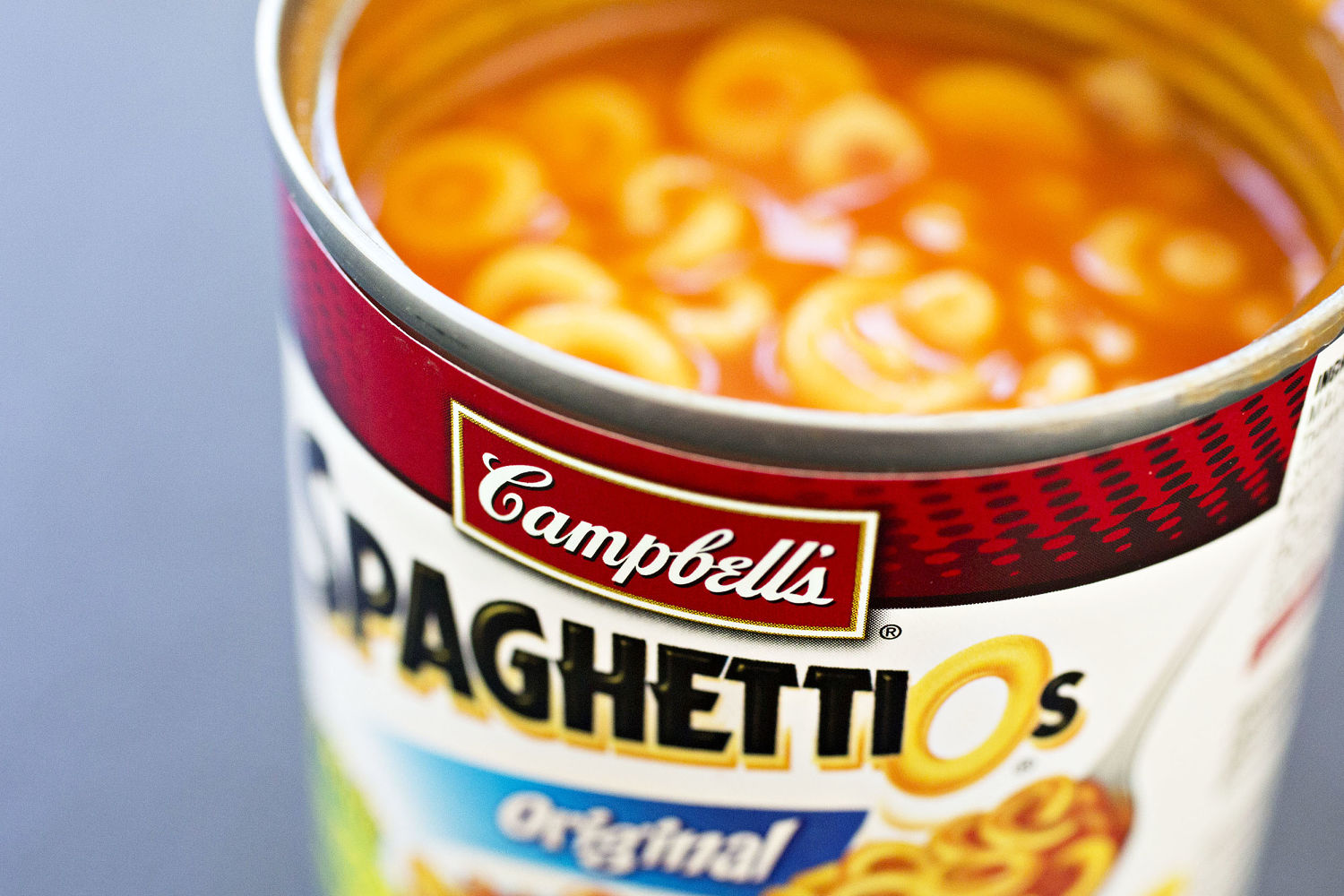
The internet loves a good grocery store horror story. A consumer opens a can of processed comfort food, spots something moving, panics, and calls a lawyer. Within hours, the headlines scream about worms, parasites, and multi-million dollar lawsuits. The public reacts with predictable outrage, vowing to never step foot in the canned goods aisle again.
It is a comforting narrative. It pits the pure, innocent consumer against the negligent, faceless corporation.
It is also almost certainly nonsense.
When you look at the actual mechanics of modern, industrial food manufacturing, the "parasite in a sealed can" story falls apart under the slightest friction of logic and physics. The lazy consensus among media outlets is to treat every gross-out lawsuit as a systemic failure of food safety. In reality, these stories are a masterclass in statistical illiteracy, legal opportunism, and a fundamental misunderstanding of thermal processing.
Stop asking how the worm got into the can. Start asking how anyone believes it could survive the trip.
The 250-Degree Wall of Reality
To understand why the viral panic is manufactured, you have to look at the commercial sterilization process. This is not a backyard kitchen. This is highly regulated, industrial thermodynamics governed by the Food and Drug Administration (FDA) under strict Low-Acid Canned Foods regulations.
When a product like canned pasta is processed, it undergoes a commercial sterility cook inside a massive industrial pressure cooker called a retort.
- The Temperature: Products are heated to temperatures typically ranging from 240°F to 250°F (115°C to 121°C).
- The Pressure: The system operates under intense pressure to prevent the cans from bursting at those temperatures.
- The Time: This heat is maintained long enough to achieve what food scientists call a 12-D reduction of Clostridium botulinum.
Let's translate that scientific jargon. A 12-D reduction means the process is mathematically calculated to reduce the most heat-resistant, deadly bacterial spores by twelve orders of magnitude. It is a statistical annihilation of microscopic life.
Consider the biology of a nematode or a common fly larva. These organisms are primarily water and protein. They do not possess specialized, heat-resistant endospores like botulinum. If a biological organism enters the raw ingredients before processing, the retort environment does not preserve it. It disintegrates it. It liquefies it.
The idea that a worm could go through a commercial retort cycle and emerge on the other side intact, recognizable, and moving violates the basic laws of thermal degradation. Protein denatures at much lower temperatures. By the time the can cools, any organic hitchhiker has been converted into unrecognizable, sterile mush indistinguishable from the sauce itself.
The Anatomy of Post-Opening Contamination
If the biology cannot survive the can, how do these incidents happen?
I have spent years analyzing operational supply chains and quality assurance protocols. When a consumer finds a living organism in a product that went through a retort process, there are only three viable explanations. Every single one of them shifts the blame away from the manufacturing plant.
1. The Breached Seal
The integrity of a tin can relies entirely on the double seam. If a can is dropped during shipping, dented on a store shelf, or micro-fractured during distribution, the hermetic seal fails.
Once air gets in, opportunistic pests can get in too. This is not a failure of the factory floor; it is a failure of logistics and retail handling. A microscopic pinhole is a highway for flies to deposit eggs after the product has left the manufacturer's control.
2. The Kitchen Timeline Gap
People open a can, leave it on a counter, walk away, and come back hours later. In a warm kitchen, a housefly requires only a matter of minutes to land on exposed food and deposit larvae.
When the consumer returns to make their meal, they notice the movement and immediately assume it came from inside the matrix of the product. Memory is highly fallible, and human psychology desperately prefers blaming a corporate entity over admitting a personal hygiene lapse.
3. The Litigious Lottery
Let's be brutally honest about the legal system. Filing a lawsuit costs very little. Generating a viral headline costs nothing.
Many corporate legal departments prefer to settle small-scale, gross-out claims for a few thousand dollars rather than spend fifty thousand dollars defending their thermal processing records in court. This creates a perverse incentive structure. It turns the gross-out claim into a low-stakes lottery ticket for unscrupulous actors.
What the "Defect Action Levels" Actually Mean
When pushed on the math of food safety, critics love to point to the FDA's Food Defect Action Levels. This is a favorite weapon of sensationalist journalists who want to shock audiences with the revelation that the government "allows" a certain amount of insect fragments or rodent hairs in food.
Yes, the guidelines exist. No, they do not mean what you think they mean.
| Food Product | FDA Defect Action Level Definition | The Economic Reality |
|---|---|---|
| Canned Tomatoes | Average of 10 or more fly eggs per 500 grams | Natural agricultural products grow outdoors; total eradication is a biological impossibility. |
| Wheat Flour | Average of 75 or more insect fragments per 50 grams | Post-harvest processing removes the vast majority, but microscopic trace elements remain harmless. |
| Chocolate | Average of 60 or more insect fragments per 100 grams | Sorting raw cacao beans is highly efficient, but zero-tolerance would collapse the global food supply. |
The defect levels are not a permission slip for filth. They are a recognition of natural agricultural realities. Crops grow outside in dirt, under the sun, where insects live. If a manufacturer attempted to achieve an absolute zero-tolerance policy for microscopic insect fragments, the global food supply chain would collapse overnight. Prices would skyrocket by 10,000%, and billions of people would starve.
These fragments are completely harmless, sterilized by processing, and invisible to the naked eye. They are a far cry from the intact, wriggling worms featured in sensationalized legal complaints.
The Hidden Cost of Pure Risk Aversion
There is a dark side to our collective obsession with these fake food scares. When a brand faces a massive, viral public relations crisis based on a bogus contamination claim, they are forced to react.
They do not react by fixing a non-existent worm problem. They react by adding redundant, chemical-heavy preservative steps, over-packaging products in non-recyclable plastics, and driving up operational costs that are ultimately passed down to the poorest consumers who rely on affordable canned goods.
We are trading affordable, shelf-stable nutrition for the illusion of absolute sterility.
Every time you share a sensationalized headline about a moving parasite in a canned product, you are participating in a collective lowering of the public IQ. You are ignoring basic physics, discarding microbiology, and rewarding legal extortion.
The next time you see a lawsuit claiming someone found a living creature inside a commercially canned, shelf-stable product, do not gag. Do not vow to change your diet. Look at the data, remember the 250-degree retort oven, and recognize the story for what it truly is: a failure of basic education playing out in the court of public opinion.
If you want to protect yourself from foodborne illness, stop worrying about the sterile contents of a sealed tin can. Go home, wash your can opener, and put a lid on your food while it sits on the counter. That is where the real vectors live.


