Maritime choke points operate on precise hydrological inputs that dictate global supply chain velocity. When meteorological anomalies alter precipitation baselines, the financial impact propagates through container freight rates, vessel routing choices, and inventory holding costs. The Panama Canal authority manages a complex water allocation problem where every transit requires millions of gallons of freshwater to cycle through lock chambers, ultimately discharging into the ocean. Operating this infrastructure during prolonged dry periods driven by climate oscillations exposes the fragility of relying on gravity-fed freshwater lakes for interoceanic transit.
The Hydrological Equation of Transits
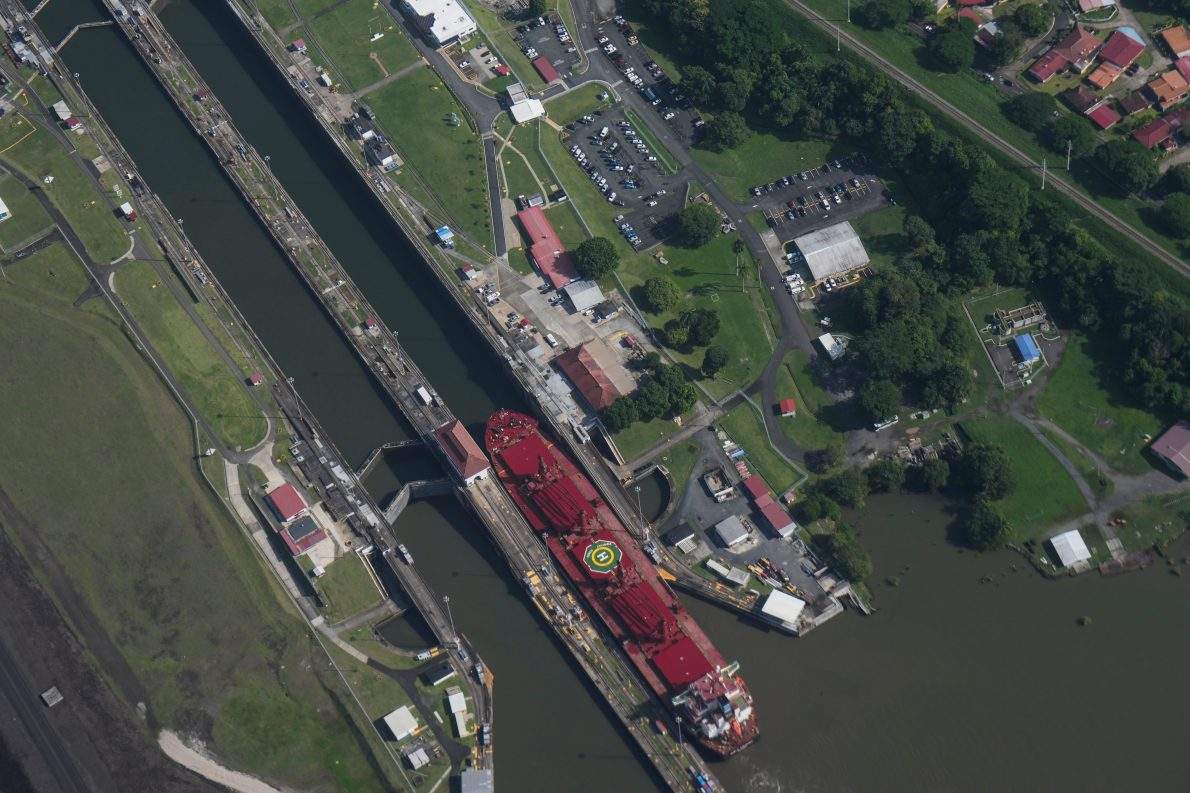
The operational capacity of the Panama Canal depends on the water volume of Gatun Lake and Alajuela Lake. These artificial reservoirs supply the municipal needs of Panama City and the operational requirements of the lock system. Each vessel passage demands approximately 52 million gallons of freshwater. Under normal climatic conditions, annual rainfall replenishes these reservoirs during the wet season, creating a storage buffer for the dry months.
When El Nino phenomena suppress precipitation, the inflow rate drops below the consumption and evaporation rates. Lake levels decline toward critical operating thresholds. If draft restrictions are implemented, container ships must lighten their cargo loads to reduce their depth in the water. Carriers respond by offloading cargo at port terminals, transferring weight via rail or alternative vessels, and reloading on the other side of the isthmus. This light-loading requirement reduces the effective carrying capacity of global trade loops, forcing operators to deploy additional hulls to move the same volume of goods.
The Cost Function of Transit Restrictions
Supply chain optimization models rely on predictable transit times and fixed asset costs. Capacity caps disrupt these variables by introducing deterministic delays and variable spot market pricing.
- Slot Auctions: As daily transit slots decrease, the Panama Canal authority utilizes an auction mechanism for remaining availability. Bidding wars drive slot acquisition costs from standard baseline fees to millions of dollars for individual transits.
- Routing Divergence: Shippers facing prohibitive slot fees or excessive wait times evaluate alternative routes. The Suez Canal serves as an alternative for Asian-to-East Coast North American trade under specific fuel price regimes, while landbridge rail alternatives across the United States absorb some intermodal volume.
- Inventory Carrying Costs: Extended queues at anchorage areas outside the canal entrances increase transit variance. Supply chain managers compensate for this variance by inflating safety stock levels, shifting operational expenditures toward long-term warehouse storage.
These cost adjustments do not distribute evenly across the market. Large liner companies with long-term service contracts and dedicated fleet allocations absorb slot fee volatility better than independent operators dependent on the spot market. Smaller operators face margin compression or are priced out of the lane entirely, driving market consolidation among major carriers.
Operational Adaptations and Capital Constraints
Addressing structural water deficits requires capital allocation toward engineering solutions rather than temporary operational cutbacks. The primary challenge is decoupling lock operations from direct rainfall dependency.
Water-saving basins constructed alongside newer locks capture and reuse a significant portion of the water discharged during a transit cycle. However, older lock lanes lack these basins, consuming high volumes of fresh water with every cycle. Retrofitting the legacy system or developing entirely new external water sources involves massive capital expenditure and prolonged environmental impact assessments. Desalination plants or pumping water from unexploited river basins present engineering challenges and high energy costs, which would permanently alter the baseline toll structure of the waterway.
Carriers adjust vessel utilization rates to match maximum allowable drafts. Designing next-generation container ships requires optimizing beam-to-draft ratios to maintain cargo capacity while reducing physical immersion depth. However, ships already afloat cannot be physically altered, leaving fleet deployment strategy as the primary lever for shipping lines. Operators shuffle vessel classes across global loops, assigning smaller tonnage to restricted trade lanes while deploying mega-max vessels exclusively on unrestricted deep-water corridors.
Long-Term Market Reconfiguration
Persistent hydrological volatility alters strategic decision-making for port authorities, logistics providers, and manufacturing hubs across the Americas. Supply chains dependent on just-in-time delivery models cannot absorb unpredictable multi-week delays at critical geographic bottlenecks. Shippers increasingly diversify entry points, routing cargo through West Coast North American ports followed by domestic rail distribution, or establishing dual-sourcing manufacturing nodes that bypass trans-isthmian shipping lanes.
Investment decisions shift toward predictive analytics platforms capable of modeling long-range meteorological patterns against vessel scheduling databases months in advance. Stakeholders must price water availability directly into operational risk models, treating hydro-meteorological data with the same scrutiny traditionally reserved for fuel price volatility and macroeconomic demand indicators.