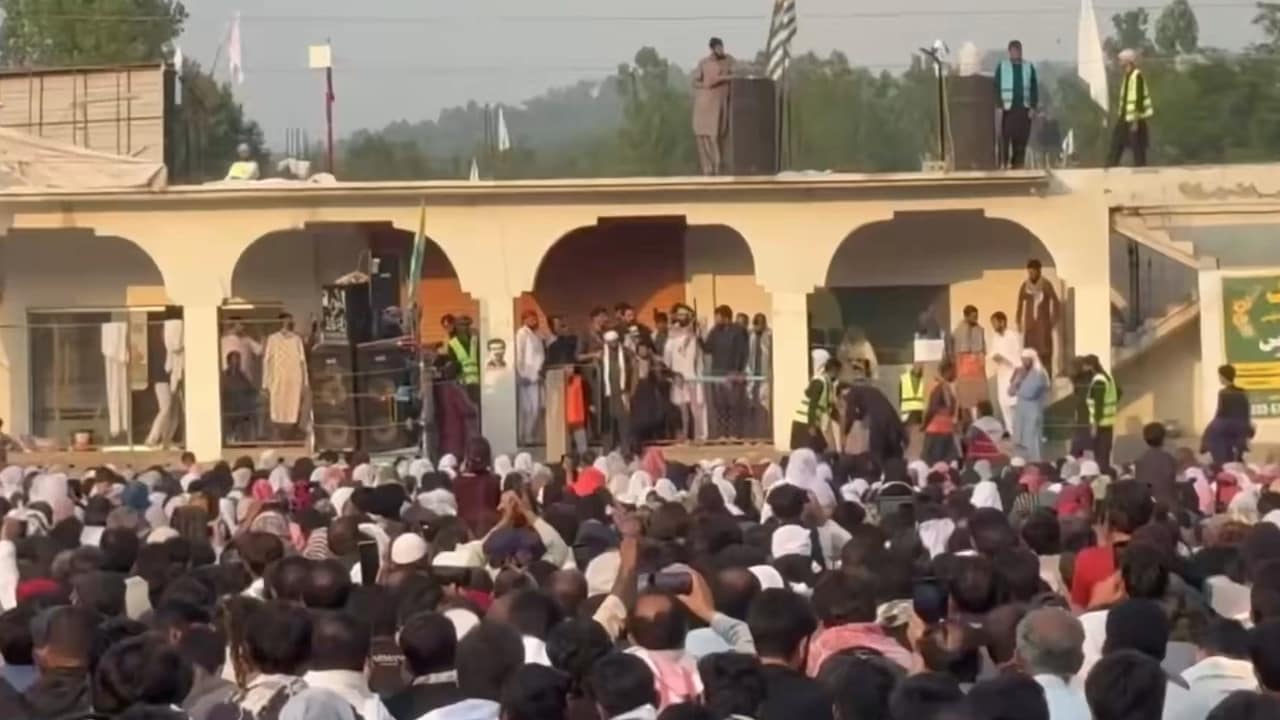
Ground realities in Pakistan-occupied Kashmir have shattered the carefully manufactured narrative that Islamabad has spent decades feeding the world. For years, the Pakistani establishment painted the region as a content, integrated territory. That illusion is completely gone. Thousands of angry protesters are camping out at Zero Point along the Line of Control near Rawalakot, and their message to the federal government is brutal, clear, and loud. Pakistan-occupied Kashmir is not part of Pakistan, and if the state continues to squeeze the region, the locals will simply look across the border toward India.
This isn't a minor economic skirmish or a routine local strike. It's a full-blown rebellion against state overreach and decades of systematic resource draining. Led by the Joint Awami Action Committee, the movement has pushed Islamabad into a corner. When prominent leaders like Sardar Amman Khan look at a massive crowd and openly declare that Pakistan needs the region more than the region needs Pakistan, you know the political calculus has permanently shifted.
Why the Streets of Rawalakot are Exploding
The immediate trigger for the current unrest looks like a fight over local governance, but the roots run way deeper. The Joint Awami Action Committee initially mobilized people over soaring electricity tariffs, heavy-handed wheat smuggling, and a massive shortage of subsidized flour. But the ultimate breaking point arrived when Islamabad insisted on preserving 12 legislative assembly seats reserved specifically for refugees living in other parts of Pakistan.
Locals know exactly what that reservation means. It is a tool for the federal government to rig regional elections and plant a compliant puppet administration in Muzaffarabad. When the region's supreme court ruled that these seats were constitutionally protected, the public felt entirely cheated.
PoK Crisis Timeline:
May 2023: First major protests over electricity bills and flour shortages.
May 2024: Long march to Muzaffarabad forces temporary state concessions.
June 2024: Massive sit-in begins at Rawalakot over rigged legislative seats.
June 2026: Supply blockade by Islamabad sparks threats to reopen Indian trade routes.
The response from the Pakistani state was predictable and heavy-handed. They labeled the protest group a terrorist organization, deployed paramilitary troops, and cut off mobile internet. Dozens of civilians have died in clashes over the last few weeks. Rather than breaking the spirit of the protesters, the brutality just made them angrier. Now, the demands have shifted from cheaper food to basic sovereignty.
The Strategic Threat of Reopening the Line of Control
The most dangerous development for Islamabad is the explicit threat to bypass Pakistan entirely. Protesters accuse the military of enforcing a silent blockade by stopping trucks carrying flour, rice, and critical medicines at regional checkpoints. The state thinks it can starve the movement into submission.
They miscalculated. Protesters at the Line of Control sit-in have openly warned Prime Minister Shehbaz Sharif and Army Chief Asim Munir that they don't need Pakistani rations. If the state continues to choke supply lines, the local leadership threatens to open the historical trade routes directly into Indian-administered Kashmir.
Think about what that means for regional geopolitics. For decades, Pakistan used the territory as a strategic buffer and a launchpad for foreign policy narratives. If the local population actively invites Indian trade and intervention to escape starvation, Pakistan's historical stance on the Kashmir issue completely collapses. The locals are leveraging their geographic position, telling the federal government that their loyalty isn't guaranteed and certainly can't be bought with dwindling subsidies.
Diverting Blame to India Won't Fix a Broken Economy
Faced with a massive domestic failure, the Pakistani establishment did exactly what it always does. Defence Minister Khawaja Asif tried to blame New Delhi for orchestrating the unrest. India's Ministry of External Affairs immediately shot back, calling the allegations a desperate attempt to hide Islamabad's own systemic failures and human rights abuses.
Honestly, the Pakistani government's line of reasoning is insulting to the intelligence of the people living there. Indian covert ops didn't cause skyrocketing inflation. New Delhi didn't cut off the fuel supply to Poonch and Muzaffarabad, leaving petrol pumps completely dry and forcing residents onto the black market. The local population is furious because they live next to mega-hydroelectric projects but cannot afford their own electricity bills. They watch their resources get extracted to power Punjab while they struggle to find basic antibiotics in closed pharmacies.
"Someone once put a box of matches in a monkey's hands, and it set everything on fire," leader Sardar Amman Khan told a roaring crowd. "They keep saying that Kashmiris should first prove their loyalty. Remember this—Kashmir is not the property of Pakistan."
The Immediate Next Steps for Regional Stability
The current stand-off cannot be solved by cutting off internet access or sending in more paramilitary forces. If Islamabad wants to prevent a total administrative collapse before the upcoming July 27 legislative elections, it needs to shift its strategy immediately.
- Lift the Supply Squeeze: The state must immediately allow the unhindered flow of food, fuel, and medical supplies through the main transit corridors. Starving a population only guarantees a more violent uprising.
- Drop the Terror Labels: De-escalate the political rhetoric by removing the terrorist designation from civil rights groups like the Joint Awami Action Committee. You can't negotiate a peaceful resolution while calling the other side terrorists.
- Address the Reserved Seats Issue: Find a political compromise on the 12 refugee seats that locals view as a tool for electoral manipulation. True regional autonomy must be respected, not managed from a boardroom in Islamabad.
If the Pakistani establishment refuses to open honest channels of dialogue, the situation at Zero Point will turn even uglier. You cannot rule a strategic border territory through economic strangulation and expect the population to stay quiet forever. The old tricks of invoking external enemies aren't working anymore, and time is rapidly running out.


