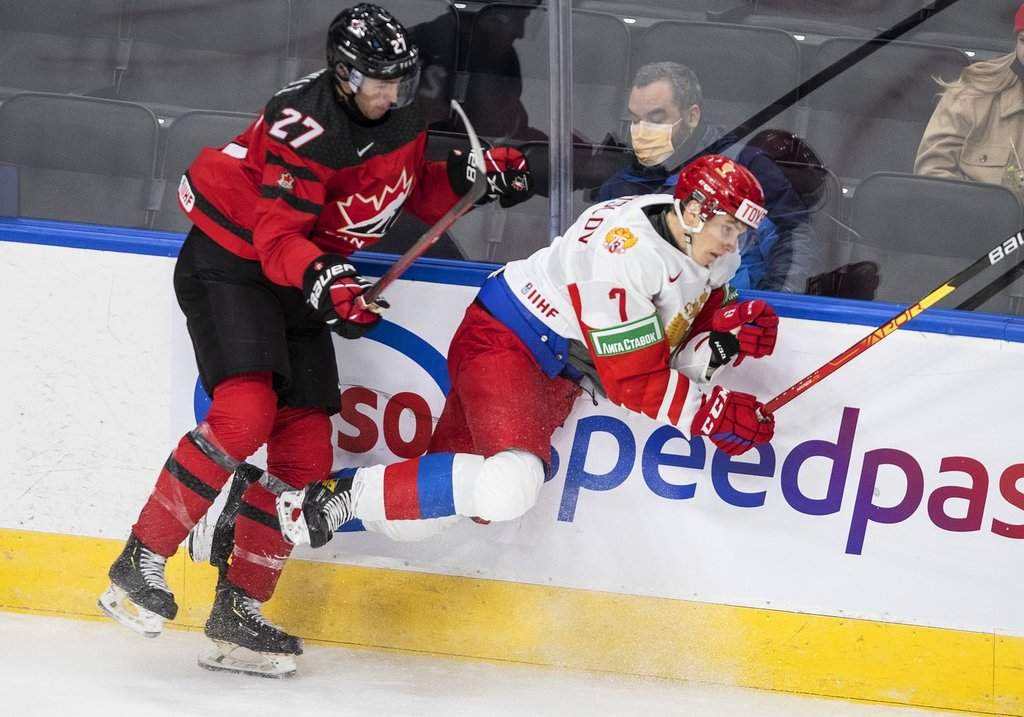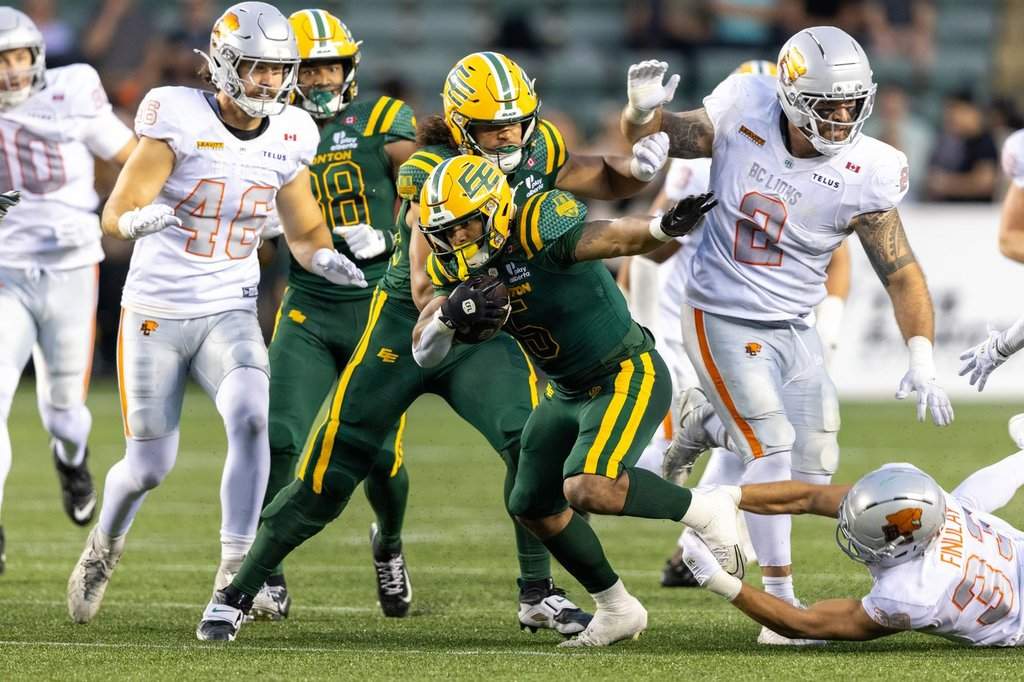
Every Sunday, sixty thousand voices scream until their throats bleed while twenty-two men hurl themselves into each other at twenty miles per hour. It is a collision of pure kinetic force. Bones creak. Turf flies. For decades, the sound of that impact—the sharp, rifle-crack noise of plastic shell striking plastic shell—was the undeniable soundtrack of autumn in America.
Then came the quiet muffling.
If you watched an NFL game recently, you likely noticed something strange resting atop the glossy, multi-million-dollar helmets of a few linemen or linebackers. It looks like a soft, ribbed cushion stretched over the hard shell, transforming sleek gridiron gladiators into something resembling oversized, padded mushrooms. It is called a Guardian Cap.
To the casual fan taking a sip of beer on a Sunday afternoon, it is a minor visual quirk. To the men wearing them—and to the neuroscientists watching from the lab—it is a battleground where modern physics, billion-dollar entertainment, and human mortality collide.
The Crack of Polycarbonate
Stand on an NFL sideline during a goal-line stand. You do not just hear the impact; you feel it in your chest. When a 300-pound offensive tackle crashes into a 290-pound defensive end, the energy generated is roughly equivalent to a sedan colliding with a brick wall at low speed.
For nearly a century, helmet design focused entirely on preventing catastrophic skull fractures. The hard polycarbonate shell was engineered to distribute the force of a sudden blow over a wider surface area so the bone underneath would not shatter. It worked. Skulls stopped fracturing on the field.
Instead, a different, invisible crisis emerged.
Inside that hard exterior, wrapped in three layers of protective tissue and floating in fluid, sits the human brain. A hard helmet stops the skull from cracking, but it does nothing to stop the brain from continuing to move forward at high velocity when the head stops instantly. It sloshes. It twists. The delicate neural pathways stretch like rubber bands until they fray.
Multiply that single collision by seventy snaps a game, through sixteen weeks of practice, over twelve years of a career. The math is brutal. It is not always the single, dramatic, knockout blow that steals a retired player's memories or changes his personality in his forty-fifth year. It is the cumulative friction of thousands of sub-concussive thuds—the daily grind of small collisions that nobody notices because nobody falls to the turf.
Softening the Blow
Enter the Guardian Cap.
The concept relies on a principle simple enough for a middle school science fair: soft outer layers absorb kinetic energy before it reaches the hard shell. By adding a lightweight, urethane fabric cover that flexes on impact, the cap acts as a decelerator.
Imagine dropping a raw egg onto a hardwood floor. It shatters. Now imagine wrapping that same egg in a thin layer of memory foam before dropping it. The foam compresses, extending the time it takes for the egg to come to a complete stop by just a few milliseconds. In the brutal realm of impact mechanics, those milliseconds are everything.
According to data collected by the NFL during mandatory practice usage, the physics checks out. When one player wearing a cap hits another player wearing a cap, the force transmitted to the head drops by as much as twenty percent. If only one player is wearing the cap, the force is still reduced by roughly ten percent.
Ten to twenty percent sounds modest on paper. But consider a hypothetical veteran offensive lineman—let us call him Marcus—entering his eighth year in the trenches. Marcus takes roughly 1,000 head impacts per season between practice and games. A twenty percent reduction in force across those 1,000 blows is not a statistical rounding error. It is the difference between going home to play catch with your kids at fifty, or asking your spouse where you left your keys for the fifth time in a morning.
Yet, despite these numbers, the debate on sidelines across the country is far from settled.
The Psychology of Armor
Armor has a strange effect on the human mind.
In the early twentieth century, when rugby players wore leather caps and no shoulder pads, they tackled differently. They led with their shoulders, kept their heads back, and wrapped their arms around their opponents. The moment hard helmets were introduced, players began using their heads as weapons. The perceived invulnerability of the equipment changed the behavior of the athlete.
Risk compensation theory suggests that when you make a system safer, human beings naturally increase their risk-taking behavior to offset the safety gain. Give a driver anti-lock brakes, and they drive closer to the car in front of them. Give a linebacker a softer helmet, and does he tackle harder, confident that his head is protected?
Some coaches worry quietly about this paradox. If a player feels invincible beneath layers of soft foam, will he abandon proper tackling form? Will he throw his body into collisions he might have otherwise avoided?
Then there is the aesthetic problem—a factor that sounds superficial until you remember that professional sports are a multi-billion-dollar visual spectacle. Football helmets are iconic branding. They bear the star, the G, the lightning bolt. They represent history. Slipping a bulky, soft cover over that shiny legacy feels, to some traditionalists, like putting a bumper sticker on a vintage Ferrari.
Players themselves are split. Some cite the added weight—just a few ounces, but enough to feel like a drag on a hot August afternoon when neck fatigue sets in by the fourth quarter. Others complain about the heat retention, as the soft cap insulates the helmet, trapping sweat inside.
"It feels different," a veteran linebacker admitted during training camp. "It changes the balance just enough that you notice it when you turn your head fast."
The Stakes Beyond Sunday
Walk into the quiet living room of a retired player suffering from late-stage neurological decline, and the debate over helmet aesthetics vanishes instantly.
The tragic truth of brain trauma in contact sports is its delayed delivery. The bill for Sunday afternoon does not arrive when the lights go down at the stadium. It arrives twenty years later in quiet kitchens, in forgotten names, in sudden outbursts of unexplained anger, and in the terrifying realization that your own mind is retreating from you.
The medical community remains cautious. Researchers readily point out that while outer padding reduces linear acceleration—the straight-on force of a hit—it is far less effective at stopping rotational acceleration. Rotational force occurs when the head is struck at an angle, twisting the brain stem. That shearing force is often what causes the most severe long-term damage, and a soft cap wrapped around a hard shell can only do so much to prevent a neck from twisting.
A Guardian Cap is not a magic shield. It does not turn a violent, collision-heavy sport into a harmless game of chess. No piece of equipment ever will.
But waiting for a perfect solution while men suffer irreversible damage every autumn is a luxury the sport no longer has. The introduction of these soft caps into actual regular-season games marks a fundamental shift in how the league views its duty of care. It is an admission that the old ways—relying solely on rule changes and post-injury management—were not enough.
The Changing Profile of the Game
Change in football comes agonizingly slow, buried under layers of tradition, macho culture, and financial momentum.
A decade ago, a player wearing a padded cap during a game would have been mocked relentlessly by opponents and fans alike. Today, as young stars pull them on before running onto the field under the bright lights of national television, the narrative is shifting. The macho ideal of sacrificing your body—and your future—for four quarters of entertainment is breaking down.
Modern athletes are business entities, husband, and fathers who want to enjoy the fortunes they earn long after their final contract expires. Protecting the brain is no longer seen as a sign of weakness; it is an act of career preservation.
Stand back and watch the game now. The rifle-crack sound of helmet-on-helmet contact is fading, replaced slowly by a duller, softer thud. It takes some getting used to. The helmets look bulky, almost alien against the sleek uniforms.
Yet beneath those padded covers are minds—intricate networks of memories, love, fear, and ambition—trying to navigate the most violent game on earth and make it home intact. The physics may still be under debate, and the design will undoubtedly evolve, but the direction is clear. The era of unshielded impact is coming to a close, one muffled hit at a time.