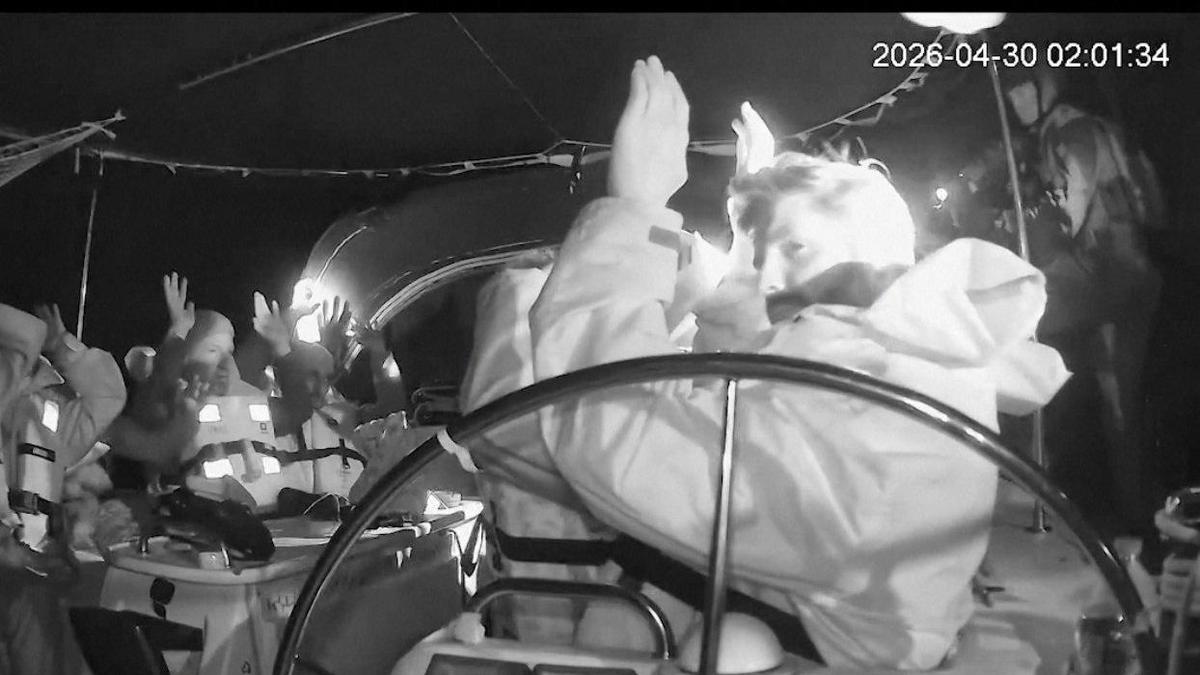
The interception of a 20-vessel maritime convoy carrying 175 activists toward the Gaza coastline represents a significant shift in Mediterranean asymmetric naval engagement. This event is not merely a border enforcement action; it is a case study in the friction between unconventional maritime logistics and state-level blockade protocols. Understanding the outcome requires an analysis of the logistical constraints of the flotilla, the naval doctrine of the Israel Defense Forces (IDF), and the specific operational triggers that led to the non-violent boarding of twenty disparate crafts.
The Flotilla Composition and Logistical Vulnerability
The fleet’s operational failure was inherent in its structural diversity. Unlike a singular, high-capacity vessel, a 20-boat convoy introduces exponential complexity in coordination and speed matching. The fleet consisted of small-to-medium motor vessels, each carrying an average of 8.75 individuals. This distribution created a massive radar cross-section while offering zero defensive or evasive capability.
We can categorize the flotilla’s failure through three distinct operational bottlenecks:
- Velocity Asymmetry: The convoy’s speed was dictated by its slowest vessel. In naval terms, this makes the entire formation a "sitting duck" for high-speed interceptors. By maintaining a slow pace to keep the 20 boats together, the activists inadvertently allowed the IDF to dictate the time and location of the engagement within the maritime exclusion zone.
- Communication Fragility: Coordinating 20 civilian vessels requires high-frequency or satellite communication systems that are easily jammed or monitored. Once the IDF established electronic superiority, the flotilla's ability to act as a cohesive unit dissolved, turning a "convoy" into 20 isolated targets.
- Personnel-to-Vessel Ratio: With only 175 activists spread across 20 boats, the "manning density" was extremely low. This meant that once naval commandos boarded a vessel, the occupants lacked the physical numbers to offer even passive resistance that would delay the seizure of the helm.
The Doctrine of Graduated Interception
The IDF’s tactical response followed a standard escalation ladder designed to minimize international legal friction while ensuring 100% containment. The operation was not a sudden strike but a choreographed sequence of maritime "shaping."
Phase I: Verbal and Electronic Deterrence
Before physical contact, the naval units utilized the International Maritime Distress Frequency (Channel 16) to issue formal warnings. This establishes the legal basis for "interference with innocent passage" under the San Remo Manual on International Law Applicable to Armed Conflicts at Sea. Simultaneously, electronic countermeasures were likely deployed to sever the activists' ability to livestream the approach, controlling the narrative before the physical boarding began.
Phase II: Kinetic Maneuvering and Box-In Tactics
The use of fast-attack craft allowed the IDF to perform "shouldering" maneuvers. By physically occupying the sea space directly in the path of the flotilla, the intercepting forces forced the activists to either change course or risk a collision, which would legally shift the liability for the engagement onto the flotilla captains.
Phase III: The Boarding Sequence
The boarding of 20 vessels simultaneously requires significant manpower and platform synchronization. Reports indicate that the interception occurred without casualties, suggesting the use of "Ship-to-Ship" boarding rather than "Fast-Rope" (helicopter) insertion. By coming alongside each boat, the navy could overwhelm the small crews (averaging 8-9 people) with superior numbers instantly, securing the engine rooms and navigation bridges before resistance could organize.
The Economic and Political Cost Function
Every maritime interception carries a high "unit cost" for the state. To intercept 20 boats, the IDF likely deployed a task force including Sa'ar-class corvettes, Shaldag-class fast patrol boats, and specialized naval commando units.
The resource drain includes:
- Fuel and Maintenance: The high-speed maneuvering of patrol craft incurs significant mechanical wear compared to standard littoral patrols.
- Personnel Allocation: Executing 20 simultaneous boardings requires hundreds of trained personnel, diverting them from other high-readiness sectors.
- Legal and Administrative Processing: Each of the 175 activists must be processed through immigration and security screenings, creating a massive administrative bottleneck at the port of Ashdod.
The activists’ strategy relies on this cost function. They aim to make the "cost of interception" higher than the "cost of entry." However, the state views the cost of a breached blockade as infinite, as it would set a precedent for the unregulated flow of goods and personnel. Therefore, the state will always over-allocate resources to ensure a 100% interception rate, regardless of the financial inefficiency.
Geographic Constraints of the Gaza Maritime Zone
The geography of the Eastern Mediterranean simplifies the task of the intercepting force. The Gaza coastline is relatively short and lacks natural cover or complex archipelagic features.
- The 20-Nautical Mile Limit: International agreements and subsequent security restrictions have defined a narrow corridor for "permitted" fishing, which has been further constricted by the blockade. The flotilla's approach was tracked long before it hit the 12-mile territorial water mark.
- Bathymetry: The shallow waters near the coast limit where larger vessels can maneuver, but the IDF’s fleet is specifically optimized for these littoral conditions.
Strategic Divergence: Narrative vs. Materiality
There is a fundamental mismatch between the goals of the activists and the goals of the military.
The Activist Logic: Success is defined by the attempt and the subsequent media coverage. The seizure of the 20 boats is viewed by the organizers as a tactical loss but a strategic win, as it forces the blockade back into the global news cycle.
The Military Logic: Success is defined by denial of access. From a security perspective, the 175 activists are secondary to the cargo. The primary mission is the inspection of the 20 hulls for contraband, weapons, or dual-use materials. The lack of violence in this specific interception suggests that the IDF has refined its "soft-power boarding" techniques, moving away from the high-friction methods seen in previous years that resulted in international crises.
Predictive Analysis of Future Maritime Challenges
The shift from one or two large ships to 20 smaller boats suggests a move toward "swarming" tactics. While this specific attempt was neutralized, it points toward a future where activists may attempt to use 50 or 100 even smaller, autonomous, or semi-autonomous crafts to overwhelm the navy's boarding capacity.
If the number of vessels exceeds the number of available boarding teams, the IDF will face a "saturation crisis." To counter this, the military is likely to invest in:
- Remote Disabling Technologies: Long-range acoustic devices (LRADs) or water cannons to deter boarding without physical contact.
- Propeller Entanglement Systems: Using nets or lines to foul the engines of small boats, neutralizing them without the need for a boarding party.
- Autonomous Interceptors: Using unmanned surface vessels (USVs) to mirror the movements of flotilla boats, reducing the manpower required for "shouldering" maneuvers.
The current model of boarding and towing 20 vessels to Ashdod is sustainable for a convoy of this size, but it represents the upper limit of manageable civilian maritime friction. Any further increase in vessel count will require a shift from physical seizure to technological immobilization at sea.
The state’s ability to maintain the blockade now rests on its capacity to process high volumes of low-threat targets without generating the "martyrdom" imagery that activists require to fuel their campaign. The success of the 20-boat interception proves that current naval doctrine is sufficient for "linear" threats, but the strategic vulnerability remains in the potential for non-linear, high-volume maritime swarms that bypass the current boarding-heavy paradigm.



