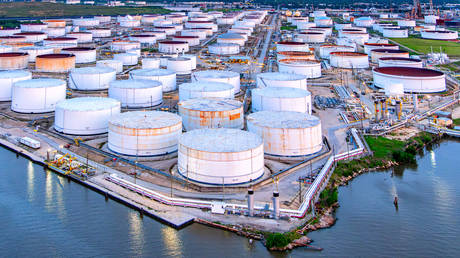
The resumption of full operations at Libya’s Zawiya refinery is not merely a restoration of industrial capacity; it is the recalibration of a fragile domestic supply chain that dictates the state’s internal stability. As the largest functioning refinery in the country, with a nameplate capacity of approximately 120,000 barrels per day (bpd), Zawiya serves as the primary pressure valve for the National Oil Corporation (NOC). Its return to service mitigates the prohibitive costs of importing refined products and reduces the "supply-gap friction" that historically triggers civil unrest.
The Triad of Operational Interdependence
The functionality of the Zawiya complex is governed by three distinct but inextricably linked variables. If any single pillar fails, the refinery enters a state of forced attrition or total shutdown. Meanwhile, you can find similar developments here: Madrid Plays a Dangerous Game of Economic Diplomacy with Beijing.
- Upstream Feedstock Continuity: The refinery is the primary downstream recipient of Sharara crude. This creates a linear vulnerability. Any protest or blockade at the Sharara field, located in the Murzuq Basin, manifests as a feedstock deficit at Zawiya within 48 to 72 hours, depending on pipeline inventory levels.
- Infrastructure Integrity and Maintenance Debt: Decades of intermittent conflict and underinvestment have created a high "maintenance debt" ratio. Operational restarts are high-risk events where thermal stress and pressure fluctuations can expose latent metallurgical fatigue in distillation units.
- Physical Security and Sovereign Control: The refinery sits at the intersection of rival political jurisdictions. Its operational status is often used as a kinetic bargaining chip by local armed groups. "Full operations" indicates a temporary alignment of political interests rather than a permanent resolution of security risks.
The Cost Function of Downstream Interruption
When Zawiya is offline, the NOC is forced into a "negative arbitrage" position. Libya exports crude at market prices but must use those proceeds to import refined gasoline and diesel at a premium to satisfy domestic demand. This creates a massive fiscal drain on the Central Bank of Libya.
The economic damage is calculated through the Fuel Subsidy Displacement Cost. Because Libya heavily subsidizes domestic fuel, every liter of imported gasoline is sold at a loss. When the refinery operates at its 120,000 bpd capacity, it reduces the volume of these high-cost imports. The delta between the cost of domestic refining and the cost of landed imports represents the "Operational Dividend" of the Zawiya restart. This dividend is currently the only mechanism keeping the state’s current account deficit from expanding beyond manageable thresholds. To explore the full picture, check out the excellent report by Investopedia.
Mechanical Bottlenecks and Product Yield
Zawiya’s output is heavily weighted toward fuel oil and middle distillates. The refinery’s configuration—primarily atmospheric distillation—limits its ability to produce high-octane gasoline without significant blending or secondary processing.
- The Light-Heavy Imbalance: Zawiya is optimized for light, sweet crudes like Sharara. If forced to process heavier grades, the yield of high-value transport fuels drops significantly, increasing the production of low-value residual fuel oil.
- Storage Saturation: The refinery’s throughput is gated by its export terminal and domestic truck-loading racks. If the distribution network is blocked by civil strikes, storage tanks reach "top-of-tank" status, forcing a ramp-down of the distillation towers regardless of feedstock availability.
- Utility Failure: Refineries require constant, stable power and steam. Zawiya’s reliance on the aging national grid means that a localized blackout can cause an unplanned "trip" of the entire system, requiring days of purging and reheating before operations can resume safely.
Geopolitical Proximity and the Mediterranean Sink
Zawiya is more than an inland asset; its coastal location makes it the center of the Mediterranean’s "shadow economy." The proximity of the refinery to major maritime lanes has historically facilitated the illicit diversion of refined products.
The "resumption of full operations" creates an immediate increase in regional fuel liquidity. This has a secondary effect on the localized political economy. Armed factions controlling the perimeter of the refinery gain access to refined product flows, which function as a hard currency in a devalued Libyan Dinar environment. Analysts must view the refinery's throughput not just as a statistical success for the NOC, but as a redistribution of economic power among the actors who control the geography surrounding the facility.
Risk Assessment of the "Full Operations" Designation
The term "full operations" is often a political statement rather than a technical one. In the context of Libyan energy, this state is characterized by extreme volatility. To quantify the durability of this restart, we must track the Operational Stability Index (OSI), which accounts for:
- Feedstock Volatility: The frequency of valve closures on the pipelines from the south.
- Labor Relations: The status of payments to refinery workers and security contractors.
- Foreign Exchange Access: The NOC’s ability to secure letters of credit for spare parts and chemical catalysts required for the refining process.
The current restart appears to be driven by a tactical truce between the Tripoli-based government and regional power brokers. However, this truce does not address the underlying structural deficit in Libya’s energy infrastructure. The refinery is currently operating on "extant hardware" with little to no redundancy.
Strategic Realities for Global Energy Markets
While Zawiya primarily serves domestic needs, its status ripples through global markets by altering Libya’s net export profile. When Zawiya is functional, more of Libya’s high-quality light sweet crude is consumed internally, slightly reducing the volume available for European Mediterranean (Med) refiners. Conversely, a functional Zawiya reduces Libya’s demand for European refined products, particularly gasoline from Italian and Greek refineries.
The "Net Export Effect" of the Zawiya restart is a tightening of the sweet crude market and a loosening of the refined product market in the Mediterranean basin.
The immediate strategic priority for the NOC is the "Ring-fencing" of the Zawiya-Sharara corridor. This requires a shift from reactive security—responding to blockades—to proactive institutional integration, where local stakeholders are given a formal, transparent share of the "Operational Dividend." Without this transition from a militia-guarded asset to a state-protected utility, the current resumption of operations should be treated as a transient peak in a long-term cycle of instability. Investors and regional partners must discount "full capacity" figures by a 15-20% "instability premium" when forecasting annual Libyan output.