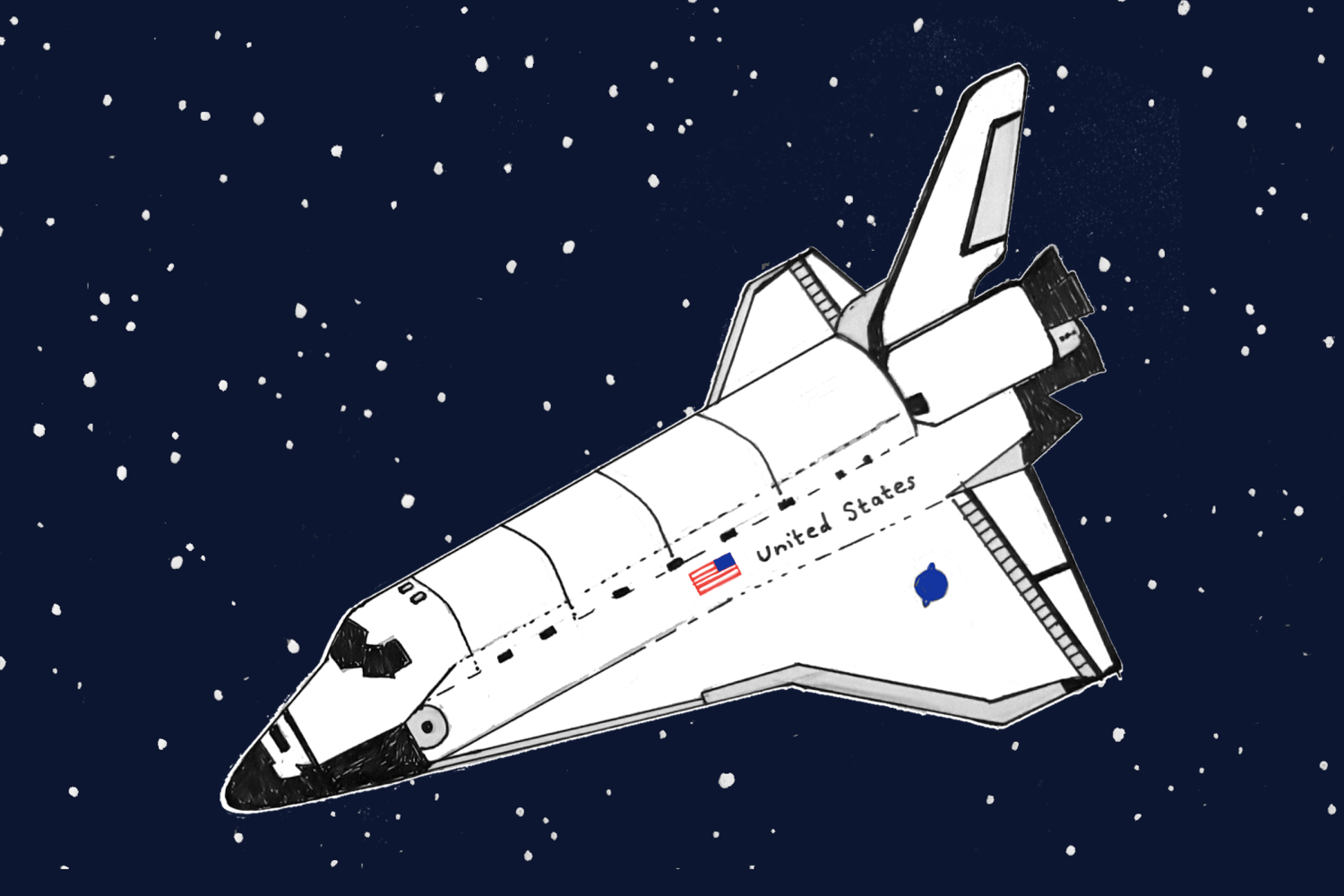
The Space Shuttle Endeavour (OV-105) was not merely an orbital transport vehicle; it was an integrated microgravity habitat and heavy-lift assembly platform designed to bridge the gap between terrestrial engineering and orbital permanence. Understanding the operational reality of Endeavour requires stripping away museum-tour nostalgia and examining the vehicle through two distinct analytical lenses: its structural evolution as the final orbiter built in the NASA fleet, and the granular human-factors engineering required to keep a crew alive inside a pressurized aluminum hull moving at 17,500 miles per hour. By dissecting the physical systems of the mid-deck, flight deck, and payload bay alongside the thermodynamic and biological constraints of orbital living—down to the seemingly trivial problem of storing wheat tortillas—we uncover the foundational rules of closed-loop spaceflight logistics.
The Structural Evolution of OV-105
Authorized by Congress in 1987 to replace Space Shuttle Challenger, Endeavour entered service in 1992 with a distinct engineering advantage over its sister ships: it was constructed using structural spares from Discovery and Atlantis, integrated with fourth-generation avionics and mechanical upgrades learned from a decade of flight data. While legacy orbiters required extensive tear-downs to retrofit modern hardware, Endeavour was born with a higher baseline of operational capability.
To evaluate Endeavour’s physical architecture, one must divide the orbiter into three functional zones, each governed by different pressure, thermal, and structural constraints:
- The Forward Fuselage (Crew Module): A 2,325-cubic-foot pressurized aluminum shell suspended inside the outer thermal protection structure. Isolated from the exterior skin by four structural attach points to accommodate thermal expansion during reentry, this module houses the flight deck, mid-deck, and lower equipment bay.
- The Mid-Fuselage (Payload Bay): An unpressurized 60-foot by 15-foot cargo hold structurally dominated by the payload bay doors, which serve a dual purpose. Beyond enclosing cargo during ascent and reentry, the interior surfaces of these doors house the deployable radiators of the Active Thermal Control System. Opening the doors in orbit is not an option for payload deployment; it is a mandatory thermodynamic requirement to prevent the orbiter from cooking itself via internal electronics heat.
- The Aft Fuselage: The propulsion and reaction control hub housing the three Space Shuttle Main Engines (SSMEs), the Orbital Maneuvering System (OMS) pods, and the auxiliary power units.
Endeavour introduced critical mechanical upgrades that defined the latter half of the shuttle program. Most notably, it was the first orbiter equipped with a 40-foot-diameter drag chute, deployed at touchdown to reduce landing rollout distance by up to 2,000 feet and minimize wear on the carbon-carbon brake assemblies. It also featured updated plumbing and electrical connections that enabled Extended Duration Orbiter (EDO) missions—allowing Endeavour to stay in orbit for up to 16 days instead of the standard 7 to 10—and later integrated the Station-to-Shuttle Power Transfer System (SSPTS), enabling the orbiter to draw electrical power from the International Space Station (ISS) rather than relying solely on its internal cryogenic hydrogen and oxygen fuel cells.
Flight Deck Avionics and Cockpit Ergonomics
The transition from analog electro-mechanical instrumentation to the Multifunction Electronic Display System (MEDS)—commonly referred to as the glass cockpit—transformed how astronauts interacted with Endeavour. Originally, the shuttle flight deck contained over 2,000 switches, circuit breakers, and mechanical gauges. During high-workload phases like ascent and entry, cognitive load on the commander and pilot was extreme.
Endeavour underwent the MEDS modification during its 1998–1999 Orbiter Maintenance Down Period, replacing the legacy Cathode Ray Tube (CRT) displays and mechanical tape meters with eleven full-color, flat-panel Liquid Crystal Displays (LCDs). This upgrade did not merely modernize the aesthetic; it fundamentally altered failure-mode management:
- Information Consolidation: Critical flight parameters—attitude, altitude, velocity, and angle of attack—were synthesized onto single primary flight displays, eliminating the need for pilots to scan across disparate mechanical dials during hypersonic reentry.
- Redundancy and Reconfigurability: If a display unit failed during a critical flight phase, any of the remaining ten screens could be instantly reconfigured to display the lost data stream, removing single-point display failures from the cockpit architecture.
- Weight and Power Reduction: Eliminating heavy mechanical gauges and high-voltage CRTs shaved roughly 75 pounds off the forward fuselage and reduced the thermal load inside the flight deck, easing the burden on the cabin cooling loops.
Behind the primary pilot stations lies the aft flight deck, the operational nerve center for orbital proximity operations and payload manipulation. Here, astronauts operated the Remote Manipulator System (Canadarm) using rotational and translational hand controllers while looking through overhead and aft-facing windows into the payload bay. Because depth perception in the harsh, unfiltered sunlight and pitch-black shadows of low Earth orbit is notoriously unreliable, astronauts relied on a combination of closed-circuit television cameras mounted on the arm and mathematical range-rate data from the orbiter’s Ku-band rendezvous radar to berth multi-ton station modules within fractions of an inch.
Mid-Deck Habitation and the Physics of Microgravity Living
Directly beneath the flight deck sits the mid-deck, the living quarters, galley, airlock, and primary storage locker array for the crew. In a zero-gravity environment, volume is utilized three-dimensionally; floors, walls, and ceilings lose their terrestrial definitions and become equally viable surfaces for equipment mounting and crew restraint.
The mid-deck’s spatial economy is dictated by the modular locker system. Forty-two standard avionics-style lockers line the forward bulkhead, storing everything from spare lithium hydroxide canisters for carbon dioxide scrubbing to crew clothing and scientific payloads. Every item inside these lockers is secured with hook-and-loop fasteners (Velcro), bungee cords, or custom foam inserts. Without gravity to hold objects down, an unsecured bolt, pen, or water droplet becomes an airborne hazard capable of fouling air filtration intakes or damaging sensitive optical sensors.
The Waste Collection System
Sanitation in microgravity is an exercise in fluid dynamics and airflow engineering. Because liquids do not drain downward, Endeavour’s Waste Collection System (WCS)—located immediately adjacent to the mid-deck entrance hatch—relies entirely on differential air pressure to separate and transport human waste.
- Liquid Waste: Crew members use a contoured funnel attached to a hose generating a high-velocity airstream. Urine is drawn into a rotary separator that spins the fluid to create artificial gravity, separating the liquid from the air. The air is filtered through activated charcoal and bacteria traps before returning to the cabin, while the liquid is routed to a wastewater storage tank for periodic overboard dumping (which instantly flash-freezes into ice crystals in the vacuum of space).
- Solid Waste: The commode seat features a four-inch-diameter opening—significantly smaller than terrestrial toilets—requiring precise alignment, often practiced beforehand on Earth using a positional trainer equipped with a closed-circuit camera. High-speed airflow pulls solid waste into a porous collection bag. Once the user finishes, a compaction mechanism compresses the bag, and the entire canister is exposed to the vacuum of space via an external vent line, freeze-drying the waste to neutralize bacterial growth and odor for the duration of the mission.
Thermal and Acoustic Realities
Despite the extreme cold of space, the interior of Endeavour’s mid-deck is a noisy, tightly regulated thermal environment. Hundreds of avionics boxes, cooling fans, water pumps, and air circulation blowers run continuously, generating an ambient noise level averaging 60 to 65 decibels—roughly equivalent to a loud conversation or a running vacuum cleaner. Over a two-week mission, this constant acoustic baseline induces crew fatigue and complicates verbal communication.
Thermally, the cabin is maintained between 65 and 80 degrees Fahrenheit via a closed-loop water-and-Freon heat exchange system. Because hot air does not rise in microgravity, convective heat transfer ceases to exist. Without continuous forced-air circulation driven by cabin fans, a sleeping astronaut would quickly become enveloped in a stagnant bubble of their own exhaled carbon dioxide and body heat, risking hypoxia and hyperthermia. Consequently, sleep stations—whether vertical bunks mounted to the mid-deck wall or sleeping bags tethered to lockers—must be positioned directly in the path of active ventilation ducts.
Food Systems Engineering and the Tortilla Protocol
Nutritional logistics in spaceflight are governed by three strict constraints: mass, volume, shelf life without refrigeration, and particulate containment. Endeavour lacked a refrigerator or freezer for crew provisions; all food had to remain shelf-stable at ambient cabin temperatures for the entire mission profile, including pre-launch quarantine periods.
The shuttle galley, located on the port side of the mid-deck, functioned as a hydration and thermal conditioning station rather than a kitchen. It contained a water dispenser capable of metering precise volumes of ambient or heated water (derived as a pure byproduct of the orbiter's electricity-generating fuel cells) and a forced-air convection oven warmed to roughly 180 degrees Fahrenheit. Foods were categorized into thermostabilized pouches (retort pouches), rehydratable freeze-dried packages, irradiated meats, and natural-form foods like nuts and dried fruits.
Why Bread Failed and Tortillas Won
In the early days of spaceflight, standard sliced bread was quickly banned from orbital menus. Bread presents two severe operational hazards in microgravity:
- Particulate Contamination: Cutting or biting into leavened bread generates microscopic crumbs. In zero gravity, these crumbs do not fall to the floor; they remain suspended in the cabin air, where they can be inhaled into an astronaut's lungs, lodge in eyes, or bypass coarse screens to clog avionics cooling fans.
- Rapid Staling and Mold Growth: Standard bread has a short shelf life and high moisture activity, making it prone to rapid staling or fungal spoilage during multi-week mission timelines where launch delays can extend storage time by weeks.
The engineering solution—requested initially by Mexican payload specialist Rodolfo Neri Vela in 1985 and subsequently adopted as a staple across all shuttle and ISS missions—was the flour tortilla. Tortillas possess high structural integrity, low crumb generation when torn or bitten, and exceptional packing density, allowing dozens of units to be vacuum-sealed into flat, space-efficient stacks.
The Science of Orbital Tortilla Preservation
Standard commercial tortillas from a grocery store cannot survive a space shuttle mission; they typically mold or become brittle within two to three weeks. To achieve the required 12-to-18-month shelf life mandated by NASA’s Space Food Systems Laboratory, orbital tortillas undergo specific formulation and packaging modifications:
- Water Activity ($a_w$) Control: Microbial growth requires unbound water. Food scientists reformulate the dough using humectants like glycerin and specific ratios of fats and leavening agents to bind water molecules chemically. This lowers the water activity below the threshold required for mold and bacterial proliferation while keeping the tortilla pliable and soft.
- Oxygen Scavenging and Modified Atmosphere Packaging (MAP): Tortillas are sealed inside multi-layer barrier pouches composed of aluminum foil and polymers that prevent oxygen and moisture transmission. Before heat-sealing, the pouch is flushed with nitrogen gas to displace ambient oxygen, and an iron-powder oxygen-scavenger packet is inserted inside to absorb any residual oxygen molecules, halting oxidative rancidity and aerobic spoilage.
- Thermal Processing: Once sealed, the packages often undergo mild thermal pasteurization or high-pressure processing to eliminate dormant fungal spores without baking the dough into a cracker.
Once in orbit, astronauts must adhere to strict handling protocols when opening a tortilla pack. Because the vacuum-sealed pouch is pressurized relative to the exterior or tightly compressed, opening it too quickly can cause loose flour dust to puff into the cabin. Crew members slice the top edge with surgical scissors tethered to the galley, extract a single tortilla, and immediately fold and clip the pouch shut. To prepare a meal, an astronaut anchors a pouch of thermostabilized chicken or beef to the galley wall with Velcro, uses a pair of scissors to cut open the pouch—relying on the surface tension of the sauce to keep the food inside the packet—and spoons the contents onto the tortilla, rolling it into a self-contained delivery vehicle that traps fluids and solids simultaneously.
Mission Legacy and the Museum Transition
Endeavour’s operational career spanned 25 flights between May 1992 and June 2011, logging 299 days in space, 4,671 orbits, and 122.8 million miles. Its mission manifest reflects the structural maturation of the shuttle program:
- STS-49 (Maiden Flight, 1992): Demonstrated the orbiter’s extreme orbital maneuvering and EVA capabilities during the dramatic three-person spacewalk to manually capture and repair the stranded Intelsat VI satellite.
- STS-61 (1993): Executed the first Hubble Space Telescope servicing mission, installing corrective optics that salvaged the observatory's primary mirror flaw.
- STS-88 (1998): Initiated the orbital assembly of the International Space Station by mating the US-built Unity node to the Russian Zarya control module.
- STS-134 (Final Flight, 2011): Delivered the Alpha Magnetic Spectrometer (AMS-02) to the ISS, cementing Endeavour’s role as the heavy-lift workhorse of low Earth orbit.
Following its final landing at Kennedy Space Center on June 1, 2011, Endeavour underwent a rigorous decommissioning process to transition from an active spacecraft to a static museum artifact at the California Science Center in Los Angeles. Technicians drained all toxic hypergolic propellants (monomethylhydrazine and nitrogen tetroxide) from the OMS and Reaction Control System tanks, purged the cryogenic fuel cell lines, removed the three Space Shuttle Main Engines (replacing them with replica nozzles while the real engines were reassigned to the Space Launch System program), and deactivated pyrotechnic separation bolts.
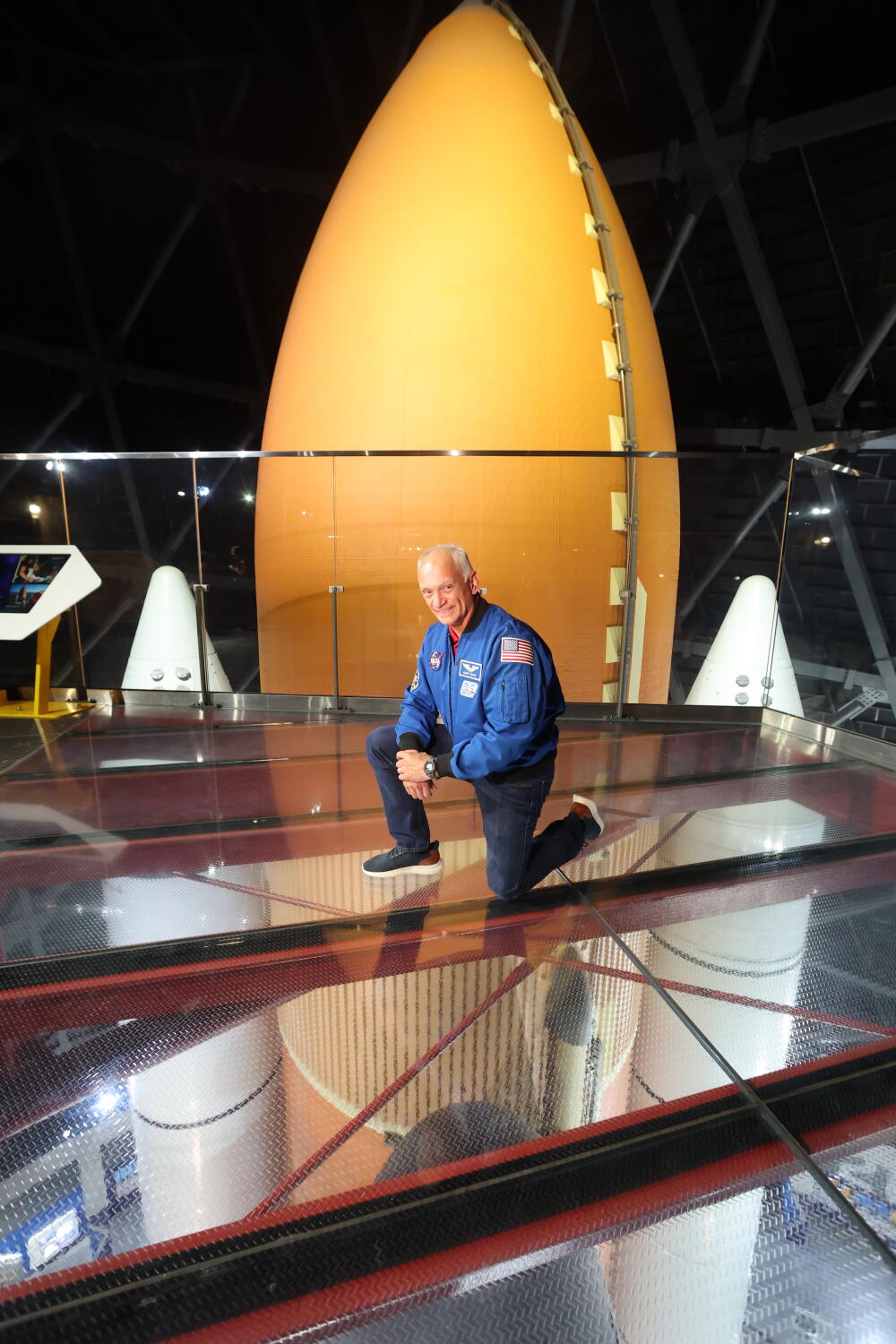
Even in retirement, the engineering constraints of OV-105 dictate how it is displayed. Currently being integrated into the Samuel Oschin Air and Space Center in a vertical, launch-ready stack—mated to an authentic External Tank (ET-94) and two Solid Rocket Boosters—the orbiter requires specialized seismic isolation pads beneath its structural foundation. The very same airframe designed to withstand the 3-G structural loads of hypersonic ascent must now be engineered to survive a magnitude 8.0 earthquake in Southern California without buckling its composite payload bay doors or cracking its brittle silica thermal protection tiles.
Strategic Takeaways for Closed-Loop System Design
The operational history of Space Shuttle Endeavour offers a definitive blueprint for modern aerospace and extreme-environment engineering:
- Design for Modularity Over Monolithic Perfection: Endeavour outperformed its predecessors because its airframe and avionics architectures anticipated future upgrades. Modern spacecraft and remote habitats must prioritize open-architecture data buses and standardized mechanical interfaces so subsystems can be swapped as technology evolves without scrapping the primary hull.
- Treat Human Factors as Core Mechanical Systems: In a closed environment, crew nutrition, waste management, and acoustic comfort are not secondary amenities; they are critical failure points. A flaw in food packaging—such as bread crumbs—directly threatens environmental life-support hardware. System engineers must evaluate every consumable item for its secondary physical interactions with air filtration, thermal loops, and crew cognitive load.
- Optimize for Packaging Density and Multi-Use Utility: Every gram launched into orbit carries an exponential propellant penalty. As demonstrated by the payload bay door radiators and the humble shelf-stable tortilla, the most efficient aerospace solutions solve multiple physical problems simultaneously—turning structural skins into heat exchangers and turning food into both nutrition and fluid containment.