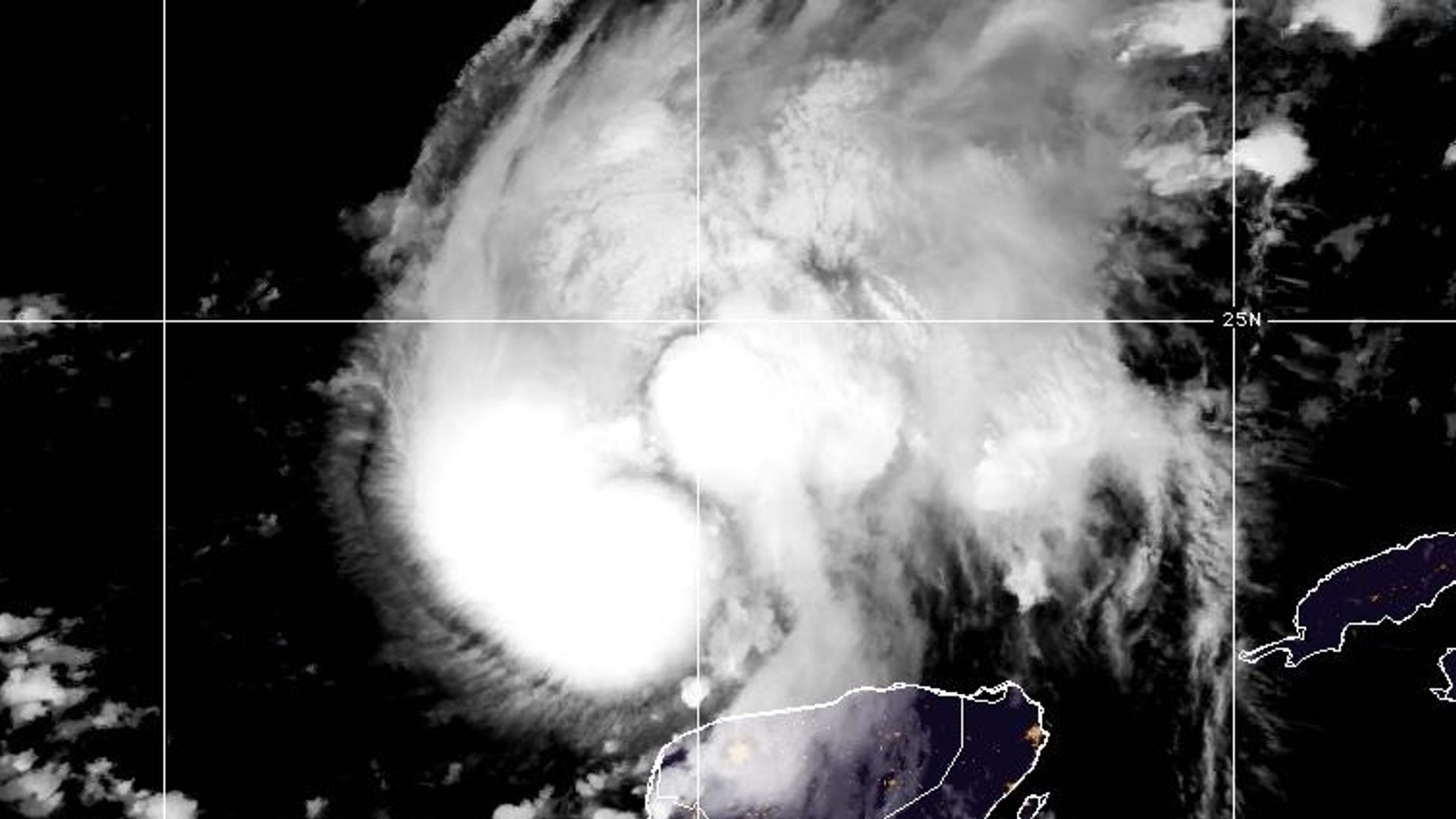
Every autumn, weather media undergoes a collective meltdown. A storm pops up on satellite imagery, anchors clear their throats with grave urgency, and headlines scream about century-old milestones. When Hurricane Isaias earned its badge for late-season development, pundits treated the calendar like an oracle of doom.
Stop buying the panic. The obsession with 120-year historical records is a lazy substitute for actual meteorological literacy. It distracts from how modern vulnerability works, transforming complex atmospheric fluid dynamics into a parlor game of trivia.
I have spent years watching risk analysts blow millions on sensationalized storm metrics while missing the boring, structural realities that actually determine whether a community survives a weather event. Let us strip away the hype and look at why these historic milestones mean far less than the internet wants you to believe.
The Myth of the Statistical Milestone
The core narrative surrounding Isaias relied on a seductive narrative: the latest first Atlantic hurricane in over a century. It sounds terrifying. It makes for compelling television. But it fundamentally misunderstands how climate baselines operate.
Historical data from 1905 or earlier is fraught with observational error. Before continuous satellite coverage, geostationary monitoring, and routine reconnaissance flights, dozens of open-ocean storms slipped past human detection entirely. Comparing modern observational precision with a ship captain's handwritten logbook from the Teddy Roosevelt administration is an apples-to-spaceships comparison.
More importantly, a late-forming first hurricane does not measure raw atmospheric energy. It measures the timing of localized shear reduction. When El Niño pumps vertical wind shear across the Atlantic basin, it acts as a mechanical blender, tearing apart nascent tropical waves before they can vertically stack.
When a storm like Isaias finally punches through a temporary shear loophole, it exploits an isolated pocket of low friction and high ocean heat content. It is an anomaly of timing, not a harbinger of unprecedented meteorological collapse. Treating it as a mystical signifier of climate destiny ignores the basic physics of the upper troposphere.
Why Basin-Wide Totals Lie to You
Another favorite pastime of weather commentators is tallying up named storms to predict societal doom. We get breathless updates on whether a season will feature ten storms or thirty.
This metric is dangerously misleading. The total count of named storms tells you nothing about local impact. You can have a hyper-active season where twenty storms spin harmlessly into the central Atlantic, generating great graphics for news sites while touching zero human lives. Conversely, you can have a dead-quiet season featuring only a handful of systems where a single storm threads the needle straight into a major metropolitan area.
Isaias proved this exact disconnect. It arrived during a stretch where most tropical systems struggled to organize against persistent hostile winds. Yet when it finally found thermodynamic fuel over warm waters and aligned its core, it packed a punch.
Focusing on the macro-statistic of seasonal storm counts is a cognitive trap. It blinds emergency planners to the localized vulnerabilities that turn a modest tropical depression into a regional infrastructure failure.
The Real Vulnerability is Infrastructure, Not Barometric Pressure
If you want to understand why modern hurricanes cause billions in damage, throw away the Saffir-Simpson scale. Wind speed and central pressure are easy numbers to print on a graphic, but they tell an incomplete story.
The true catastrophe vector is urban density coupled with outdated civil engineering. Look at what actually leaves hundreds of thousands of people in the dark during a storm. It is rarely the Category 3 winds blowing down concrete skyscrapers; it is rotting utility poles, above-ground power lines threading through dense tree canopies, and poorly zoned coastal developments built on reclaimed wetlands.
When a storm moves ashore, the physical damage is dictated by soil saturation and drainage capacity. A slow-moving tropical storm dumping twelve inches of rain on a county with archaic stormwater management will cause exponentially more economic destruction than a fast-moving major hurricane that breezes through an area with resilient, elevated infrastructure.
We obsess over whether a storm breaks a century-old calendar record because it provides clean narrative drama. Upgrading a municipal electrical grid or burying suburban power lines is unsexy, expensive, and difficult to market.
The Dangerous Downside of Constant Alarmism
There is a severe human cost to the constant inflation of weather reporting. When every single anomaly is framed as a historic, record-shattering catastrophe, public fatigue sets in.
Imagine a scenario where emergency management agencies issue maximalist evacuation warnings for every seasonal quirk. Citizens comply once or twice, experience minimal disruption because the storm stalled offshore or sheared apart, and promptly ignore subsequent warnings.
This phenomenon—the cry-wolf effect—is exacerbated by media outlets hunting for clicks via historical superlatives. When Isaias was branded as a 120-year anomaly, it triggered a reflex of generalized panic rather than targeted, rational preparedness.
True preparedness is boring. It means checking generator transfer switches, clearing drainage ditches, reinforcing roof-to-wall connections, and understanding your specific local elevation relative to storm surge thresholds. It does not require refreshing social media feeds to see which decade holds the previous record for a September depression.
Stop worrying about what happened in 1905. The atmosphere does not care about our human calendar milestones, and your local zoning board shouldn't either. Fix the grid, clear the drains, and look at the actual physics on the radar instead of the hype in the headline.