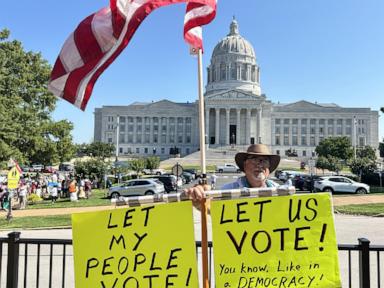
Every four years, political pundits lose their collective minds over redistricting lines. They treat congressional maps like magic wands.
They aren't.
When news broke that nine states redrew their US House districts ahead of the midterms following direct pressure from Donald Trump, the mainstream media immediately defaulted to its favorite bedtime story. You know the script. It goes something like this: Cartographers in smoke-filled rooms just decided the balance of power in Washington before a single ballot is cast.
That narrative is lazy. It is comforting to losing campaigns, flattering to political consultants, and completely detached from how modern elections are actually won or lost.
I have sat in war rooms where campaigns burned millions of dollars on fancy geospatial analytics, agonizing over three-block shifts in suburban precincts while completely ignoring the rot inside their own voter turnout operations. They treated a map change like a death sentence or a coronation. Both reactions are fatal.
If you think shifting district boundaries in nine states guarantees a lock on the House of Representatives, you do not understand the math of midterm volatility. You are looking at the frame instead of the painting.
The Myth of the Bulletproof Gerrymander
Let us get our terminology straight before we dismantle the conventional wisdom.
Gerrymandering is the manipulation of electoral district boundaries to favor one party or class. Political operatives execute this through two primary mechanisms: packing (concentrating the opposing party’s voters into a small number of districts to reduce their influence elsewhere) and cracking (spreading the opposing party’s voters across many districts to dilute their voting power below a winning threshold).
On paper, this looks like an unbeatable mathematical trap. In reality, it is a fragile balancing act that frequently blows up in the faces of the architects who designed it.
To create more safe seats for your own party, you cannot conjure new voters out of thin air. You have to take reliable partisan voters out of deep-red or deep-blue strongholds and spread them into neighboring, more competitive districts. Political scientists call this efficiency gap optimization. I call it stretching your defense so thin that a mild gust of wind knocks the whole line over.
When nine states redraw their maps mid-decade or right before a high-stakes midterm cycle at the behest of national leadership, they are making a massive, unspoken bet. They are betting that baseline partisan turnout remains static.
It never does.
Midterm elections are notorious for differential turnout—the phenomenon where the electorate shrinks dramatically compared to a presidential year, and the demographic composition of who actually shows up shifts violently. When you crack an opposing party’s base to build a five-point cushion across four districts instead of a twenty-point cushion in two, you have just created four dummymanders waiting to happen. If the opposing party experiences a sudden surge in enthusiasm, or if your own base stays home because they think the map already won the race for them, you do not just lose one seat. You lose all four in a wave you never saw coming.
What the Media Missed About the Nine-State Push
The mainstream coverage of Trump urging these nine states to alter their US House districts frames the entire maneuver as an unprecedented, top-down power grab that instantly tilts the playing field.
They are asking the wrong question. They are asking, "How many seats did these new maps just hand to Republicans?"
The real question—the one veteran campaign managers are quietly sweating over—is: "How much localized political capital just got burned to redraw lines that might not hold against a standard midterm backlash?"
Think about the mechanics of mid-cycle or late-stage redistricting. Unlike the standard post-Census redistricting process, which occurs every ten years under a cloud of routine bureaucratic inevitability, sudden map changes driven by explicit political pressure trigger an immediate, visceral reaction.
- It nationalizes local races prematurely. House races are supposed to be about potholes, local hospital funding, and constituent services. The second a state legislature redraws a map because a national figure told them to, every challenger in those nine states gets a ready-made, multimillion-dollar fundraising hook. "They couldn't beat us on ideas, so they rigged the lines." That message prints money on ActBlue and WinRed alike.
- It fractures incumbent loyalty. You cannot redraw nine states' worth of districts without cutting into the safe territory of sitting members of Congress. Incumbents hate giving up loyal precincts they have spent a decade cultivating. When national leadership forces state lawmakers to carve up existing districts, you end up with bitter primary challenges, drained campaign war chests, and alienated local party chairs who refuse to knock on doors in November.
- It invites relentless judicial warfare. State supreme courts and federal panels do not operate on campaign schedules. Drawing new maps right before an election guarantees emergency injunctions, delayed filing deadlines, and chaotic ballot access fights. Campaigns end up spending their spring paying election lawyers $800 an hour instead of hiring field organizers.
I will admit the obvious downside to my own skepticism here: in a razor-thin House majority, where control of the gavel comes down to three or four seats, even a marginal structural advantage matters. If the national political environment stays completely neutral, those nine redrawn maps will likely squeeze out a net gain of two to five seats. In a tied game, a field goal wins it.
But politics is rarely a neutral environment. And betting your entire House strategy on cartography is like building a house out of dry kindling and praying nobody strikes a match.
Why Voters Are Not Chess Pieces
The biggest flaw in the "maps decide everything" consensus is the arrogance of assuming human beings behave like static data points on a GIS spreadsheet.
Political consultants love looking at past election results overlaid onto new census blocks. They point to a precinct that voted 54% for their candidate two years ago and assume that precinct is permanently locked into their column.
It is a fantasy.
Voters move. Demographics shift faster than state legislatures can convene special sessions. More importantly, partisan elasticity—the willingness of voters in a given area to swing between parties based on current economic conditions or cultural flashpoints—is higher in newly drawn suburban districts than almost anywhere else.
Consider a simple thought experiment. Imagine a state legislature takes a solid, reliable suburban district and cracks it into three neighboring rural districts to dilute the suburban vote. On the map, the rural voters outnumber the suburbanites by six percentage points in each new district. The consultants pop champagne.
Now, fast-forward eighteen months. Inflation ticks up, or a local healthcare crisis dominates the regional news, or a polarizing candidate says something unforgivable on a hot mic. Those cracked suburban voters—who now feel actively disenfranchised because their community was sliced into pieces—turn out at 68% in a midterm election. Meanwhile, the rural base in those three districts, feeling secure because they keep hearing on cable news that the new maps guarantee victory, turns out at 44%.
That six-point structural advantage evaporates before 8:00 PM on Election Night. All three seats flip.
We saw versions of this exact collapse play out after the 2010 and 2020 redistricting cycles across states like New York, California, Texas, and North Carolina. In 2022, aggressive map-drawing in New York backfired spectacularly when a state court threw out the legislature's lines, leading to a chaotic scramble that cost Democrats multiple House seats they assumed were untouchable. Conversely, aggressive gerrymanders in sunbelt states forced incumbents to defend unfamiliar territory against well-funded grassroots challengers, turning supposed "safe" seats into grueling, expensive trench warfare.
As David Wasserman, senior editor at The Cook Political Report and arguably the sharpest analyst of congressional districts in the country, has repeatedly demonstrated over multiple cycles, redistricting defines the playing field, not the final score. You still have to run the plays.
The Questions Everyone Is Asking (And Why They Are Wrong)
When news like this hits the cycle, search engines light up with the same predictable panic. Let us strip away the noise and look at the reality behind the headlines.
Did these nine states break the law by redrawing districts now?
Mostly, no. While federal law requires states to redraw districts every ten years following the US Census, the US Constitution’s Elections Clause gives state legislatures massive latitude over the time, place, and manner of holding elections. Unless a state’s own constitution explicitly prohibits mid-decade redistricting—and several do—legislatures technically have the authority to pass new maps whenever they have the votes. The real battleground is almost always Section 2 of the Voting Rights Act or state-level partisan gerrymandering bans, not federal timing rules.
Does this guarantee a House majority for the party that drew the lines?
Not even close. Structural advantages in the US House are routinely overwhelmed by thermostatic public opinion—the well-documented tendency of the electorate to push back against whichever party holds the White House during a midterm cycle. Since the Civil War, the president’s party has lost House seats in nearly every single midterm election, regardless of who drew the maps. Maps act as shock absorbers; they soften the blow of a bad political environment, or amplify a good one, but they cannot reverse a national wave.
Why would Trump push for this if it carries so much risk?
Because national leaders operate on a different risk-reward curve than local candidates. From the perspective of the White House or a national party leader, squeezing every possible marginal advantage out of friendly state legislatures is basic political triage. If you are facing historical midterm headwinds, you do not care if a state party fractures internally or if a local incumbent has to work twice as hard. You care about maximizing your floor so you do not lose the gavel entirely. It is a rational macro-strategy that creates massive micro-problems on the ground.
What Smart Operatives Actually Do When the Maps Change
If you are running a campaign, funding a PAC, or trying to predict where the House actually lands in November, stop staring at the new district borders. The lines are set, the lawsuits are filed, and worrying about the cartography will not win you a single vote.
Here is how you actually beat—or capitalize on—a redrawn map.
- Audit the "orphaned" precincts immediately. Every time a state redraws its maps, thousands of voters get dumped into a new congressional district where they do not recognize the incumbent's name. These orphaned voters have zero loyalty to the sitting representative. Smart campaigns treat these precincts like open-seat races, flooding them with high-touch constituent outreach and local media buys before the incumbent even figures out where the new border lies.
- Ignore top-line partisan lean metrics. Stop relying on Cook PVI or generic partisan indexes calculated from presidential election data. Midterm electorates are older, wealthier, and more ideologically motivated than presidential electorates. Build your targeting models exclusively around two-of-four and three-of-four midterm voters—people who actually showed up in previous non-presidential cycles.
- Weaponize the map itself as a turnout engine. Voter anger is the most potent fuel in midterm politics. If your district was cracked or packed to protect a political agenda, do not whine about fairness in high-minded op-eds. Voters do not care about procedural norms. Frame the map change as a direct insult to local autonomy. Tell voters that outsiders carved up their community because they think the locals are too stupid to notice. Turn bureaucratic cartography into a personal grievance.
- Watch the candidate recruitment, not the lines. A brilliant map cannot save a terrible candidate, and a hostile map cannot stop a generational talent who knows how to raise money and dominate local earned media. Look at the primary fields in those nine states. If the party that drew the lines nominates extreme, unvetted candidates because they assume the new map makes them invincible, circle those districts in red ink. They are ripe for an upset.
Political commentators love talking about redistricting because maps are visual, clean, and easy to explain on a television screen. It allows pundits to sound smart without doing the hard work of tracking voter sentiment, economic anxiety, and grassroots organization.
Let them stare at their color-coded counties. History does not care who drew the lines on the paper; it only cares who shows up to fill in the bubbles.