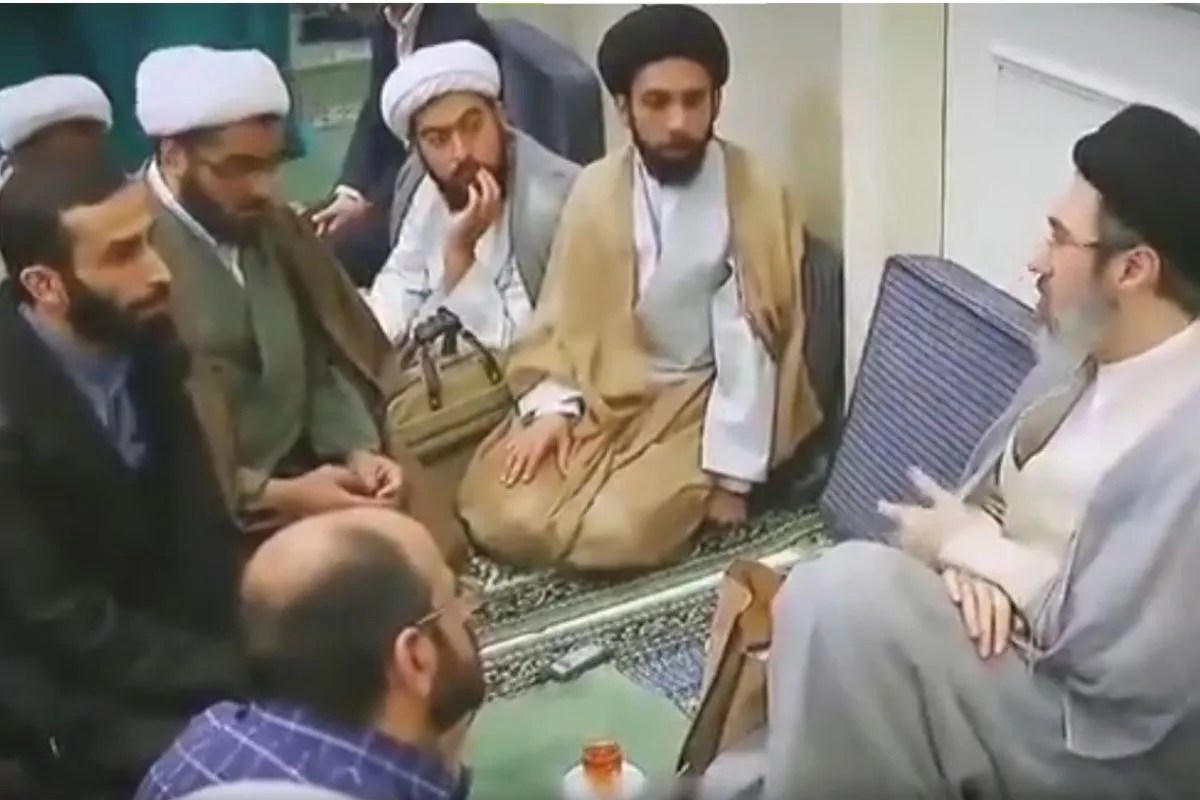
Every few months, the rumor mill kicks into gear. Grainy footage surfaces on Telegram channels. Anonymous sources whisper about hospitals, heart conditions, or sudden disappearances. The media machine eats it up, dissecting every pixel of a compressed video to answer a lazy question: Is Mojtaba Khamenei healthy enough to take the throne?
Stop asking the question. It is a distraction. If you liked this piece, you might want to read: this related article.
Focusing on Mojtaba Khamenei health status is like analyzing the paint color of a car hurtling toward a brick wall. The obsession with his medical chart misses the brutal structural mechanics of elite succession in Tehran. Dictatorships do not fall because a successor has a bad ticker; they fracture because the institutional machinery underneath them is rotting from transactional fatigue.
The Video Analysis Fallacy
Let us dismantle the digital forensics industry that springs up every time a new clip drops. Analysts freeze frames, measure posture, and compare earlobes to footage from five years ago. For another look on this event, check out the latest coverage from USA Today.
It is theatre.
In centralized security states, physical health is a managed variable, not an accidental state of being. Information is weaponized. If a rumor about a leader or a designated heir spreading sickness gets traction, ask a simple operational question: Who benefits from the leak?
Often, the rumors are trial balloons floated by rival factions inside the Islamic Revolutionary Guard Corps to gauge reaction, test loyalty lines, or smoke out hidden internal opposition. Evaluating a three-second video of Mojtaba walking down a corridor to diagnose the future of a geopolitical bloc is political illiteracy.
The Succession Illusion
The lazy consensus in mainstream foreign policy reporting runs like this: Ali Khamenei ages, Mojtaba steps in smoothly because of behind-the-scenes clout, and the system continues uninterrupted.
This ignores how power actually concentrates at the top.
Mojtaba Khamenei is not merely a cleric waiting for an inheritance. He is the node of a massive financial and security network built over three decades. His influence relies on Bonyads—massive tax-exempt bony foundations—and deep ties to the intelligence apparatus.
Even if he were physically incapacitated tomorrow, the institutional apparatus that protects his faction would simply pivot to another frontman. The survival of the system does not depend on one man biological continuity. It depends on the distribution of rents among generals, security chiefs, and clerics who have everything to lose if the current architecture collapses.
The Real Danger: Internal Fractures, Not Medical Bulletins
If you want to understand where the system breaks, throw away the medical reports and look at resource allocation and elite cohesion.
Iran faces crushing economic pressures, deep social discontent, and a restless youth demographic that views the clerical elite with total contempt. When legitimacy hits zero, dynastic transitions stop looking like smooth royal coronations and start looking like high-stakes musical chairs during a fire.
The real vulnerability is not Mojtaba heart rate. It is the friction between the ideological purists and the pragmatic economic operators within the IRGC who care more about their business portfolios than theological purity.
When the transition comes, it will not be decided by a doctor stethoscope. It will be decided by who controls the communications grid, who pays the riot police, and who blinks first when the streets light up.
Stop watching the clips. Look at the balance sheets of the security conglomerates. That is where the regime lives or dies.