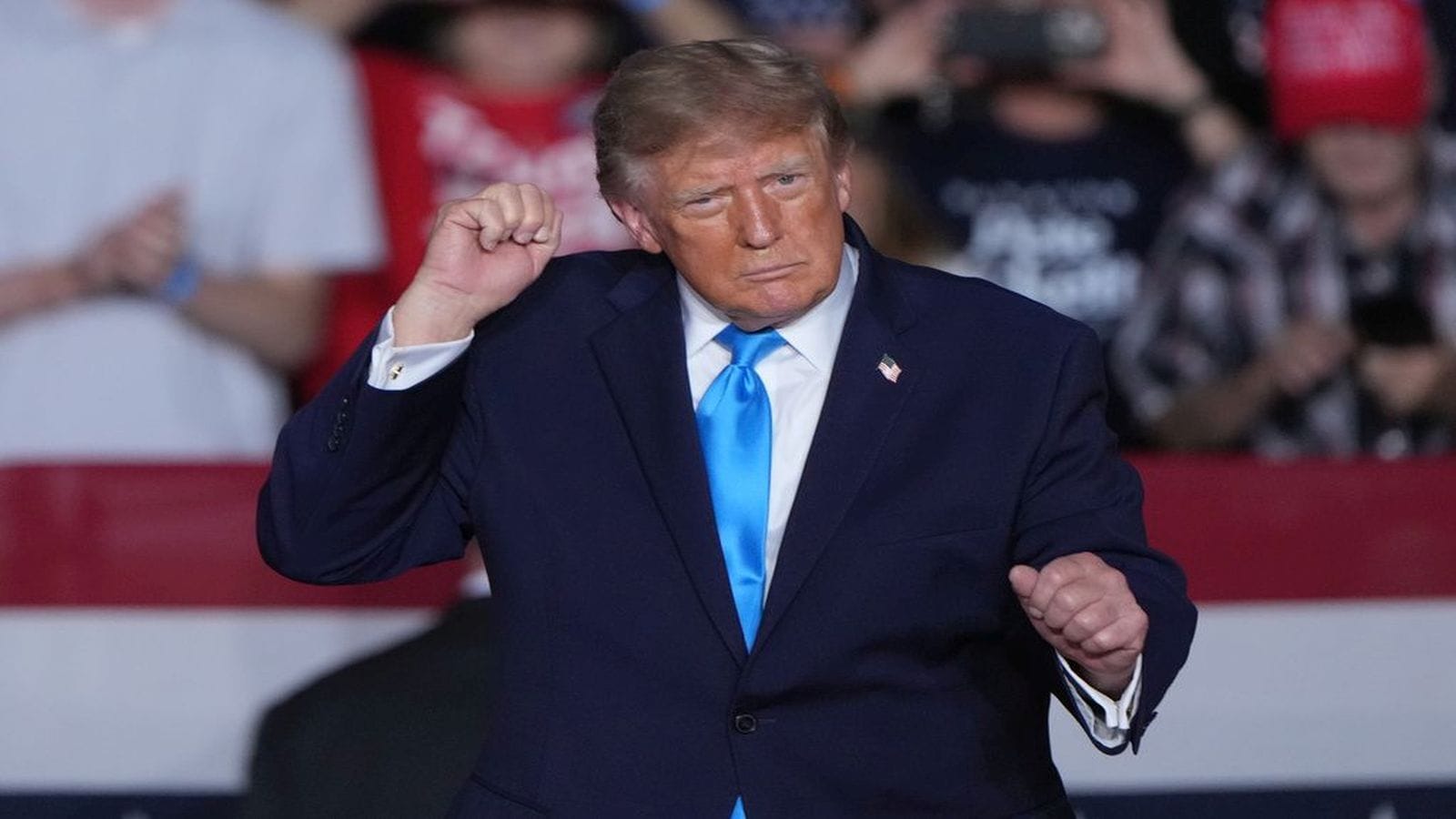
Mainstream commentary has fixated on a single, predictable critique regarding President Donald Trump's announcement of a limited "energy ceasefire" between Russia and Ukraine—namely, the absence of immediate, publicly released operational details. According to mainstream media coverage and initial reactions from European diplomatic circles, an announcement without a published verification mechanism, clear enforcement protocols, or defined geographic boundaries is inherently hollow or premature.
That analysis mistakes diplomatic signaling for a finalized legal treaty. When analysts dismiss high-level political announcements simply because the fine print is absent, they misunderstand how asymmetric negotiations actually begin in protracted conflicts.
In reality, the lack of public detail is rarely an oversight in high-stakes diplomacy. More often, it is a deliberate structural feature designed to preserve strategic ambiguity while technical negotiators work behind closed doors.
The Myth of the Transparent Diplomatic Breakthrough
The prevailing consensus among foreign policy commentators rests on the assumption that credible conflict de-escalation requires immediate, public transparency. Critics point out that without explicit definitions of what constitutes "energy infrastructure"—whether it covers power plants, substations, oil refineries, or transit pipelines—any pause in strikes remains vulnerable to immediate collapse. Furthermore, Ukrainian officials and European observers have frequently emphasized that past agreements with Moscow failed precisely because verification mechanisms were weak or non-existent.
While these concerns reflect genuine historical grievances, treating public vagueness as proof of diplomatic failure ignores how modern ceasefires are constructed.
- Public specificity creates immediate domestic traps. When leaders publish granular terms before backchannel consensus is cemented, hardliners on both sides gain ammunition to accuse their governments of capitulation.
- Ambiguity allows face-saving compliance. Neither Moscow nor Kyiv can afford to appear as though they are retreating under pressure. A broadly framed pause lets each side present the restraint as a tactical decision rather than a concession.
- Technical verification always trails political intent. In complex military environments, rules of engagement, deconfliction hotlines, and satellite monitoring protocols take weeks of quiet military-to-military coordination to establish.
To understand why an undefined energy pause matters, one has to look at the mechanics of energy warfare itself rather than the press conference announcing it.
The Asymmetric Economics of the Energy War
Both Russia and Ukraine have treated energy infrastructure as a primary theater of attrition, yet their strategic vulnerabilities are fundamentally different. Analysts who view an energy ceasefire purely through the lens of traditional territorial negotiations miss the distinct economic pressures driving both capitals.
For Ukraine, Russian missile and drone campaigns against thermal power plants, hydroelectric facilities, and high-voltage substations have created severe grid instability, threatening industrial output and civilian resilience ahead of winter cycles. According to assessments from the International Energy Agency and Ukrainian grid operators, repairing damaged generation capacity requires both massive capital inflows and long lead times for specialized transformers.
For Russia, the vulnerability lies not in its domestic electricity grid, but in its refining and export capacity. Ukrainian long-range drone strikes targeting Russian oil refineries have periodically disrupted domestic fuel supplies and forced Moscow to divert air defense assets away from front-line positions to protect industrial facilities deep inside its territory.
| Strategic Dimension | Ukraine's Primary Exposure | Russia's Primary Exposure |
|---|---|---|
| Target Profile | Centralized power generation and transmission grids | Oil refineries, fuel depots, and export terminals |
| Immediate Impact | Rolling blackouts, civilian strain, industrial downtime | Refined product shortages, air defense overextension |
| Strategic Leverage | Dependent on Western air defense replenishment | Dependent on sustained energy export revenues |
| Value of a Pause | Time to rebuild grid resilience and stockpile equipment | Relief for domestic refining margins and air defense networks |
Because each side holds a credible capability to inflict costly, ongoing damage on the other's energy sector without altering front-line territorial control, the energy domain represents a classic mutually hurting stalemate. In international relations theory, as articulated by scholars like I. William Zartman, a mutually hurting stalemate is the precise precondition required for rival parties to test limited de-escalation.
Why Ambiguity Is a Feature, Not a Bug
Critics argue that without clear terms, any violation will immediately unravel the arrangement and damage diplomatic credibility. Yet in practice, informal or loosely defined moratoriums often function as vital confidence-building measures.
Consider how partial ceasefires operate in active war zones:
- Testing Command and Control: Before committing to broader territorial negotiations, each side needs to verify whether the opposing leadership can actually enforce restraint across its own missile, drone, and artillery units.
- Establishing Deconfliction Channels: Even an unwritten or vaguely defined pause forces military planners to establish communication channels to clarify accidental strikes or rogue operations.
- Shifting the Escalation Ladder: Moving energy infrastructure off the target list reduces the immediate pressure on political leaders to respond to infrastructure attacks with broader retaliatory escalations.
Diplomatic historians frequently point out that early-stage agreements—from Cold War backchannels during the Cuban Missile Crisis to preliminary maritime deconfliction talks in regional conflicts—almost always begin with broad political statements deliberately stripped of operational specifics. Publishing a detailed compliance matrix on day one invites immediate litigation over minor tactical incidents, turning every stray drone into a strategic crisis.
The Real Risks That Critics Overlook
Admitting that strategic ambiguity serves a purpose does not mean an undefined energy ceasefire is guaranteed to succeed. In fact, focusing on the lack of public details distracts from the actual structural vulnerabilities that could cause such an arrangement to fail.
First, the definition of dual-use infrastructure remains inherently contested. Power grids do not distinguish between electricity flowing to a civilian hospital and electricity powering a defense manufacturing plant. Similarly, fuel refineries supply both agricultural machinery and military logistics. Without quiet, technical agreements on specific target lists, both sides can claim they are adhering to an "energy ceasefire" while continuing to strike facilities they classify as military logistics hubs.
Second, asymmetric timelines create uneven incentives. If one side uses a pause in energy strikes primarily to repair grid capacity while the other uses it to redeploy air defenses to the front lines, the perceived balance of advantage can shift rapidly. Once either capital concludes that the pause benefits the adversary more than itself, the incentive to maintain restraint evaporates.
Third, third-party alignment cannot be taken for granted. European allies, energy market participants, and regional neighbors all have distinct stakes in how energy flows and infrastructure security are managed. According to diplomatic observers in Brussels and Washington, sustainable de-escalation requires aligning sanctions enforcement, grid reconstruction aid, and security guarantees with whatever bilateral understanding emerges.
Asking the Right Questions About Energy Diplomacy
When evaluating high-level announcements about partial ceasefires, observers should stop asking why the press release lacked a twenty-page appendix. Instead, the meaningful indicators of whether an energy ceasefire is real will appear in observable behavior on the ground rather than in diplomatic transcripts.
- Watch target selection, not rhetoric. A genuine pause is measured by a sustained drop in long-range strikes against substations, power plants, and refineries over a multi-week window, regardless of how loudly officials posture in public.
- Track air defense repositioning. Changes in where both militaries deploy interceptor batteries—shifting away from deep-rear energy sites toward front-line sectors—signal whether commanders believe the pause will hold.
- Monitor grid repair and fuel export flows. Adjustments in European electricity import volumes into Ukraine or shifts in Russian seaborne refined product exports provide hard market data on whether infrastructure pressure is actually easing.
Diplomacy in the middle of a high-intensity war rarely looks like a tidy legal contract signed under television lights. It begins as a calculated, ambiguous test of restraint—and its success is determined entirely by what stops exploding in the dark.