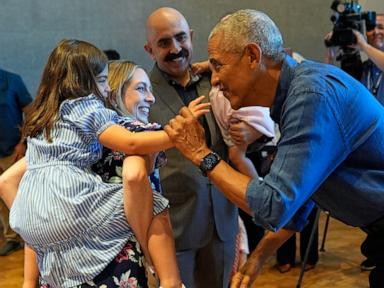
The opening of a presidential library or center represents a deliberate shift from temporary political capital to permanent institutional influence. When public figures engage in unannounced physical appearances at these sites, the event is frequently covered as a spontaneous public relations moment. However, treating these interactions as mere soft-news anomalies overlooks their structural function. In the civic development sector, highly publicized, high-profile physical engagement operates as a high-yield asset deployment strategy designed to catalyze local economic ecosystems, secure philanthropic retention, and establish a foundational brand equity for a multi-million-dollar real estate footprint.
To evaluate the operational mechanics of such institutions, one must look past the emotional resonance of a surprise visit and analyze the underlying structural pillars: civic real estate valuation, localized socioeconomic injection, and the optimization of donor engagement.
The Tri-Partite Asset Framework of Public Executions
The viability of a cultural institution rests on three interdependent asset classes. When the principal figures of an institution—in this case, former executive leaders—physically enter the space, they are not merely visiting; they are activating these specific vectors.
1. The Real Estate and Architectural Anchor
A presidential center operates fundamentally as an anchor tenant in an urban ecosystem. By establishing a physical footprint in a specific geographic zone—such as Chicago’s South Side—the institution alters the local land-use economics. The physical structure converts political legacy into tangible infrastructure. The architectural design serves as a permanent monument, but its daily economic utility relies on foot traffic, density generation, and the sustained perception of the site as a living civic hub rather than a stagnant archive.
2. The Philanthropic Capital Engine
The financial architecture of a non-profit presidential center deviates sharply from traditional government-funded presidential libraries managed strictly by the National Archives and Records Administration (NARA). Operating under a private foundation model means the institution requires continuous capital inflows to sustain its endowment, programming, and physical plant maintenance.
Direct principal engagement—such as personal appearances—serves as a primary mechanism for donor validation. It signals to high-net-worth benefactors and institutional foundations that the leadership remains operationally committed to the project’s long-term execution, reducing investor churn and stabilizing the capital campaign pipeline.
3. The Civic Economic Injection Mechanism
The surrounding community experiences a direct cause-and-effect relationship driven by institutional programming. The presence of a high-security, high-interest civic center alters local commercial dynamics through three distinct phases:
- The Construction Dividend: Immediate localized employment and material sourcing during the development phase.
- The Baseline Tourism Multiplier: Steady-state foot traffic from domestic and international visitors who generate secondary expenditures on hospitality, food and beverage, and regional transport.
- The Event-Driven Spike: Compressed windows of intense economic activity catalyzed by high-profile summits, unannounced appearances, or international delegations. These events compress the traditional marketing funnel, generating earned media value that would otherwise require significant capital outlay.
The Mechanics of Earned Media Value Acceleration
Traditional marketing relies on paid acquisition funnels where the cost per acquisition (CPA) scales alongside audience reach. For civic and cultural institutions, this model is financially inefficient. Instead, these organizations rely on a specific cost function optimization where the principal's physical presence acts as a zero-marginal-cost catalyst for global media distribution.
The causal chain of a unannounced visit unfolds systematically. First, a highly restricted, curated group of initial visitors experiences direct interaction with the principals. This creates a high-scarcity, high-value experiential asset. Second, the digital capture of this interaction is disseminated via owned institutional channels and distributed to tier-one news networks.
The resulting earned media value (EMV) operates as a compounding interest formula. The baseline value of the media coverage far exceeds the operational cost of executing the security logistics required for the visit. This creates a highly favorable return on logistics investment (ROLI). The institutional brand secures global visibility, which directly correlates with an uptick in digital micro-donations, ticket pre-sales, and membership acquisitions.
Structural Bottlenecks and Operational Risks
While the economic and branding upside of principal-led civic activation is substantial, the model introduces distinct operational constraints that institutional strategists must mitigate.
The first limitation is the optimization paradox of security versus accessibility. Presidential-grade security protocols require stringent access controls, physical checkpoints, and perimeter management. These requirements fundamentally conflict with the civic objective of creating an open, welcoming public park or community center. Excessive friction at the point of entry deters casual local usage, depressing the daily baseline foot traffic required to sustain on-site retail, dining, and community programming.
The second bottleneck is the depreciation curve of principal relevance. The capital-generation capacity of a presidential center is intrinsically linked to the cultural and political currency of its namesakes. Over a multi-decade horizon, the direct draw of the principals naturally faces diminishing returns as generational shifts occur. The institution must therefore execute a structural transition: it must pivot from a legacy-dependent asset model to a programmatic-dependent asset model.
To survive this depreciation curve, the physical infrastructure must be leveraged to incubate self-sustaining civic programs, academic partnerships, and global leadership initiatives that possess independent institutional value. The architecture must transform from a reliquary of past governance into an operational engine for contemporary industry.
Capital Allocation Strategies for Long-Term Civic Viability
To maximize the economic spillover of cultural megaprojects without triggering displacement or institutional stagnation, municipal leaders and center executives must deploy highly structured capital allocation strategies.
First, establish a dedicated local procurement quota. The procurement pipeline for the center’s ongoing operational needs—ranging from facilities management to hospitality services—must be contractually tethered to local enterprises within a defined geographic radius. This prevents the economic leakages common in urban renewal projects, where outside capital extracts value without enriching the immediate host community.
Second, implement a dual-rate monetization structure. To balance accessibility with financial sustainability, the center must deploy a segmented pricing matrix. High-margin corporate event rentals, international tourism ticketing, and premium memberships subsidize free or heavily discounted access for local residents, public school cohorts, and civic organizations. This cross-subsidization model stabilizes the operating budget while preserving the institution's core civic mandate.
Finally, prioritize programmatic diversification over physical expansion. Large-scale cultural institutions frequently fall into the trap of over-building physical footprints that require exponential maintenance costs. Capital is more efficiently deployed into scalable digital education platforms, global fellowship endowments, and rotating exhibitions that maintain institutional relevance across broader geographic and demographic segments.
The long-term equilibrium of the institution will not be determined by the initial velocity of its opening or the sentimentality of its early public relations victories. It will be governed by the precision with which it converts temporary cultural interest into structured, repeatable civic and economic utility. The strategic imperative is to ensure that the physical monument functions permanently as an active asset class, generating measurable societal dividends long after the initial novelty has normalized.