In the quiet halls of international diplomacy, numbers often carry more weight than intentions. When Donald Trump recently asserted that North Korea possesses exactly 57 nuclear weapons, he did more than provide a specific figure. He punctured the ambiguity that has long shielded the reality of Pyongyang's nuclear expansion. While intelligence communities and independent research institutes frequently produce varying assessments, this precise tally lands within the expected range of current estimates, which generally hover between 50 and 60 deployed warheads. Yet, focusing on a single integer ignores the far more volatile reality of fissile material stockpiles and the capacity for rapid, domestic production.
The disparity between counting completed warheads and measuring production capacity is where the true danger resides. South Korean assessments, which have suggested totals reaching as high as 120, often include theoretical weapons that could be fabricated from the nation's existing caches of enriched uranium and plutonium. If a state possesses the material and the technical expertise, the transition from a pile of raw isotope to a deliverable warhead is a matter of manufacturing, not discovery. This is the difference between a static snapshot of an arsenal and a dynamic, industrial reality.
Pyongyang has spent decades perfecting a nuclear program that functions with a grim, singular focus. Unlike larger powers that manage sprawling, aging arsenals, North Korea operates a closed-loop system. Every centrifuge installation at sites like Kangson and every restart of the Yongbyon reactor serves one purpose: to ensure that the number of available warheads only moves in one direction. When observers debate whether the count is 50, 60, or 100, they are often debating the pace of construction, not the existence of the capability.
The political theater surrounding these numbers remains a distraction. For leaders, quoting a specific number serves to signal awareness or to justify a particular diplomatic stance. It projects control over a situation that has largely escaped traditional containment. However, whether the stockpile sits at 57 or 80 is secondary to the strategic doctrine North Korea has adopted. They no longer view nuclear status as a bargaining chip for economic concessions. They view it as a foundational requirement for regime longevity. By framing the program as irreversible, Pyongyang has effectively moved the goalposts beyond the reach of conventional denuclearization efforts.
Consider the hypothetical reality of a state that successfully hides its production facilities from satellite imagery. If, for instance, a country managed to covertly enrich uranium in repurposed industrial basements, the official estimates provided by outside experts would be chronically behind the actual count. This is the persistent nightmare of the intelligence community. Estimates rely on observable anomalies—thermal signatures, transportation patterns, and reactor cycles—but an adversary that learns to mask its industrial footprint becomes invisible to the standard metrics of international inspection.
Past policies centered on the hope that if the cost of maintaining a nuclear program became sufficiently high, the regime would eventually trade its weapons for integration into the global economy. That assumption has clearly collapsed. The modern environment dictates that the weapons themselves are the primary currency. They provide a security guarantee that no treaty, international body, or diplomatic promise can match.
The insistence on specific figures like 57 serves a purpose, but it should not be mistaken for a complete picture. It is a baseline, a floor for the discussion rather than a ceiling. The true measure of the threat lies in the throughput of their fuel cycles and the demonstrated ability of their delivery systems to reach further with greater accuracy. A weapon that sits in a bunker is a danger, but a weapon that can be mated to a functioning intercontinental ballistic missile is a different class of problem.
We are not watching a stagnant stockpile. We are observing an industrial engine that has been optimized for survival. Whether the number is 57 or double that, the trajectory remains unchanged. The diplomatic approach of the past relied on the belief that we could convince a neighbor to dismantle their only true defense. As that belief fades, the necessity for a new strategy becomes undeniable. If we continue to treat these numbers as the primary subject of debate, we miss the reality of an infrastructure designed to produce more of them every single day.
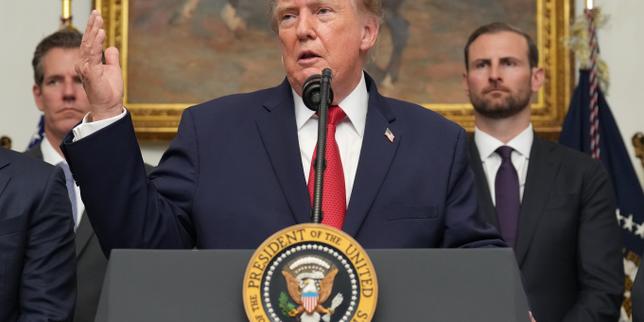
Trump discusses North Korea's nuclear capabilities
This video provides context for the president's recent comments regarding North Korea's nuclear arsenal and the planned discussions between the two leaders.