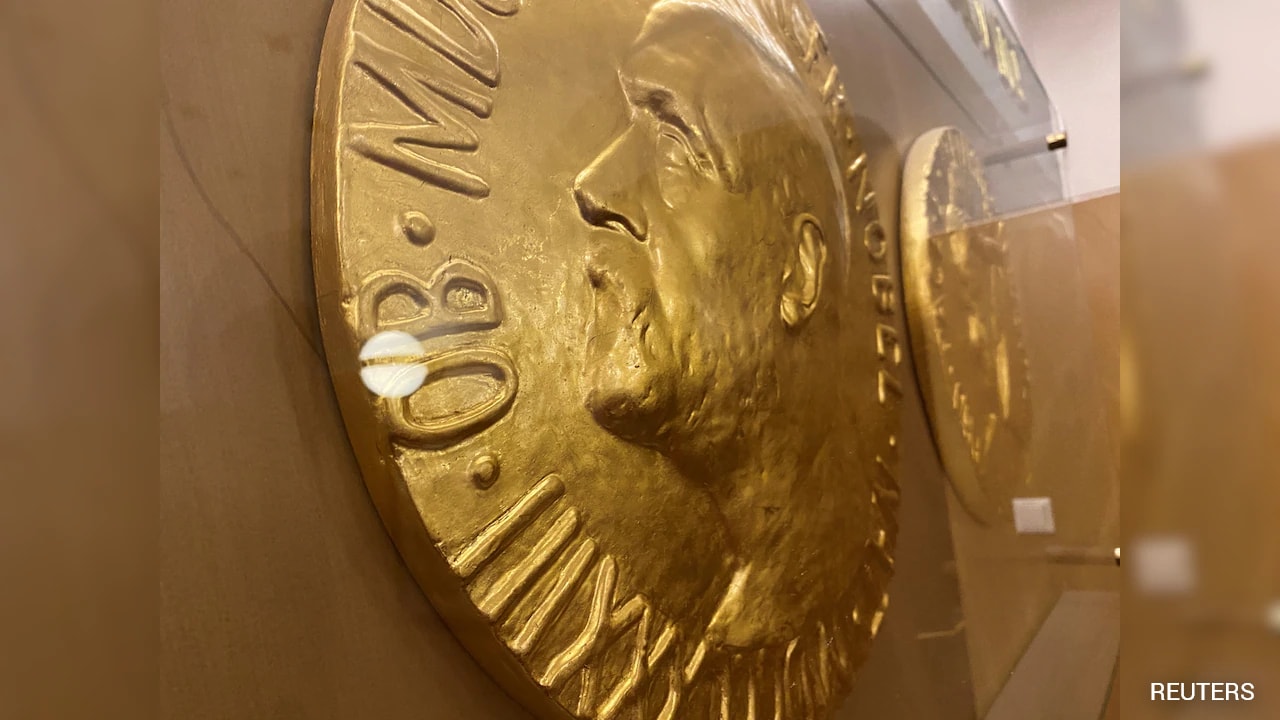
The Stockholm phone rings on a Monday in October, and a life splits cleanly into before and after.
Most of us never think about the machinery humming beneath our skin. We wake up, pour coffee into a ceramic mug, and curse the alarm clock. We assume our bodies are solid, reliable houses. But inside every single one of our thirty trillion cells, a quiet, furious labor is taking place. Molecular motors are walking along microtubules. DNA strands are unzipping, copying, and stitching themselves back together.
For decades, a select group of scientists has spent their lives listening to the low, steady thrum of this cellular machinery. They do not work for glory. They work because they are haunted by broken code. And every autumn, as the trees in Sweden turn the color of rust and old copper, the world turns its gaze toward a brick building in Solna, waiting to see whose name will be etched into the history of human survival.
Consider what happens when the machinery breaks.
Picture a researcher sitting alone in a sterile basement laboratory at three in the morning. The fluorescent lights hum with a high-pitched whine that sounds like cicadas in August. On the monitor in front of her, a string of letters scrolls past: A, T, C, G. Millions of them. A single typographical error in that endless sequence can spell the difference between a long, vibrant life and a sudden, devastating decline. For years, medicine could only watch the typo happen. We could diagnose the heartbreak, but we could not pick up the eraser.
That era is ending.
The conversation around the Nobel Prize in Chemistry for 2026 is not merely a polite academic parlor game. It is a referendum on our species learning how to edit its own operating system. Across the globe, experts are pointing toward three distinct frontiers where human ingenuity is colliding with our biological limitations: programmable gene editing, the molecular architecture of sleep, and the metabolic choreography of appetite.
To understand why these three fields are dominating the whispered conversations in Stockholm hallways, you have to look past the jargon and look straight at the human cost.
Let us start with the code itself.
Imagine trying to edit a massive, multi-volume encyclopedia written in a language you only half-understand, using a pair of tweezers in a hurricane. That was genetic medicine twenty years ago. Then came the programmable scissors—tools that could home in on a specific paragraph, clip the faulty sentence, and paste in the correct words. But the human genome is vast, and mistakes are costly. Off-target cuts can trigger unintended consequences, turning a cure into a new hazard.
The next generation of gene editing is no longer about clumsy scissors. It is about precision editing at the single-base level, rewriting individual letters of DNA without severing the double helix.
Think of it like proofreading a manuscript written in ink versus rewriting an entire chapter. When scientists can change a single C to a T without slicing the chromosome in half, the safety profile shifts entirely. Diseases that once felt like a life sentence written in stone—sickle cell anemia, inherited blindness, certain forms of muscular dystrophy—suddenly look less like permanent tragedies and more like stubborn engineering problems waiting for a fix.
The researchers working on these molecular editors do not sleep much. They spend their days chasing shadows in crystal structures and computer models, trying to predict how a protein will fold before it even exists. When a breakthrough happens, it doesn't arrive with explosions or fireworks. It arrives as a tiny, quiet peak on a mass spectrometer graph. A faint blip that means a cell has successfully taken up the instruction and rewritten its own destiny.
Yet, fixing the code is only half the battle. What happens when the code is entirely fine, but the rhythm of the organism is collapsing?
This brings us to the second obsession gripping the scientific community: sleep.
We treat sleep like a luxury item. We trade it for productivity, for late-night scrolling, for the quiet peace of a house where everyone else is finally quiet. We treat it as an empty space between days.
Biology tells a radically different story.
Sleep is not an absence of activity; it is a rigorous, nocturnal maintenance shift. When you finally close your eyes and slip into slow-wave slumber, a specialized plumbing system in your brain—the glymphatic system—switches on. Cerebrospinal fluid rushes through the neural tissue, washing away the metabolic waste products that accumulated during the wakeful hours. Proteins like beta-amyloid, the sticky debris associated with neurodegenerative decline, are swept down the drain.
When you chronically shortchange your sleep, you are essentially leaving the trash on the kitchen floor night after night after night. Eventually, the floor disappears.
For years, sleep research was treated as the softer cousin of molecular biology. It was behavioral, observational, hard to pin down in a test tube. But recent discoveries have mapped the precise cellular receptors and circadian clock proteins that dictate our internal chronobiology. We now know that sleep deprivation is not just feeling tired; it is a systemic inflammatory state. It alters gene expression, impairs immune response, and degrades metabolic regulation.
The pioneers in this field have spent decades tracking the molecular gears of the internal clock. They have shown how a single mutation in a clock gene can completely derail an organism's life span, throwing every organ system out of sync. When experts eye the horizon for major scientific honors, they are recognizing that sleep is not a passive state we fall into. It is the fundamental anchor of human health. Without it, even the most sophisticated gene editing tools cannot save a body that is slowly burning out its own circuits.
And then there is appetite.
Few subjects carry as much emotional baggage, social shame, and medical misunderstanding as human hunger. For generations, society blamed weight struggles entirely on a lack of willpower, treating metabolism as a simple moral ledger of calories in versus calories out.
That simplistic narrative has been thoroughly shattered by molecular endocrinology.
Our appetite is governed by an ancient, deeply conservative neurochemical dialogue between the gut and the brain. Hormones like GLP-1 and peptide YY act as chemical messengers, whispering to the hypothalamus when we have had enough fuel. In some bodies, however, that communication network is frayed or muted. The biological brake pedal simply does not engage. Telling someone with a dysregulated appetite-signaling system to "just eat less" is the biological equivalent of telling someone with nearsightedness to just squint harder at the chalkboard.
The pharmaceutical revolution sweeping through metabolic research has changed everything. By designing molecules that mimic or enhance these natural gut-brain signals, scientists have managed to quiet the relentless, biologically driven noise of constant hunger.
To watch a patient experience true metabolic quiet for the first time in their life is to witness a profound psychological transformation. The constant, exhausting preoccupation with food fades into the background. Mental bandwidth that was previously consumed by the sheer willpower required to navigate daily existence is suddenly liberated for art, for family, for living.
This is why the Nobel speculation is so intense this year. The lines between these three domains—genetic correction, circadian rhythm, and metabolic signaling—are beginning to blur.
Imagine a future where these technologies converge. A patient receives a precise, single-base gene edit to correct a metabolic vulnerability, supported by targeted interventions that restore healthy circadian rhythms and rebalance hormonal signaling. We are moving away from managing chronic symptoms with blunt instruments and moving toward a world of biological calibration.
The scientists standing at the center of this storm are ordinary people who happen to possess extraordinary persistence. They are professors who forget to pick up their dry cleaning, mentors who draw complex pathways on napkins in noisy campus cafeterias, and quiet obsessives who spend decades staring at electron density maps until patterns finally emerge from the noise.
When the announcement is finally broadcast from Stockholm, the names read aloud will represent thousands of anonymous postdocs, lab technicians, and clinical trial participants who bled, wept, and worked through countless dead ends to buy humanity a little more time, a little more clarity, and a little more health.
The phone will ring. The cameras will flash.
And then, tomorrow morning, those same researchers will put down their coffee mugs, walk back into the lab, and turn the microscopes back on. Because the code is still running. The machinery is still turning. And there is still so much dark left to illuminate.