Darkness. Absolute, heavy darkness.
You check in past midnight. The key card beeps, a sterile, welcoming green light flashes, and the heavy door clicks shut behind you, sealing out the hum of the highway or the quiet murmur of the city street. The air inside smells faintly of industrial bleach and crisp, laundered cotton. You kick off your shoes, drop your suitcase on the luggage rack, and collapse onto the crisp white sheets. Sleep takes you instantly. You are safe. You are resting.
Then, the itching begins.
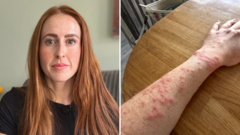
It starts as a faint, localized tickle on your forearm. You swipe at it lazily in your sleep, rolling over. Minutes later, it happens again—higher up, near your shoulder, then a cluster of tiny pricks along your neck. You wake up heavy-eyed, fumbling for the bedside lamp. The warm yellow glow floods the room. You scratch at your arm, looking down, and find them: three neat, angry red welts arranged in a straight line.
Bed bugs.
The Anatomy of an Unseen Invasion
To understand what happens next, you have to understand the creature itself. Cimex lectularius is not a visitor that announces its presence. It does not buzz like a mosquito or fly in through an open window. It is an ancient, patient parasite, flat as a credit card, waiting in the dark seams of mattress piping, behind headboards, and inside the microscopic crevices of wooden bed frames.
Consider a hypothetical traveler named Sarah, a business consultant who spends one hundred and fifty nights a year in hotel rooms. Sarah knows the routine. She books reputable chains, places her suitcase on the designated metal stand, and turns off the lights. She assumes that a globally recognized brand name—such as Travelodge—acts as an impenetrable shield against the mundane horrors of the natural world.
She is wrong.
When a guest encounters a bed bug infestation during a stay, the immediate physical reaction is only the surface of the wound. The bites themselves, numbed by the bug's saliva as it feeds, swell hours later into intensely itchy lesions. But the true devastation is psychological. It is the sudden, jarring realization that the bed—the universal symbol of sanctuary and rest—has been compromised.
When the Sanctuary Betrays You
The morning after the attack, the sterile magic of the hotel room evaporates. Sarah calls the front desk. A manager arrives, apologetic, professional, offering a room change and perhaps a refund or loyalty points. The protocol is standard. Maintenance is called. The room is locked down.
Yet, for the traveler, the damage is already done.
Panic sets in during the packing process. Every fold of clothing becomes suspect. Every shadow in the suitcase looks like a crawling six-legged nightmare. You begin to question every fabric surface you touched. Did they crawl into your wool coat? Did they lay eggs in the seams of your favorite boots?
This is where the hospitality industry faces its greatest invisible adversary. No matter how rigorous the cleaning staff, no matter how spotless the lobby, bed bugs do not discriminate based on star ratings or nightly rates. They arrive in the luggage of a previous guest, tucked deep within the lining of a backpack or the folds of a thrift-store sweater. They are the ultimate hitchhikers.
When an incident like the Travelodge attack makes headlines, it triggers a visceral shudder in anyone who has ever slept away from home. It strips away our polite illusions about cleanliness and control. We want to believe that hygiene is a fortress we can build and maintain. Biology laughs at our fortresses.
The Long Shadow Home
Crossing the threshold of your own front door after an infested trip does not mean the journey is over. In many ways, it is just beginning.
You do not simply unpack and throw your clothes in the wash. You perform a decontamination ritual on your porch or in your garage. Every garment goes into a sealed plastic bag. The suitcase is inspected with the beam of a flashlight, inch by agonizing inch. Hot water, high heat cycles in the dryer, and endless vacuuming become your evening routine.
For weeks afterward, every phantom itch on your skin sends your heart racing. You pull back the sheets of your own bed at home, shining your phone's flashlight along the mattress seams, checking for tiny dark spots or shed skins. The psychological aftermath lingers long after the physical welts have faded into pale scars.
Rest should be a given. Instead, we find ourselves negotiating with the dark, remembering that beneath the pristine white sheets and the corporate guarantees, the world is wild, resilient, and indifferent to our comfort.
Check the seams. Look behind the headboard. Trust nothing in the dark.