The rain in Vancouver didn’t just fall; it heavy-stepped against the concrete outside the stadium like a percussion section waiting for a cue. Inside, forty thousand people were holding a collective breath so deep it felt as though the oxygen had been vacuumed right out of the province.
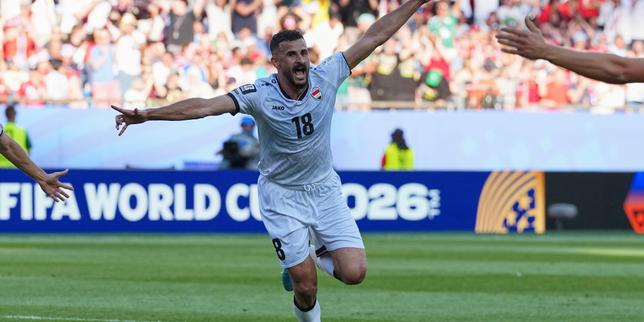
We have all seen the photograph by now. It is frozen in the national psyche: a sea of red jerseys, a ball suspended in mid-air like a drop of oil in water, and eleven men in white shirts suddenly realizing that the ground beneath them had shifted forever. The scoreboard read three-two. The whistle blew. Canada had won.
But if you think that moment was merely about a ball crossing a white line, you are looking at the frame and missing the canvas.
The dry sports wire reports will tell you the clinical facts. They will detail the possession percentages, the tactical shift to a low block in the seventy-second minute, and the precise financial windfall expected to hit the national soccer federation. They treat the event like an ledger entry. A success. A box ticked.
They miss the kid standing under the awning of a shawarma shop in Scarborough, staring through the window at a television screen he couldn't hear, weeping into his jacket sleeve.
The Weight of an Unseen History
To understand why a single victory on a grass pitch caused an entire nation to drop its collective jaw, you have to understand the quiet, grinding ache of being invisible.
For decades, Canadian soccer was an exercise in beautiful, tragic futility. It was a sport played by millions on Saturday mornings across suburban parks, only to be completely abandoned by the time those children reached adulthood. The narrative was fixed. We were a hockey nation. We belonged to the ice, to the boards, to the cold. Soccer was something imported, something we watched other nations do with flair and passion while we sat on the sidelines, feeling like permanent tourists in the world's greatest game.
Consider a hypothetical teenager named Marcus. He grows up in Montreal. His parents arrived from Cameroon in the late nineties. In his house, football is not a game; it is a secular religion. He wears the shirts of European clubs. He tracks the Champions League like a scholar tracking ancient texts. But when he looks at the Canadian national team, he sees nothing that mirrors his passion, his speed, or his reality. The team is a ghost ship, sailing through empty stadiums, failing to qualify for tournaments, playing in front of crowds that often cheer louder for the visiting opposition than the home side.
That is the invisible stake. It wasn't about adding a trophy to a cabinet that didn't exist. It was about validation. It was about proving that a kid from a Toronto suburb or a Calgary neighborhood could wear the maple leaf and not feel like they were compromising their love for the beautiful game.
The turning point was not tactical. It was psychological.
The Geography of Belonging
When the whistle blew on that rainy night, the reaction across the country did not follow the traditional fault lines of Canadian culture. It didn't care about the perpetual political tension between Quebec and the rest of Canada. It didn't care about the economic divide between the oil fields of Alberta and the financial high-rises of Bay Street.
In Edmonton, bars that normally echoed with the sounds of hockey skates grinding against ice were suddenly vibrating with the rhythm of drums. People who didn't know the offside rule were hugging strangers.
This is the power of a postcard moment. It creates a temporary, beautiful amnesia. For ninety minutes, the complex, often fractured reality of a modern, multicultural nation crystallized into a single, shared emotion.
The tactical geniuses will point to the youth academies. They will credit the strategic investments made a decade ago. They are not wrong, but they are explaining the engine while ignoring the destination. The real magic lay in the composition of the squad itself. This wasn't a team born out of a singular, monolithic sporting culture. It was a mosaic. It featured sons of refugees, kids who learned the game on concrete patches in London, and players who rejected the call-ups of more established footballing nations to build something from scratch in the cold north.
When they celebrated, they didn't just wave the flag. They redefined what the flag meant.
The Illusion of the Final Whistle
There is a danger in victories like this. The euphoria creates a thick fog that obscures the work remaining.
The morning after the match, the television commentators were already talking about "the new era" and "the permanent shift." It sounded easy. It sounded inevitable. But anyone who has watched the long, slow arc of sporting infrastructure knows that momentum is the most fragile commodity in the world.
The real test of this postcard moment won't happen in a packed stadium under floodlights. It will happen on a Tuesday night in November, in a community center where funding is being debated. It will happen when the federation has to decide whether to invest in elite training facilities or grassroots programs in underserved urban areas.
If the victory merely creates a generation of consumers who buy expensive jerseys and watch games on television, it has failed. The true victory lies in the creation of a sustainable ecosystem where a kid doesn't have to leave the country to become world-class.
The stadium eventually emptied. The lights flickered off, casting long shadows across the damp pitch. The forty thousand fans spilled out into the Vancouver night, their voices echoing down the wet streets, refusing to let the feeling go.
Back in the Scarborough shawarma shop, the television had been turned off. The kid who had been crying was gone, replaced by the regular late-night crowd seeking shelter from the drizzle. But on the wet pavement outside, someone had left a cheap, plastic soccer ball, wedged against the curb.
It sat there in the dark, gleaming under the streetlights, waiting for someone to kick it.