The human body is essentially a soft, pressurized balloon trapped inside a sack of skin. When you place that balloon into the absolute nothingness of a vacuum, physics ceases to be an academic theory. It becomes an executioner.
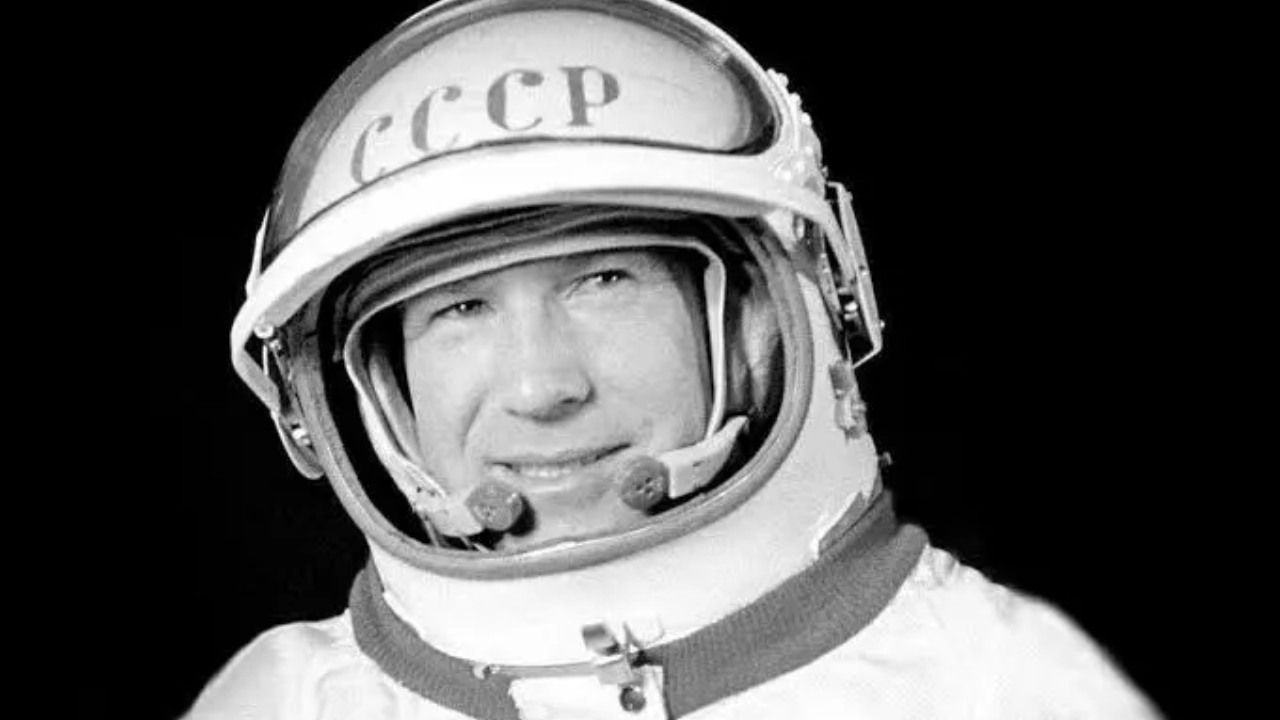
We tend to look back at the early space race as a series of clean, triumphant dates etched into textbooks. We see the grainy monochrome photographs of smiling cosmonauts and astronauts, their silver suits gleaming under hangar lights, looking like gods engineered for the future. But the reality inside those metal hulls was damp. It smelled of sweat, ozone, and raw, metallic terror.
In March 1965, Alexei Leonov stepped out of the Voskhod 2 spacecraft into the open void of the cosmos. He was the first human being to ever do so. For twelve minutes, he floated, a solitary speck of dust drifting over the massive, curved canvas of the Mediterranean and the snow-dusted expanse of the Ural Mountains.
Then, the universe reminded him who was boss.
The Weight of Zero Allure
To understand what happened to Leonov, you have to forget everything Hollywood has told you about space. It is not a peaceful, weightless sanctuary. It is an active environment of violent pressures.
Inside the Voskhod 2 capsule, Leonov and his commander, Pavel Belyayev, breathed pure oxygen. The air pressure was maintained at a level comfortable for human lungs. Outside, there was nothing. The delta—the difference between the pressure inside Leonov’s spacesuit and the vacuum of space—was supposed to be regulated perfectly by his equipment.
But engineering on a drafting board in Moscow is a world away from the harsh reality of Earth's orbit.
Think of a bicycle tire. When you pump it full of air, the rubber stiffens until it is rock hard, resisting the bend of your thumb. The moment Leonov entered the vacuum, his Berkut spacesuit reacted exactly like that tire. The pressure inside the suit ballooned outward against the empty void.
Leonov felt the fabric tighten. The gloves swelled until his fingers could no longer grip the safety tether. His boots expanded, slipping away from the soles of his feet. Within minutes, the suit deformed completely. He was no longer a pilot maneuvering through space; he was trapped inside a rigid, misshapen cage of rubber and canvas that refused to bend.
His heart rate spiked. The suit began to heat up, the internal cooling system completely overwhelmed by the sheer exertion of Leonov trying to force his own limbs to move against the pressure. Sweat pooled in his helmet, sloshing across his eyes, blinding him in the glare of the unfiltered sun.
He was running out of oxygen. And he was stuck outside.
The Calculation of Survival
The hatch of the Voskhod 2 was only about intermediate width—roughly forty-five inches across. Leonov’s inflated suit was now wider than the opening.
Imagine trying to push an over-inflated couch through a narrow apartment doorway while wearing oven mitts, blindfolded, knowing that if you fail, you will drift across the solar system until your air runs out. That was the mathematical reality facing the cosmonaut.
He had two choices, both of them terrifying.
He could radio ground control in Moscow, breaking protocol, waiting for a committee of engineers to debate a solution while his life support ticked down to zero. Or he could make a rogue decision.
Leonov chose to live.
Without consulting the engineers on Earth, he reached for the pressure relief valve on his suit. This was an act of pure, calculated madness. By opening the valve, he was intentionally bleeding off his own life-giving oxygen supply into the void, hoping to deflate the suit just enough to squeeze back into the ship before he blacked out from decompression sickness.
Air hissed out into the blackness. The nitrogen in his blood began to boil—a agonizing condition known to deep-sea divers as the bends. His vision narrowed. The edges of his consciousness began to fray like a burnt rope.
Slowly, agonizingly, the suit softened.
He didn’t go back in headfirst as the manuals prescribed. He couldn't. Instead, he lunged into the airlock chamber backwards, kicking frantically, operating on pure adrenaline and animal instinct. He wrestled his swollen frame through the narrow ring of metal, defying the physical geometry of his own equipment.
He was inside. But the nightmare was only getting started.
When the Earth Ignores You
Re-entering the spacecraft should have been the end of the ordeal. But the universe wasn’t done testing the crew of Voskhod 2.
As Leonov and Belyayev prepared to return to Earth, the automated landing system failed completely. The capsule’s thrusters didn't fire when they were supposed to. A manual re-entry was their only option, an incredibly precise maneuver that required Belyayev to calculate the burn time perfectly while crammed into a cockpit that was suffocatingly small.
They fired the rockets, but the orbital module failed to separate completely from the landing capsule. A thick bundle of communication cables kept the two modules chained together.
As they hit the upper layers of the atmosphere, the two connected spacecraft began to spin violently, tumbling through the thermal inferno of re-entry like a thrown stone. The gravitational forces were immense, pulling blood from their brains, forcing their eyes back into their skulls.
Finally, the intense heat of friction burned through the connecting cables. The capsule stabilized, its massive parachutes deploying with a violent jerk.
They hit the ground hard.
When the dust settled, Leonov and Belyayev looked out the small porthole. They weren’t in the warm, predictable steppes of Kazakhstan where the recovery teams were waiting. They were thousands of miles off-course, deeply embedded in the ancient, frozen taiga of the Upper Kama Upland, surrounded by snowdrifts and dense pine forests.
The Cold Reality of the Taiga
The silence must have been deafening after the roar of the rocket engines.
The temperature outside was well below zero. The spacecraft's electrical systems were dead, meaning the internal heaters were useless. The capsule's hatch was jammed shut against a massive birch tree, forcing the two exhausted men to use their bare hands and survival tools to wedge the heavy metal open.
They stepped out into snow that came up to their chests.
The Soviet space program was a marvel of technological engineering, but it had no answer for the primal wilderness of the Siberian winter. The recovery crews knew the cosmonauts were alive, but the terrain was too thick for helicopters to land.
For two days, Leonov and Belyayev lived in that frozen forest. They poured the sweat out of their spacesuits, wrung out their thermal underwear, and used the capsule's rough insulation material to wrap themselves against the biting wind. They had a single pistol between them, kept close at hand not for politics, but because the local wolves and bears were active, hungry, and entirely unbothered by the technological achievements of humanity.
They survived on raw grit, a small fire, and shared rations until a rescue team on skis finally carved a path through the wilderness to reach them.
The Scars of the Horizon
We often treat progress as an inevitability. We look at complex machinery and assume the technology itself is what carries us forward.
It isn't.
The machine is only as strong as the human heart inside it. Alexei Leonov survived the first spacewalk not because the Soviet engineering was flawless, but because he possessed a rare, icy clarity of mind when the entire universe was telling him to panic. He stared into the absolute nothingness of the void, felt his own body expanding toward death, and chose to precisely bleed away his life support just to buy a few more inches of movement.
Decades later, Leonov would look back on those twelve minutes in the open sky not with boasting, but with a quiet, reverent awe. He remembered the profound silence of the stars and the terrifying fragility of the blue planet below.
We cross frontiers because we are driven to see what lies beyond them, but the true test of exploration is never the arrival. It is the survival. It is the willingness to bleed the air from your own suit just to find a way back home.