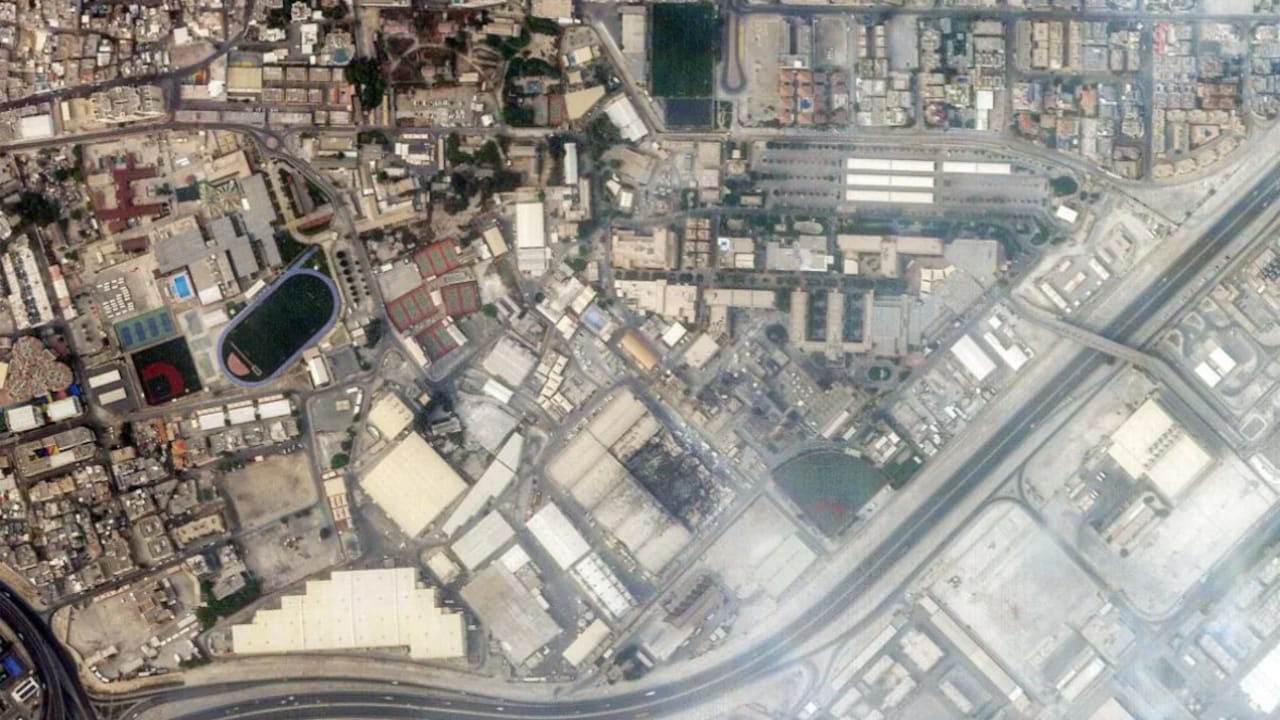
The air inside a tactical operations center does not smell like heroism. It smells like stale coffee, ozone, and the collective sweat of two dozen people trying very hard not to panic. On a routine night at an American outpost in the Middle East, the hum of servers is usually the loudest sound in the room. Officers stare at screens, tracking the mundane choreography of routine patrols and logistics.
Then, the screens blink.
It starts as a flurry of small, slow-moving dots on the radar. They are not supersonic fighter jets. They do not cost eighty million dollars apiece. They are cheap, fiberglass lawnmowers with wings, packed with explosives and guided by commercial GPS. And there are dozens of them, humming their way through the dark toward a multi-billion-dollar military installation.
For decades, American military dominance rested on a simple premise: we own the sky. If you wanted to challenge the United States, you needed a state-backed defense budget, advanced aerospace engineering, and a fleet of stealth aircraft. That premise died on the night a swarm of low-cost drones rained down on a major U.S. base. It was a loud, chaotic wake-up call that forced military strategists to tear up their old playbook and start over.
The Anatomy of an Asymmetric Nightmare
To understand why this moment sent shockwaves through the highest corridors of defense, consider a hypothetical soldier named Specialist Miller. Miller is standing watch, wearing gear that costs more than a family sedan, backed by the most sophisticated logistics network in human history. He is protected by anti-missile systems designed to intercept multi-million-dollar ballistic threats.
But those defense systems were built for a different century.
When a swarm of loitering munitions—often called suicide drones—descends on a base, they fly low, hug the terrain, and move slowly enough to blend in with birds or radar clutter. The traditional response to an airborne threat is a surface-to-air missile. There is just one glaring problem with this math. A single Patriot interceptor missile costs roughly three to four million dollars. The drone it is trying to shoot down might cost twenty thousand dollars.
Some cost even less.
You do not need a degree in economics to see the math of defeat hidden in those numbers. If an adversary launches fifty cheap drones, and you shoot them down with fifty multi-million-dollar missiles, you are losing the war of attrition before the first boot hits the ground. The enemy can bankrupt your defense budget without ever risking a human pilot. It is a terrifying shift in the economic gravity of warfare.
The Long Illusion of the High-Tech Shield
For a long time, Western defense strategy operated under the assumption that complexity equaled security. We built bigger radars, stealthier jets, and more intricate command networks. We treated warfare as an exclusive club where only the wealthiest nations could afford to play.
The proliferation of cheap, automated technology blew the doors off that club.
Suddenly, small commercial components available on civilian markets were being modified to carry military-grade payloads. Think about the last time you ordered something online. The supply chains that bring consumer electronics to your doorstep are the exact same channels supplying the chips, motors, and GPS modules used to build these swarms. The democratization of technology turned a hobbyist’s toy into a strategic weapon.
When the attack hit, it was not just a physical assault; it was a conceptual ambush. The base defenses managed to neutralize many of the incoming threats, but the sheer volume overwhelmed standard protocols. Fragments rained down. Structures burned. The vulnerability was suddenly undeniable. The invisible shield that American forces had taken for granted for thirty years had holes in it, and those holes were precisely the size of a standard commercial drone.
Rebuilding the Wall from Scratch
The morning after an attack like that brings a quiet, heavy realization. The strategies that secured the past cannot guarantee the future. The Pentagon realized it could not simply buy its way out of this problem using the traditional defense acquisition pipeline, which takes years to approve a single piece of hardware.
The response required an entirely new way of thinking about defense.
Instead of relying solely on massive, centralized missile batteries, the military had to pivot toward what engineers call layered defense. This means mixing old-school kinetic solutions—like rapid-fire cannons that shred the air with steel—with futuristic directed energy weapons. High-powered microwaves and lasers are no longer science fiction. They are economic necessities. A laser beam does not cost three million dollars per shot; it costs the price of the fuel required to run the generator for a fraction of a second.
But hardware is only half the battle. The real panic in modern military strategy is about data processing. Human eyes and reflexes cannot track thirty distinct targets attacking simultaneously from different angles at two in the morning. The defense of a modern base relies on algorithms that can identify a drone by the specific frequency of its motor, calculate its trajectory, and deploy a countermeasure in milliseconds without waiting for a human to click a mouse.
The Human Cost of a Moving Target
It is easy to get lost in the talk of algorithms, lasers, and strategic pivots. But the true weight of this shift lands squarely on the shoulders of the people living inside those perimeters.
Imagine sitting in a concrete bunker, listening to the high-pitched, buzzing whine of an incoming swarm. It sounds like a hornet’s nest amplified through a stadium speaker. You know that if the automated jamming systems fail for even a second, that sound ends in a blast wave. The psychological toll of this constant, low-cost surveillance and threat environment changes the nature of service. There is no longer a safe "rear echelon" in modern conflict. If you are within range of a drone launcher, you are on the front line.
This reality has forced a profound humility upon military planners. The assumption of absolute technological superiority has been replaced by a gritty, urgent adaptability. Strategists are realizing that the next conflict will not be won by the side with the most expensive toys, but by the side that can adapt the fastest to the cheap, chaotic innovations of the modern world.
The smoking craters left in the wake of that attack were quickly filled with gravel, and the broken walls were rebuilt with reinforced concrete. But the old strategy could not be patched over so easily. The era of unchallenged airspace is gone, replaced by a messy, crowded sky where the cheapest weapon can dictate the moves of the world's most powerful military.


