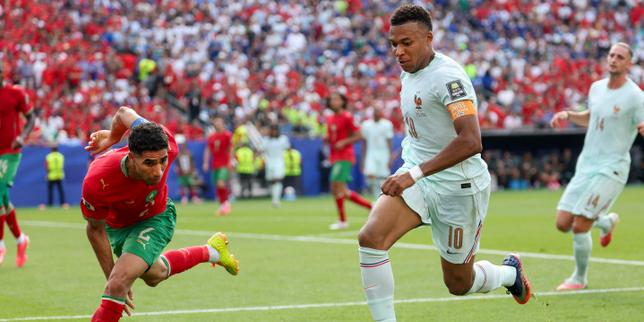
The air inside the stadium doesn't just hold the smell of stale beer and cut grass. It carries a heavy, vibrating pressure. When twenty thousand people lock their eyes onto a single patch of green turf, the silence right before a crucial play isn't actually quiet. It hums. You can hear the leather of a boot striking a ball, the desperate gasp of a defender lunging out of position, and, if you are close enough to the touchline, the raw, unfiltered fury of a manager who has completely forgotten that the entire world is watching him.
Football at the highest level strips away the polished veneer of corporate press conferences and multi-million-dollar sponsorships. It reduces grown men to their most primal states.
Consider what happens when that pressure valve finally pops.
During a recent, high-stakes clash involving the Mexican national team, the technical area became less of a tactical tactical zone and more of a Gladiator's pit. The Mexico boss, pushed to the absolute brink by the shifting tides of the match, let loose a volley of words so sharp and explicit they could be heard over the roar of the crowd. It wasn't tactical instruction. It wasn't a polite request for a tactical adjustment. It was a visceral, profane heckle aimed squarely at the opposition.
In the immediate aftermath, the moral architects of the sporting world laced up their boots to do what they do best: outrage. The back pages primed themselves for a scandal. Pundits sharpened their knives, ready to dissect the collapse of sideline decorum and demand formal apologies.
But then Craig Gordon stepped into the frame.
The View from the Goalmouth
To understand why Gordon, a veteran goalkeeper who has spent decades surviving the psychological warfare of professional football, looked at the manager's outburst and shrugged, you have to understand the view from between the posts.
A goalkeeper lives in a state of permanent isolation. For ninety minutes, they are subjected to a relentless barrage of abuse from fans standing mere feet behind their net. They watch managers pace the touchline like caged animals, throwing their arms up, screaming at officials, and occasionally losing their minds entirely.
When asked about the Mexican manager’s explicit tirade, Gordon didn't join the chorus of condemnation. He didn't offer a canned, PR-approved statement about setting a good example for the youth. Instead, he smiled. He called it a bit of fun.
That single phrase cracks open a window into a world the average spectator rarely sees. It exposes the massive, unspoken gulf between the sterile way we expect athletes to behave and the chaotic reality of how they actually survive the cauldron of elite competition.
The Theater of the Absurd
Football is, at its core, a theater of intense psychological manipulation. Every throw-in delayed by five seconds, every heavy tackle meant to "leave a mark," and every screamed word from the technical area is a chess piece being moved in the dark.
Imagine standing on that pitch. Your lungs are burning. The home crowd is creating a wall of noise designed specifically to make you misjudge a bouncing ball by a fraction of an inch. In that exact moment, an opposing manager barks something deeply personal and intensely vulgar across the white line.
To an outsider sitting on a comfortable couch, it looks like a breakdown of discipline. It looks like a crisis of character.
But to the players on the grass, it is merely data. It is a sign that the pressure is working. When a manager resorts to explicit heckling, they aren't demonstrating power; they are revealing their vulnerability. They are screaming because they have lost control of the tactical board and are trying to claw their way back into the match through sheer, aggressive willpower.
Gordon’s dismissal of the incident as "fun" isn't a defense of bad manners. It is an acknowledgment of the unwritten rules of the game. On the pitch, insults don't carry the same weight they do in a corporate office or a schoolyard. They are stripped of their societal context and weaponized as psychological noise. If you let the noise in, you lose. If you view it as part of the theater, you survive.
The Myth of the Sterile Athlete
We have fallen into a dangerous trap in modern sports culture. We demand that our athletes perform with superhuman intensity, yet we expect them to possess the emotional temperament of Buddhist monks the moment the ball goes out of play. We want the fire, but we are terrified of the smoke.
The reaction to the Mexico boss’ behavior highlights this exact hypocrisy. We tune in for the drama, the rivalry, and the high-octane emotion that makes international football the most compelling spectacle on earth. Yet, when that emotion boils over into something raw and unscripted, the collective instinct is to sanitize it.
But the real problem lies elsewhere. By treating every sideline outburst as a moral failing, we strip the game of its humanity. We forget that these are human beings operating under levels of stress that would crush the average person. A manager’s job hangs on the whims of a ball hitting an upright. Their reputation, their livelihood, and the pride of an entire nation are tied to ninety minutes of chaos.
When Craig Gordon calls an explicit heckle "a bit of fun," he is gently mocking our collective fragility. He is reminding us that the people inside the arena are far more resilient than the people watching from the stands. They don't need to be protected from a manager's sharp tongue. They don't need a safe space on the six-yard box.
What We Lose When We Clean Up the Game
There is a quiet push to turn football into a perfectly curated product. Mic up the referees, penalize every minor show of frustration, and turn the technical area into a designated zone of polite applause.
But something vital dies in that sterilization process.
The grit, the edge, and the genuine animosity between rivals are what give the victories their sweetness and the defeats their sting. When you remove the ability of a manager or a player to lose their temper, you remove the honesty of the sport. The explicit heckle from the Mexico boss wasn't elegant, and it certainly wasn't polite. But it was entirely honest. It was the sound of a man who cared too much, trapped in a moment where everything was on the line.
The match eventually ended. The stadium emptied, leaving behind nothing but crushed plastic cups and the echo of the crowd. The pundits continued to talk, parsing the words, looking for angles of offense, and drafting hypothetical punishments.
But out on the pitch, before the lights were turned off, the players shook hands. They swapped shirts. They understood what the onlookers couldn't: that the anger breathed out during the ninety minutes belongs exclusively to the grass, disappearing into the night air the very second the final whistle blows.