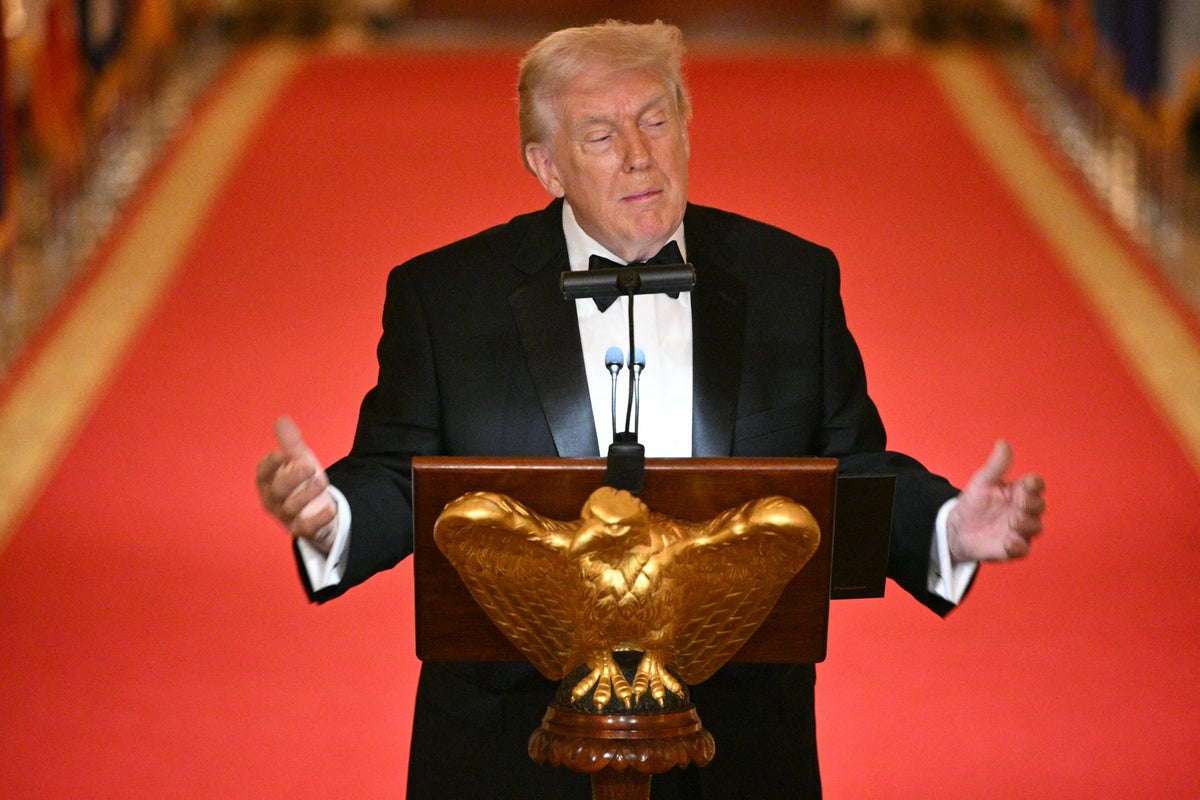
The air inside the Washington Hilton’s International Ballroom usually smells like expensive cologne, wilting lilies, and the frantic sweat of a thousand journalists trying to look like they aren't working. It is a strange, shimmering bubble. Here, the people who write the news sit elbow-to-elbow with the people who make it. For decades, the White House Correspondents’ Dinner was a truce. It was the one night a year when the daggers were supposedly sheathed, the press corps wore floor-length gowns, and the President of the United States stood at a podium to prove they could take a joke.
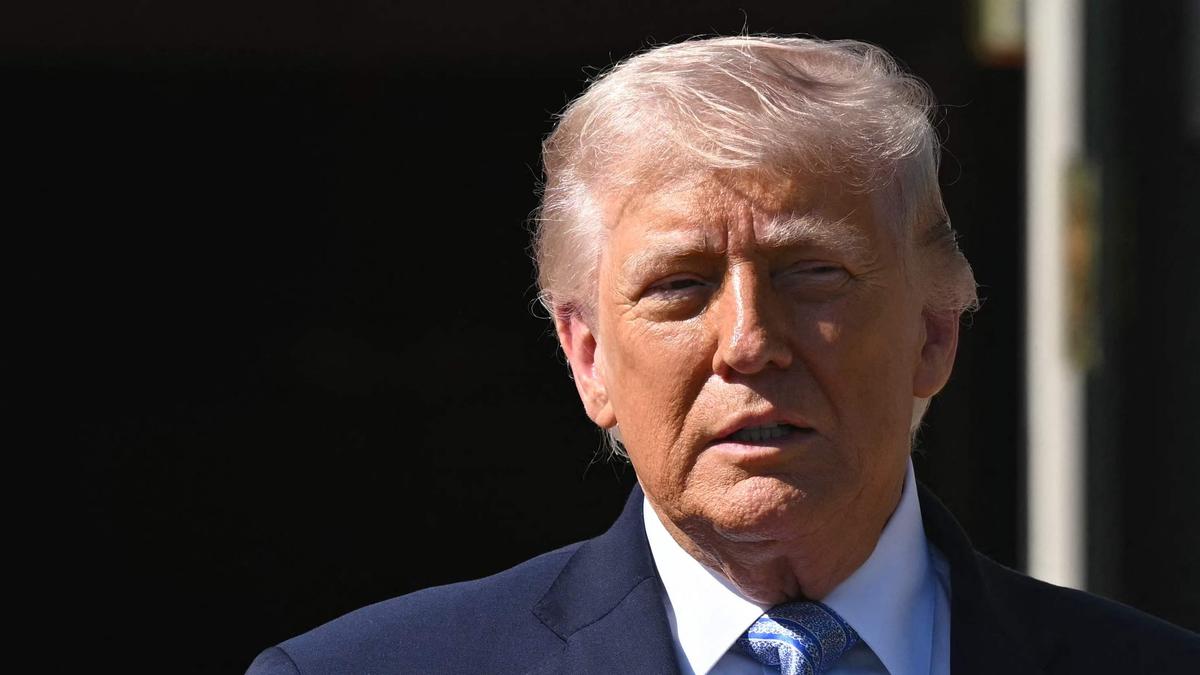
Then came the return of Donald Trump.
The room didn’t just feel crowded; it felt pressurized. When the former president and current candidate stepped into that space, he wasn’t just attending a dinner. He was walking back into a gladiatorial arena he had spent years dismantling. The debate that had been simmering in newsrooms from Midtown Manhattan to K Street didn't just reignite. It exploded.
The Ghost at the Head Table
To understand why this single appearance matters, you have to look past the tuxedoes. You have to look at the empty chairs of the years prior. During his first term, Trump treated this event like a toxic spill. He stayed away, hosting rallies in the heartland where he branded the people in this very ballroom the "enemy of the people."
By showing up now, he performed a masterful piece of political theater. It was a reclaiming of territory.
Imagine a veteran reporter—let’s call her Sarah—who has spent twenty years covering the West Wing. She remembers when the dinner was a boring, slightly kitschy tradition. But as she watched Trump take his seat, the clinking of silverware felt different. For Sarah, and hundreds like her, his presence isn't just a "news cycle." It is a professional existential crisis. If you break bread with a man who has called for your credentials to be revoked, are you being "objective," or are you being complicit?
The tension in the room was a living thing. It sat in the lungs. It made the wine taste like vinegar.
A Dance on a High Wire Without a Net
The argument for his attendance is rooted in a certain old-world institutionalism. The "insiders" argue that for the American experiment to function, there must be a baseline of civility. They believe that even if the President and the Press are at war, they must acknowledge each other's right to exist. In this view, the dinner is a vital sign of a healthy democracy. It is the handshake at the end of a brutal hockey game.
But that logic is fraying.
The dissenters—and their voices are growing louder—argue that the handshake is a lie. They see the gala as a grotesque display of "the swamp" at its worst. To them, the image of journalists laughing at jokes told by a man who has repeatedly attacked the foundations of their craft is a betrayal of the public trust. It suggests that the animosity is just a performance for the cameras, while behind the scenes, everyone is part of the same elite club.
This isn't a theoretical debate. It’s a battle over the soul of how we get our information.
The stakes are invisible but massive. When the lines between "the watcher" and "the watched" blur this much, the audience at home stops believing in the watchman. They see the sparkle of the sequins and the flash of the cameras, and they don't see a free press. They see a gala.
The Comedy of Errors
The centerpiece of these evenings is the monologue. Traditionally, the President delivers a self-deprecating set, followed by a professional comedian who tears into everyone in the room. It is a high-wire act of satire.
However, Trump’s relationship with humor has always been transactional. He uses it as a blunt force instrument. In the past, the jokes told at his expense—specifically by Seth Meyers and Barack Obama in 2011—were credited by many as the spark that fueled his political ambitions. He didn't laugh then. He didn't laugh now.
Instead, the room watched a man who understands the power of the image better than any politician in a generation. He knows that by simply being there, he forces the media to cover him on his terms. He becomes the sun around which the entire galaxy of the D.C. elite must orbit.
The silence that followed some of the sharper barbs from the podium wasn't just about a lack of comedic timing. It was the sound of a room realizing it had lost control of the narrative. The press thought they were hosting him. In reality, he was hosting them.
The Cost of the Ticket
We often talk about "press relations" as if it’s a manual on a shelf. It isn't. It is a fragile, human connection. It is the ability of a reporter to ask a hard question and the obligation of a leader to answer it, even if they hate the person asking.
When that connection breaks, the world gets darker.
Consider the hypothetical young journalism student, watching the livestream from a dorm room in Missouri. They see the glamor. They see the celebrities. But they also see the vitriol on social media. They see the protesters outside the Hilton screaming about "fake news" and "genocide" and "betrayal." That student has to decide if this is a profession they want to join. If the dinner looks like a farce, the work starts to feel like a farce too.
The hidden cost of this night isn't the price of the beef Wellington or the security detail. It’s the slow, steady erosion of the idea that truth exists independently of power.
If the press is just another character in the reality show, then the show is all we have left.
The Echo in the Hallway
As the lights dimmed and the guests spilled out into the humid Washington night, the debate didn't end. It just moved to the after-parties. In the dimly lit bars of the Dupont Circle hotels, the same questions were whispered over gin and tonics.
"Should we have been there?"
"Did we give him what he wanted?"
"Does the public even care?"
The reality is that there are no easy answers. If the press ignores him, they are accused of bias and losing touch with a massive segment of the population. If they embrace him, they are accused of normalizing rhetoric that many find dangerous. It is a trap with no exit.
The ballroom is empty now. The lilies have been tossed in the trash, and the tuxedoes have been returned to their garment bags. But the image of that night remains.
It is the image of a divided country mirrored in a room of people who are supposed to be explaining that country to itself. We are left watching a screen, trying to figure out where the performance ends and the reality begins. The most terrifying thought isn't that the two sides hate each other. It’s the possibility that they need each other too much to ever let the curtain fall.
The circus hasn't left town. It just found a permanent home in the heart of the capital, and the tickets are getting more expensive every year.
Somewhere in the silence of the now-dark ballroom, the ghost of a different era lingers—a time when the laughter didn't feel like a weapon and the truth didn't feel like a casualty of the guest list.
We are all still waiting for the punchline.