The screen does not blink. It sits in a concrete basement somewhere outside Kyiv, humming a low, monotonous song that competes with the distant thud of artillery. For the young lieutenant staring at the pixels, the world has shrunk to a series of glowing geometry shapes. Green boxes mean safety. Red triangles mean death is en route.
Two years ago, this room smelled of wet wool and panic. Maps were paper. Decisions took minutes. Today, the air smells of ozone and energy drinks, and decisions are made in milliseconds by an invisible intelligence that never sleeps, never grows tired, and never feels fear. Read more on a related topic: this related article.
We are witnessing the quiet death of old war.
For centuries, conflict was defined by the limits of human muscle and the speed of human eyesight. Generals stood on hills with brass telescopes. Later, commanders sat in bunkers with radio headsets. But the fundamental bottleneck remained the same: the human brain. A mind can only process so much data before it breaks under the weight of terror and fatigue. Additional reporting by The Verge highlights comparable perspectives on the subject.
Now, that bottleneck is gone. In its place is an architecture of cold math. Ukraine has become the world’s living laboratory for an entirely new kind of conflict, one where artificial intelligence is no longer a futuristic accessory but the central nervous system of survival.
The Ghost in the Machine
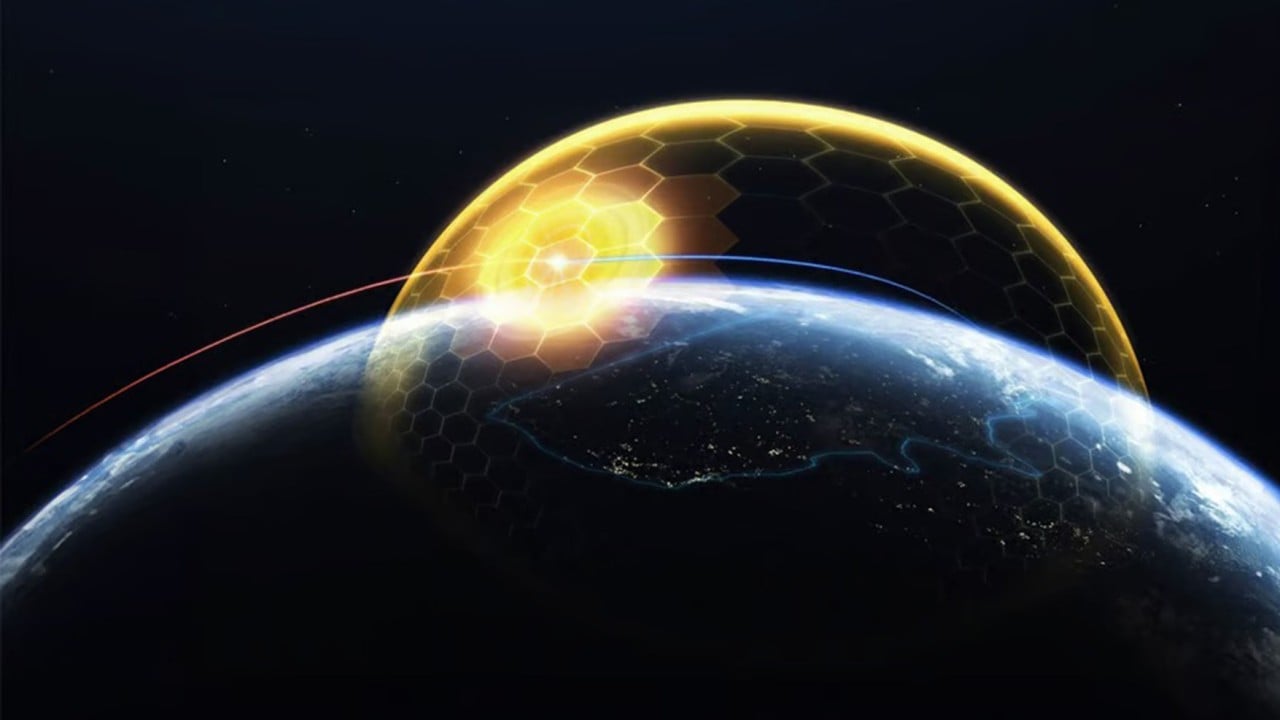
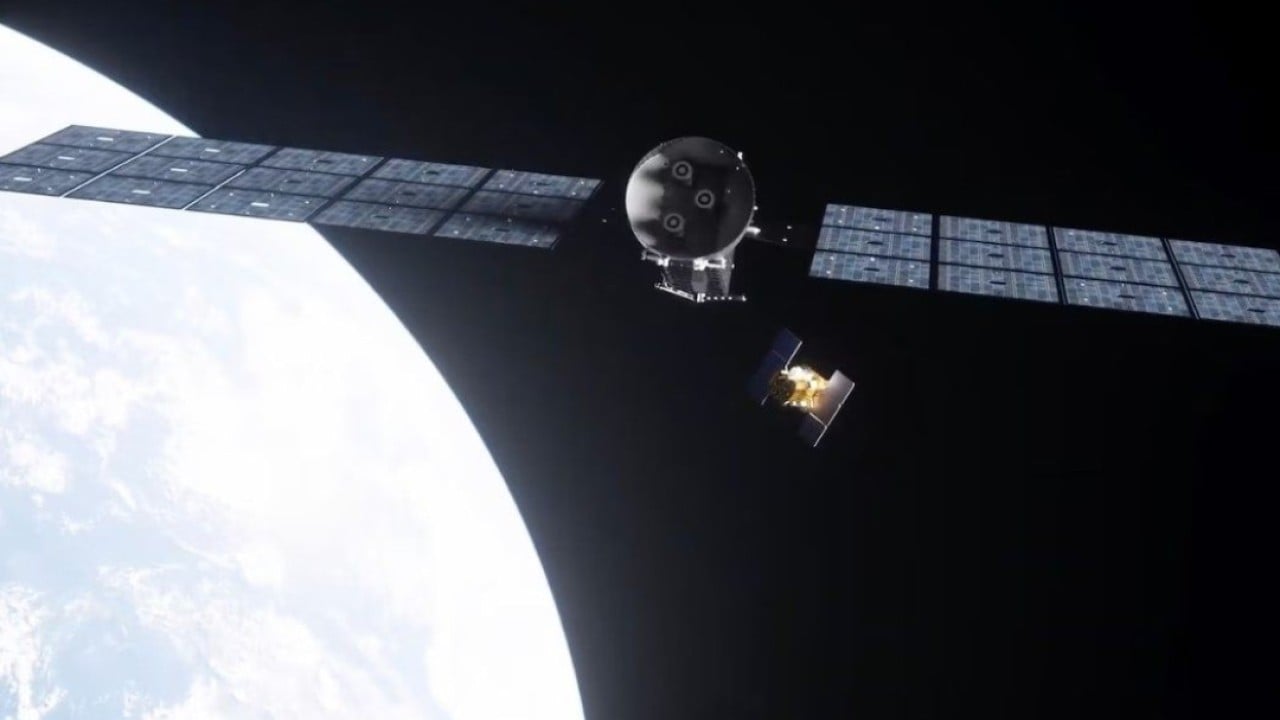
To understand what has changed, you have to look past the hardware. The world obsessively tracks the delivery of tanks, missiles, and fighter jets. But the most lethal weapon in the modern arsenal weighs nothing at all. It exists as lines of code pulsing through improvised mesh networks and consumer satellite dishes.
Consider a hypothetical but entirely typical scenario unfolding every hour along the thousand-kilometer front line.
A tiny, off-the-shelf drone hovers over a treeline. Its camera captures a blurry patch of canvas hidden beneath branches. To a human eye, even an experienced one, it looks like nothing. Just shadows and leaves.
But the video feed isn’t being watched by a tired soldier. It is being fed directly into an object-recognition algorithm trained on thousands of hours of battlefield footage.
The software notices the specific geometry of the canvas. It recognizes the silhouette of a hidden ammunition depot. Within three seconds, the system logs the coordinates, crosses them with weather data, checks the availability of nearby artillery units, and presents a firing solution to a human commander.
One click, and the target is gone.
This isn’t science fiction. It is the daily reality described by tech leaders embedded within the Ukrainian ministry of defense. The speed of the kill chain—the time between spotting an enemy and destroying them—has dropped from tens of minutes to mere heartbeats.
The Great Data Deluge
The real crisis of modern conflict isn't a lack of information. It is too much of it.
Every day, thousands of drones flood the cloud with high-definition video. Terrestrial sensors record acoustic data. Satellites pass overhead, snapping radar imagery through heavy cloud cover. Cyber units intercept radio chatter.
If you gave this mountain of data to a traditional military staff, they would drown in it. The war would move past them while they were still sorting through files.
The algorithms act as a digital filtration system. They separate the signal from the noise, ignoring the wind blowing through the grass to find the single tank engine cooling down in the dark.
But this reliance on digital sight has created an intense, invisible arms race. It is a war fought in the electromagnetic spectrum, a silent collision of code against code.
When one side deploys a software update that allows drones to navigate without GPS by reading the terrain below them like a map, the other side rushes to write an algorithm that can spoof those visual markers. It is a dizzying, iterative cycle. Software updates that used to take months or years in peacetime procurement cycles are now written, tested, and deployed in forty-eight hours.
If you don't update your code by Wednesday, your drones fall out of the sky by Friday.
The Weight of the Click
There is a profound discomfort in watching the human element recede from the loop.
Engineers will tell you that the systems are designed to keep humans in control. The AI suggests; the soldier decides. It sounds reassuring on paper. It comforts politicians and ethicists in distant capitals.
But the reality on the ground complicates this neat moral framework. When an autonomous system presents a target with a ninety-nine percent certainty rating, and the incoming artillery shells are thirty seconds away from your position, do you really have a choice? Do you pause to double-check the math?
You trust the machine. You have to.
This trust creates a strange, detached psychological reality for the operators. They are intensely connected to the battlefield through high-resolution screens, yet physically removed from the dirt and blood. They watch the destruction of columns in silence, accompanied only by the click of a computer mouse.
The danger is not that the machines will rebel. The danger is that we will become so dependent on their speed that we forget how to see the world without them.
The Democratization of Lethality
The old paradigm of military might belonged exclusively to empires. Only superpowers could build the satellite constellations and supercomputers required to run advanced intelligence networks.
That monopoly has shattered.
The code running the defense systems in Ukraine isn't just built by massive defense conglomerates. Much of it is written by volunteers, tech-savvy citizens who were building e-commerce apps and mobile games before the war began. They are using open-source tools, commercial cloud computing, and consumer electronics to build systems that rival, and sometimes exceed, the capabilities of traditional Western militaries.
This is the terrifying equalizer. A small nation, or even a non-state actor, can now achieve massive strategic leverage through clever software integration. You no longer need a billion-dollar spy plane when a thousand-dollar drone paired with a sophisticated neural network can accomplish the same mission.
The world is watching this experiment with a mixture of awe and dread. Military observers from every major global power are studying the data coming out of Ukraine, rewriting their own doctrines in real time. They realize that the massive, expensive platforms of the twentieth century—the aircraft carriers, the heavy bombers—are increasingly vulnerable to swarms of cheap, intelligent, distributed systems.
The Silent Frontier
Outside the concrete basement, the sun begins to rise over the Ukrainian steppe. The light reveals a scarred landscape, pitted with craters and littered with the rusted hulls of burned-out machinery.
Inside, the lieutenant's eyes are bloodshot. He sips his cold coffee. On his screen, a new cluster of red triangles appears near the edge of a decimated village.
The machine has detected movement. It doesn't tell him if the movement is a squad of enemy soldiers or a family trying to flee the ruins. It simply offers a probability matrix, a clean set of numbers waiting for a human finger to press the button.
We have crossed a threshold from which there is no return. The future of human conflict is no longer a question of who has the most men or the biggest factories. It is a question of who has the best data, the cleanest code, and the fastest processors.
The lieutenant hovers his hand over the input device. For a brief moment, the entire weight of history rests on the friction between his finger and the plastic key. Then, he clicks. The triangles vanish from his screen, replaced by a fresh stream of data rolling down the margin, indifferent to what it left behind in the dark.