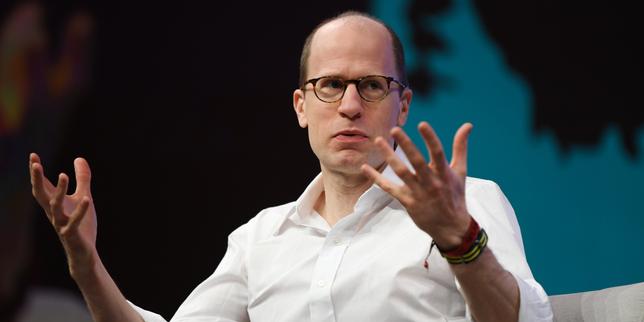
The global mood around artificial intelligence shifted overnight. A few years ago, tech pioneers painted pictures of a utopia where algorithms cured diseases and ended grueling labor. Today, governments are racing to pass sweeping restrictions, terrified of existential risk and algorithmic bias. Swedish philosopher Nick Bostrom thinks this sudden panic is a massive mistake. The man who practically invented the modern field of AI existential risk is now worried about a massive backlash against the technology.
It sounds like a total contradiction. Bostrom spent years warning us that a superintelligent AI could accidentally wipe out humanity. His 2014 book Superintelligence became the definitive textbook for Silicon Valley's doomsday fears. Elon Musk and Bill Gates read it and started sounding the alarm. But now, Bostrom is shifting his stance. He argues that the pendulum has swung too far toward fear, threatening to choke off the incredible benefits of AI before they even materialize.
The Unexpected Pivot of an Existential Risk Pioneer
When the person who sounded the alarm tells you to slow down the panic, you listen. Bostrom spent his career at the University of Oxford running the Future of Humanity Institute. He looked at the long-term horizons of human survival. For decades, he insisted that humanity wasn't taking the threat of unaligned machines seriously.
Now, things are different. Every major government is drafting regulatory frameworks. The European Union passed its comprehensive AI Act. The United States issued sweeping executive orders. Global summits focus entirely on preventing worst-case scenarios.
Bostrom looks at this current climate and sees a different kind of danger. He fears a reactionary wave. If a single high-profile AI accident occurs, or if public anxiety reaches a boiling point, politicians might implement heavy-handed bans. This overcorrection could freeze progress for decades. We risk losing out on medical breakthroughs, economic efficiency, and scientific discoveries because we are trying to regulate a hypothetical monster.
Understanding the Real Threat of an Overcorrection
Why should we care about a regulatory overcorrection? Tech development isn't something you can turn off and on like a faucet. It relies on momentum, funding, and talent.
When you over-regulate an emerging field, you don't stop the technology. You just push it underground or into jurisdictions that don't care about safety at all. If Western democracies impose rules that make AI development impossible, the research moves elsewhere. It goes to countries with fewer ethical guardrails.
Current Regulatory Approach vs. Bostrom's Balanced Approach

Current Path:
- Fear-driven policies
- Preemptive bans on advanced models
- Heavy compliance burdens for startups
- Concentrated power in a few tech giants

Bostrom's Preferred Path:
- Proactive safety research
- Flexible, adaptive guidelines
- Openness to technological upside
- Decentralized innovation with clear guardrails
Bostrom's core argument rests on a simple premise. The benefits of achieving advanced AI are astronomical. We are talking about solving complex climate issues, automating tedious labor, and revolutionizing medicine. If we let fear dictate our policies, we delay these solutions. A delay of even five years means millions of people dying from illnesses that an advanced AI might have cured. That is a tangible, quantifiable loss. It weighs heavily against speculative future risks.
Moving Past the Binary View of Tech Safety
The public debate around AI safety is frustratingly simplistic. You are either labeled a tech-optimist accelerationist who wants to build God as fast as possible, or an alarmist doomer who wants to unplug every server farm on Earth. Both positions are absurd.
Bostrom's new perspective offers a middle ground. He isn't denying his past work. He still believes that superintelligence poses a unique, civilizational challenge. But he recognizes that human psychology tends to overreact to new threats while ignoring familiar ones.
We accept thousands of deaths from car accidents every year because cars are useful. We accept the flaws of our current economic systems because they provide wealth. Yet, we demand absolute perfection from AI systems before they can even be deployed. This double standard harms progress.
The Problem With Preemptive Laws
Regulators are trying to write laws for technology that doesn't exist yet. They are guessing what GPT-6 or future neural networks will look like, creating rules based on science fiction tropes.
This causes two major problems:
- Regulatory Capture: Gigantic tech corporations love complex regulations. They have the money to hire armies of lawyers to comply with them. Startups don't. Heavy regulation kills competition and keeps power in the hands of a few tech monopolies.
- Stagnation: When developers have to spend more time on legal compliance than on actual safety engineering, the technology stagnates. Safety research becomes a checkbox exercise instead of a rigorous scientific pursuit.
How to Balance Innovation and Existential Safety
We need a major shift in how we handle tech policy. Instead of passing massive, sweeping bans out of fear, governments should focus on targeted, flexible frameworks. We must fund empirical safety research rather than drafting speculative legal restrictions.
If you want to navigate this transition without triggering a disastrous backlash, focus on practical actions. Stop treating AI like a singular entity. An algorithm that predicts protein folding is radically different from a large language model generating political commentary. They require entirely different approaches.
Establish Dynamic Sandboxes
Governments should create safe testing environments where developers can deploy advanced models under close observation. This lets us observe real-world behavior and catch actual vulnerabilities before a widespread rollout. It gives us real data instead of theoretical anxieties.
Fund Open-Source Safety Tools
Instead of outlawing open-source AI, we should fund the development of robust, public-interest safety tools. Making safety mechanisms widely available allows independent developers to build secure applications without relying on corporate gatekeepers.
Focus on Tangible Harm Over Speculation
Address the issues happening right now. Deal with deepfakes, copyright disputes, and data privacy. Solving these immediate problems builds public trust. That trust prevents the exact political whiplash that Bostrom fears, ensuring we don't panic and dismantle our technological future.