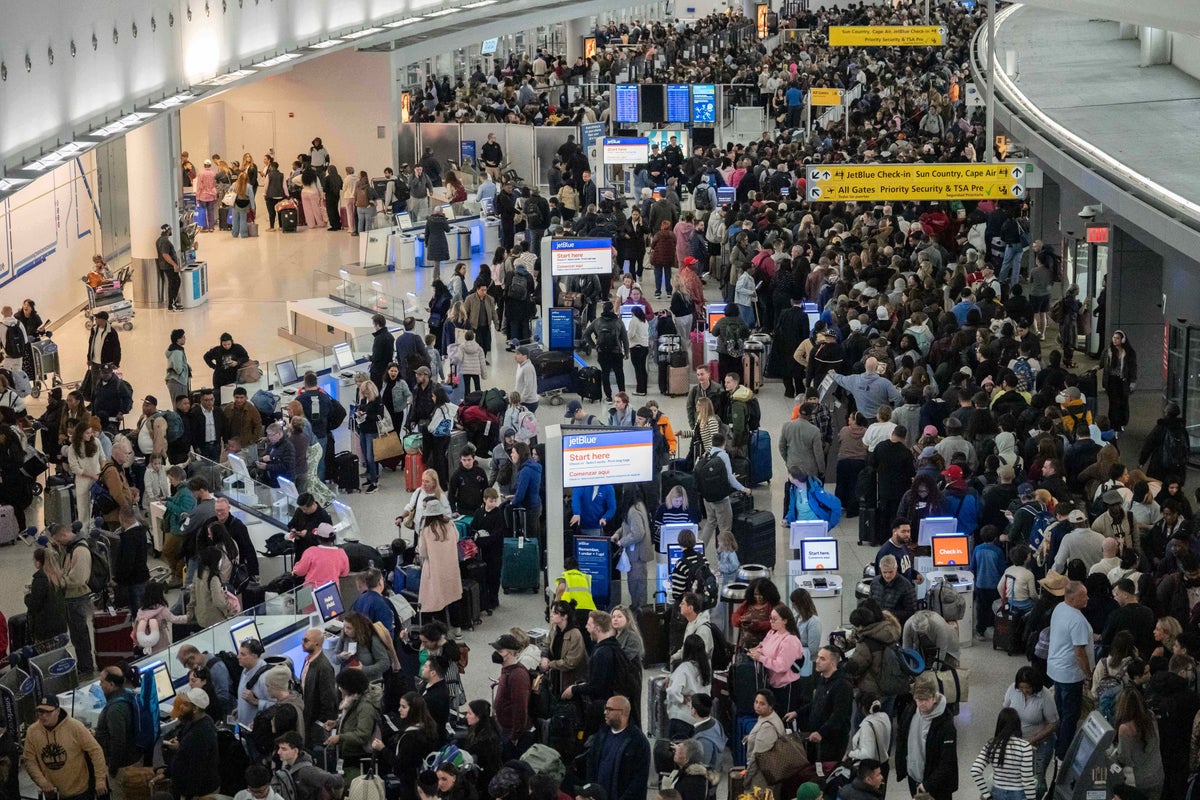
You stand there, belt in hand, shoes off, watching a TSA agent slowly inspect a bottle of contact lens solution like it’s a high-priority forensic artifact. Behind you, the line stretches toward the terminal entrance, a sea of vibrating phones and audible sighs. If you’ve flown out of JFK, LaGuardia, or Newark lately, you know this isn't just a bad day. It's the new baseline. New York’s airports are currently buckling under a perfect storm of record passenger volumes, staffing shortages, and infrastructure that feels like it was designed during the Truman administration.
The numbers don't lie. According to the Port Authority of New York and New Jersey, these hubs saw more than 144 million passengers last year. That’s a massive jump that caught the TSA flat-footed. When you combine that volume with a labor market where starting TSA wages struggle to compete with entry-level fast-food jobs in Queens or Newark, you get the chaos we’re seeing at the checkpoints.
The Reality of the JFK and LaGuardia Squeeze
It’s easy to blame the TSA agents. They're the ones in the blue shirts standing between you and your gate. But the problem is systemic. At JFK’s Terminal 4, the primary international gateway, lines frequently snake through the arrivals level during peak evening banks. I’ve seen travelers wait over 90 minutes just to reach the x-ray belt.
LaGuardia is a different kind of headache. Despite the multi-billion dollar facelift that made the terminals look like high-end shopping malls, the security bottlenecks remain. The sleek glass and fancy water features don't matter much when only three of six screening lanes are open on a Monday morning. The Port Authority and the TSA often trade barbs over who’s responsible for the wait times. The TSA points to "unprecedented travel demand," while airport officials point to "operational inefficiencies." You just want to get to your flight.
Newark Liberty (EWR) Terminal A is perhaps the only bright spot, having recently won awards for its design. Yet, even there, the "new terminal smell" can’t mask the frustration when the CLEAR kiosks go down or the PreCheck lane merges into a general boarding line because of a technical glitch.
Why Technology Isn't Saving Us Yet
We were promised that new CT scanners would speed things up. These machines allow you to leave your laptop and liquids in your bag. In theory, that's a massive time-saver. In practice, these machines are slower at processing individual bags than the old-school x-rays. They provide better security images, which is great for safety, but they often lead to more "false positives" that require a manual bag search.
Every time a bag gets pulled for a manual check, the entire lane stops. If a TSA officer has to spend five minutes digging through a backpack to find a forgotten tube of toothpaste, that’s fifty people behind you who just moved zero inches. It's a bottleneck that tech was supposed to fix but has occasionally made worse during this transition period.
Then there’s the CLEAR and PreCheck situation. It used to be a "secret" for frequent flyers. Now, everyone has it. When 60% of the people in the terminal have some form of expedited screening, nobody has expedited screening. We’ve reached a tipping point where the "fast" lane is often longer than the general line.
The Staffing Crisis Behind the Scenes
TSA attrition is a real thing. The job is stressful. You’re dealing with angry travelers all day while performing a high-stakes security role. In the New York metro area, the cost of living is astronomical. When a TSA officer can make similar or better money working at a warehouse or in retail without the federal background checks and the stress of national security, they leave.
The agency has tried offering signing bonuses—sometimes up to $2,000—but it’s a band-aid on a bullet wound. Training new officers takes months. By the time a new cohort is ready, another group has already quit. This revolving door means New York airports are constantly operating with a "rookie" workforce that hasn't developed the muscle memory to move lines quickly.
Navigating the Chaos Without Losing Your Mind
If you’re flying out of NYC, you have to change your strategy. Showing up two hours early is no longer a "safe bet." It’s the bare minimum. For international flights out of JFK, three hours is the new reality.
Check the TSA Wait Times app, but take it with a grain of salt. Those numbers are often crowd-sourced or delayed. A better trick is to check the terminal’s specific website. JFK Terminal 4, for instance, has a live sensor-based wait time tracker on its homepage that’s usually more accurate than the federal data.
Another pro tip involves Newark. If the line at Terminal C is a nightmare, you can sometimes clear security at Terminal A or B and take the airside shuttle. It’s a gamble and takes time, but if the main checkpoint is backed up to the parking garage, it’s worth a shot.
The Hidden Costs of Travel Delays
The frustration isn't just about missing a flight. It's the ripple effect. When security takes two hours, travelers skip the airport restaurants and shops. This hits the airport’s bottom line, which affects the budget for future improvements. More importantly, it creates a high-cortisol environment. I’ve seen more "air rage" incidents start at the security line than on the actual plane. By the time people board, they’re already at a breaking point.
It’s also worth noting the impact on New York’s reputation as a global business hub. If the "front door" to the city is a chaotic mess, it sends a message. Local business groups have been lobbying for more federal funding specifically for the NY-NJ region, arguing that our complexity requires more resources than a mid-sized airport in the Midwest. So far, the response from Washington has been lukewarm.
Moving Through the New Normal
Don't wait for the government to fix this. You need to be your own advocate. Dress for the occasion. Avoid the "tactical" boots with a million eyelets. Wear slip-ons. Empty your pockets into your carry-on while you’re still standing in the zig-zag line, not when you get to the bins.
If you see a massive line at JFK Terminal 1, look for the secondary checkpoints. They're often tucked away and underutilized because the main flow of traffic follows the biggest signs. Small tactical choices make the difference between a stressful morning and a missed vacation.
Stop relying on CLEAR as your only savior. Many travelers are finding that the "General" line is actually moving faster because the CLEAR and PreCheck lanes are oversaturated. Look at both before you commit to a lane. Sometimes the old-fashioned way is the fastest way out of the terminal.
Pack your bags with the assumption they will be searched. Group your electronics. Use clear pouches for your liquids. The less an agent has to hunt through your belongings, the faster you get to the bar on the other side. This isn't just about your time; it's about the collective speed of the thousand people behind you. New York airports aren't getting easier to navigate anytime soon, so adapt your routine now or expect to spend a lot of time staring at the back of someone else's head in a crowded hallway.