The Department of Justice just established a massive taxpayer-funded vehicle to pay out people who claim they were victims of political targeting by the previous administration. It is a stunning, unprecedented bureaucratic maneuver. If you think this is just standard legal housekeeping, you are missing the entire picture.
Critics are already calling it a brazen slush fund designed to reward political loyalists. The administration, meanwhile, frames it as a necessary act of constitutional hygiene to repair a weaponized justice system. Whichever side you land on, the reality is that the federal apparatus is being repurposed in a way we have never seen before.
Let's look at exactly how this happened, where the money is coming from, and what it actually means for the rule of law.
The Art of the Dropped Lawsuit
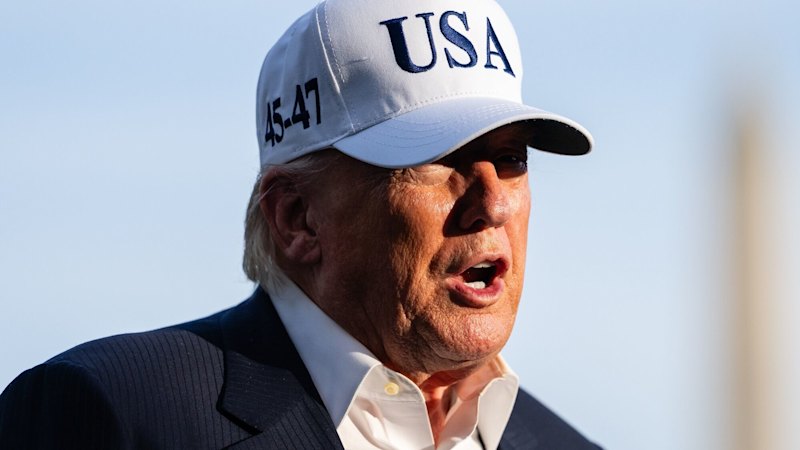
The catalyst for this entire situation stems from a quiet resolution to a high-profile legal battle. Donald Trump, his sons Eric and Donald Jr., and the Trump Organization agreed to completely drop their civil lawsuit against the IRS and the Treasury Department.
That original lawsuit alleged that leaks of the family's confidential tax records had caused massive reputational harm, financial damage, and a direct hit to their public standing. Instead of letting that case play out in a courtroom, the Justice Department engineered a massive settlement.
But instead of a simple cash payout to a single family, the settlement birthed a sweeping administrative entity. The DOJ announced the creation of a formal compensation fund, officially capped at a symbolic $1.776 billion.
The explicit goal of this entity is to provide an avenue for individuals or corporate entities to claim they were unfairly targeted by the federal government for political, ideological, or personal reasons during the Biden administration.
The official line from the DOJ is that the use of government power to target ideological opponents cannot be tolerated. To resolve the litigation over the tax leaks, the government created a system where anyone who feels they suffered from a weaponized executive branch can apply for a formal apology and a cash payout.
Where is the Money Coming From
When the government wants to pay out a massive legal settlement without going to Congress for a new budget appropriation, it uses a specific legal mechanism called the federal judgment fund.
This is essentially a permanent, indefinite appropriation used to pay for court judgments and compromise settlements against the United States. By routing the $1.776 billion through this specific fund, the administration managed to bypass the traditional congressional appropriations process entirely.
Naturally, this has triggered intense fury on Capitol Hill. Democratic lawmakers are already drafting legal challenges, arguing that using the judgment fund to create a sweeping, multi-year administrative compensation program is completely unconstitutional. They view it as a workaround to establish an executive-controlled checkbook without legislative oversight.
To understand why this is such a radical departure from precedent, we can look at how the DOJ is justifying it. The department is pointing to past class-action settlements as their legal authority.
Specifically, they are citing Keepseagle v. Vilsack, a landmark 1999 case where Native American farmers sued the USDA for systemic racial discrimination. The Obama administration eventually settled that case by setting up an administrative claims process using $680 million from the judgment fund.
The massive difference here is the scope and intent. Keepseagle was a targeted remedy for a specific class of farmers who suffered documented economic discrimination over decades. This new fund is explicitly ideological, covering generalized claims of "political targeting" across the entire federal landscape.
Who Actually Gets Paid
The million-dollar question—or in this case, the $1.776 billion question—is who will actually qualify for these taxpayer-funded payouts. The DOJ statement deliberately avoided naming specific individuals, but the scope of potential applicants is massive.
The fund is scheduled to operate through December 15, 2028. It will be run by a five-member commission appointed by Todd Blanche, with one member selected in consultation with congressional leadership. Crucially, the president retains the power to remove any member of this commission at will.
Because the criteria for what constitutes "ideological or political targeting" remain incredibly vague, critics warn that the fund could easily be used to financially reward high-profile loyalists who faced federal charges over the last four years.
- Jan. 6 Defendants: Federal prosecutors charged roughly 1,500 people in connection with the Capitol riot. While many have already received pardons or commutations, it is still entirely unclear if individuals convicted of assaulting officers could now apply for financial compensation claiming their prosecution was politically motivated.
- High-Profile Allies: High-profile figures like Steve Bannon and Peter Navarro, who both served prison time for contempt of Congress, could theoretically argue their prosecutions were the result of a weaponized system, putting them in line for major payouts.
The administration argues that the fund is a neutral arbitral body designed to fix genuine government overreach. They point out that the previous administration aggressively pursued political targets while overlooking its own issues, such as the investigation into Joe Biden’s handling of classified documents or the prosecution of Hunter Biden.
But by keeping the criteria loose and keeping the commission firmly under executive control, the line between legitimate legal restitution and an executive slush fund becomes incredibly blurry.
The Real Impact on Accountability
This move fundamentally changes how political fights are waged using the federal bureaucracy. If a new administration can simply declare the actions of its predecessor "politically motivated" and use the judgment fund to issue billions of dollars in retroactive compensation to its supporters, it creates a dangerous feedback loop.
It effectively immunizes political actors from the consequences of federal investigations. If you are investigated, charged, or even convicted, you can simply wait for a friendly administration to take power, secure a pardon, and then file a claim to get a taxpayer-funded check as an apology.
This undermines the foundational idea of an independent Department of Justice. Instead of serving as a neutral arbiter of federal law, the DOJ risks becoming a financial pendulum that swings back and forth, rewarding friends and punishing enemies depending on who holds the keys to the Oval Office.
What Happens Next
The immediate next step will play out in federal court. A coalition of nearly 100 Democratic members of Congress has already filed a legal brief laying the groundwork for an injunction to freeze the fund before any payouts can begin.
The legal battle will rest on two core arguments:
- Whether the executive branch overstepped its constitutional bounds by using the judgment fund to create a brand-new administrative entity without a direct mandate from Congress.
- Whether dropping a personal lawsuit regarding private tax records can legally justify a multi-billion-dollar systemic remedy for an entire class of political allies.
If you are tracking this story, don't look at the daily political rhetoric. Watch the docket in the federal courts. If the courts allow this commission to start distributing funds, it sets a brand-new precedent for how presidential power is wielded in Washington. The traditional guardrails governing federal settlements will be completely gone, replacing structured legal accountability with a system where the victor gets to write the checks.