The coffee in the private lounge of the Grand Hôtel in Stockholm does not taste like money. It tastes like cardamom and heavy cream, a quiet, domestic comfort that feels entirely at odds with the conversation happening at the corner table. Two men in unstructured wool blazers are looking at a tablet. They are not shouting. They do not have the frantic, sweat-sheened energy of Wall Street traders from a bygone era. They speak in the muted tones of people who view the global economy not as a casino, but as a map of soft clay, waiting for their thumbprints.
One of them points to a graph projecting wealth accumulation over the next decade. By 2031, the global landscape of ultra-high-net-worth individuals will not merely have shifted. It will have fractured and reconstituted itself in places that would have baffled an economist thirty years ago.
We are conditioned to look toward New York, London, or Silicon Valley when we think of tectonic wealth. We picture the glass towers of Manhattan or the sprawling, hyper-monitored compounds of northern California. But history has a habit of moving when we are looking the other way. The truest indicators of where the world is heading do not always wear the familiar uniform of Western venture capital. They are rising from the desert sands of Riyadh, the industrialized plains of central Poland, and the surprisingly fertile corporate ecosystems of social-democratic Sweden.
Money is changing its address. And with that relocation comes a quiet, profound transformation of how power, culture, and daily life will feel for the rest of us.
The Mirage That Became Concrete
To understand the sheer velocity of this shift, one must look first to the Kingdom of Saudi Arabia. For decades, Western observers viewed Gulf wealth through a highly specific, somewhat reductive lens. It was the wealth of extraction. Oil wells pumping black liquidity from beneath the earth, converted into sovereign wealth funds that bought up prime London real estate or legacy football clubs. It felt distant. It felt transactional.
But walk through the King Abdullah Financial District in Riyadh today, and the air feels different. It smells like curing concrete and ozone.
Consider a hypothetical architect named Tariq. He is thirty-four, educated in London, but he returned to Riyadh three years ago because the gravity of global ambition pulled him back. Tariq does not work for an oil ministry. He works for a tech-driven logistics firm that is capitalizing on the Kingdom’s massive infrastructure overhaul. His wealth is not derived from a wellhead; it is derived from equity, data, and the aggressive modernization of a nation rewriting its entire economic DNA.
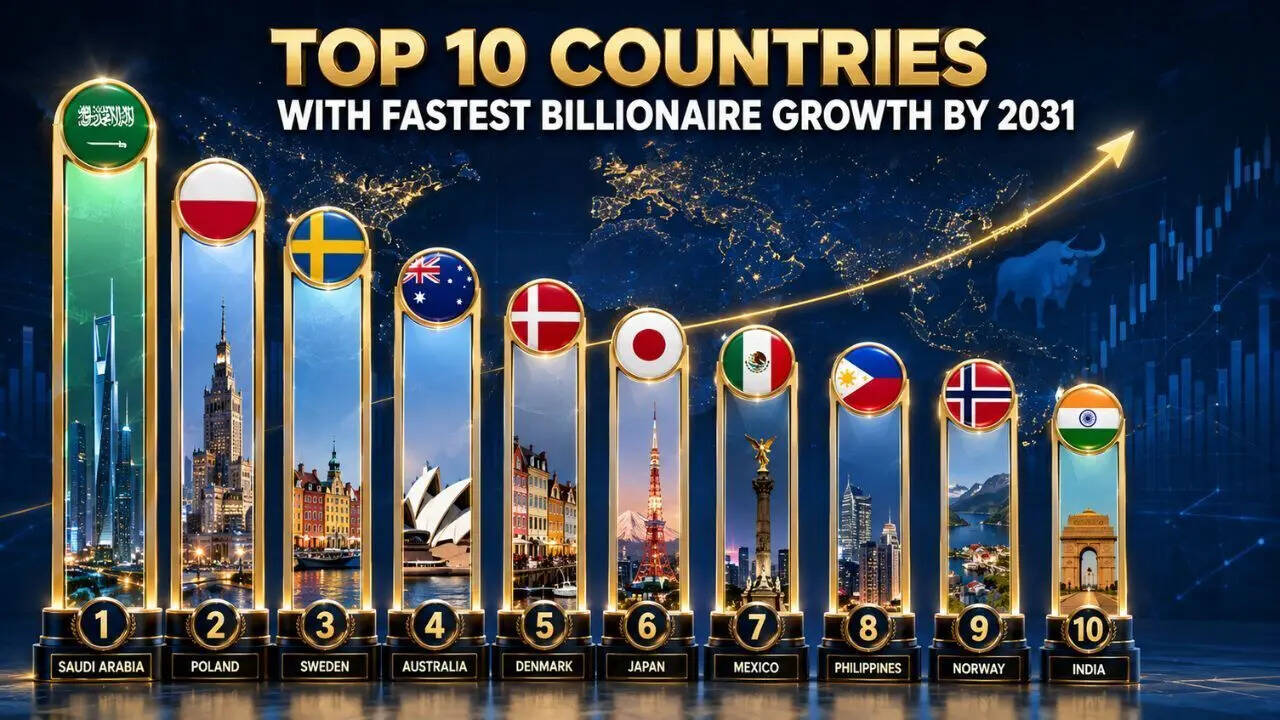
By 2031, Saudi Arabia is projected to lead the world in the growth rate of its billionaire population. This is not a fluke of fluctuating crude prices. It is the result of a deliberate, sweeping strategy to open capital markets, privatize state assets, and foster an environment where local entrepreneurs can scale businesses at a speed that seems almost violent compared to the sluggish growth of Western Europe.
The stakes here are not just financial. They are deeply human. When a society mints billionaires at this pace, the cultural fabric stretches. Legacy traditions rub shoulders with hyper-capitalism. The local grocery store becomes a high-end organic market; the quiet neighborhood where Tariq’s grandfather raised goats becomes a gleaming hub of autonomous vehicles and high-concept cafes. The wealth creates an aspirational vortex, pulling a generation of young Saudis away from comfortable bureaucratic state jobs and thrusting them into the high-stakes, high-anxiety world of global commerce.
The Baltic Tiger’s New Teeth
Fly northwest, across the Mediterranean and the Alps, and the narrative changes color. It becomes the steel-grey of the Baltic Sea and the brick-red of Warsaw’s revitalized industrial districts.
Poland is an economic miracle that most of the world treats as a footnote. After the fall of the Iron Curtain, the country spent decades doing the heavy, unglamorous lifting of Central Europe. It built factories. It manufactured auto parts. It became the logistical backbone of the European Union. But something fundamental shifted over the last ten years. The children of the people who worked the assembly lines went to university, learned to code, and realized they no longer needed to export their talent to Germany or the United Kingdom.
Poland has quietly climbed to the upper echelons of global wealth growth projections for 2031. This is a profound psychological victory for a nation whose modern history has been defined by partition, occupation, and economic subjugation.
Let us imagine Ania, an entrepreneur in Wrocław. Her father spent the 1990s importing used electronics in the back of a battered station wagon. Ania, by contrast, runs a software-as-a-service company that optimizes supply chains for global e-commerce brands. She is part of a rising class of Polish innovators who are transforming the country from a low-cost manufacturing hub into an engine of intellectual property.
When you speak to people like Ania, you notice a distinct lack of the cynicism that often plagues old-money capitals. There is a hunger here. A sense that the rules of the global economy are finally fair enough for merit to triumph over legacy. But this rapid accumulation of wealth introduces a new, unfamiliar tension into Polish society. A country that pridefully viewed itself as egalitarian, forged in the fires of collective survival, is now learning to navigate the realities of widening economic disparity. The luxury car dealerships appearing along Warsaw’s Aleje Jerozolimskie are a testament to success, but they are also a mirror reflecting the anxieties of those left behind on the old collective farms.
The Socialist Billionaires
Perhaps the most counterintuitive chapter in this global migration of wealth takes place in Sweden.
For generations, Sweden was the global poster child for democratic socialism. It was the land of lagom—the cultural doctrine that means "just enough." To stand out was to sin. To flaunt wealth was vulgar. The state took care of you from cradle to grave, funded by high, progressive income taxes.
Yet, beneath this placid, egalitarian surface lies one of the most efficient billionaire-producing engines on earth. Sweden’s inclusion near the top of the 2031 wealth growth rankings is only surprising if you haven't been paying attention to how the country actually functions.
Sweden does not tax wealth or inheritance. It rewards corporate success with a corporate tax structure that is remarkably friendly compared to its high personal income taxes. Combine that with a tech-literate population, excellent digital infrastructure, and a small domestic market that forces companies to think globally from day one, and you get a breeding ground for unicorns. Spotify, Klarna, Mojang—these are not anomalies. They are the products of a system that allows exceptional corporate winners to accumulate staggering fortunes.
The irony is palpable. In a Stockholm cafe, a tech founder might wear a faded hoodie and ride a bicycle to work, embodying the traditional modesty of his ancestors. But his net worth, held in digital shares, rivals that of a gilded-age industrialist.
This creates a peculiar, quiet crisis of identity. How does a society maintain its moral commitment to collective welfare when a small, hyper-successful elite possesses enough capital to alter the economic trajectory of entire cities? The tension is not expressed in riots or protests; it is felt in the hushed conversations about housing shortages in Stockholm, the skyrocketing price of summer homes in the archipelago, and the subtle, unspoken shifting of societal values away from the collective toward the individual.
The Invisible Currents of 2031
When we aggregate these stories, a larger, more complex picture emerges. The traditional map of global affluence is being redrawn by three distinct forces: the state-driven hyper-acceleration of the Middle East, the post-communist entrepreneurial explosion of Central Europe, and the stealthy, high-tech capitalism of the Nordic region.
This is not a simple story of numbers on a spreadsheet. It is a story about the changing nature of influence.
Consider what happens when the geographical center of wealth shifts. The art that gets funded, the architecture that gets built, the technologies that receive investment—all of these decisions follow the capital. A billionaire in Riyadh has a different vision for the future of urban living than a billionaire in San Francisco. A tech mogul in Warsaw has a different perspective on geopolitical security and supply chain resilience than a hedge fund manager in London.
The true stakes of the 2031 wealth race lie in these divergent worldviews. We are entering an era of multi-polar aspiration. For the last half-century, the global dream was largely Americanized. It was Hollywood, Wall Street, and Silicon Valley. The next decade will see the fracturing of that monopoly. The young graduate in Mumbai or Cairo will look to Riyadh or Warsaw for blueprints of success.
This realization brings a strange, unsettling clarity. The world is not becoming more uniform; it is becoming more fragmented, even as it becomes more interconnected. The growth of these new wealth centers is a reminder that economic power is liquid. It cracks through old structures, finds the path of least resistance, and pools in places that once seemed improbable.
The men in the Grand Hôtel in Stockholm close their tablet. The afternoon sun is dipping low over the Royal Palace across the water, casting long, amber shadows across the cobblestones. They stand up, adjust their coats, and step out into the crisp, northern air. They do not look like the vanguard of a global economic revolution. But then, the people who change the world rarely look like the caricatures we draw of them. They simply walk among us, quietly buying up pieces of the future while we are still trying to understand the past.