The asphalt on Highway 287 doesn’t just shimmer in July; it vibrates. It is a specific kind of Texas heat that forces you to roll the windows up, crank the air conditioner until it rattles, and wonder why anyone ever decided to stop driving and build a life here.
Then you hit the city limits of a place like San Augustine, or Buffalo, or any of the hundreds of dot-on-the-map Texas towns where the population hovers just high enough to justify a second blinking traffic light.
On a Tuesday afternoon, Evelyn Martinez is standing on a aluminum ladder outside the single screen theater on Main Street. She is holding a plastic letter 'E' that has been faded by a decade of brutal sun. Her knuckles are white. She is seventy-two years old, her hands bear the faint, silver scars of a lifetime spent working the line at the old packing plant, and she is currently risking a broken hip to ensure a sign reads AMERICA AT 250 instead of AMERICA AT 25.
"People think the middle of nowhere is empty," Evelyn says, squinting down through the glare. She doesn't climb down. She just adjusts her grip. "It isn’t empty. It’s just quiet. And when you’ve been quiet for a long time, you learn how to throw a party that makes people listen."
The United States is turning 250 years old. In Washington, D.C., and New York City, this milestone will be marked by massive corporate sponsorships, choreographed drone shows, and security perimeters that require a badge to cross. The budget will be calculated in the tens of millions. The speeches will be written by committees of people who haven’t pumped their own gas since the turn of the century.
But if you want to understand how a country survives two and a half centuries of internal friction, economic collapse, and social upheaval, you don’t look at the drone shows.
You look at the town that decided a single day of fireworks wasn't enough. You look at the community that looked at a calendar, saw July 2026 approaching, and said, We are taking the whole damn week.
The Geometry of a Small-Town Obsession
Every story about a small town reinventing itself begins with a ledger.
Consider the mathematics of survival in rural America. When the local major employer moves thirty miles down the interstate, the town doesn't vanish overnight. It bleeds. First go the young people, drifting toward the neon gravity of Dallas or Houston. Then the grocery store closes, replaced by a dollar store that sells processed cheese and plastic lawn chairs.
By the time the Semiquincentennial—a word no one in town actually uses because it sounds like a dental procedure—rolled around, the conventional wisdom suggested this town should have ignored it. A Tuesday night fireworks display over the high school football field. Maybe a parade featuring three fire trucks and the local Cub Scout troop. Total investment: four thousand dollars. Total impact: negligible.
Instead, the town council did something that looked, from the outside, like financial madness. They allocated a six-figure sum to turn a national anniversary into a seven-day festival.
To understand why, you have to look past the spreadsheets.
Imagine a hypothetical resident named Marcus. Marcus is thirty-four. He owns a diesel repair shop that operates out of a corrugated iron barn behind his house. He isn't particularly political. He doesn't spend his evenings reading historical biographies of Thomas Jefferson. But Marcus contributed three thousand dollars of his own money to buy lumber for a temporary amphitheater in the town square.
Why?
Because for Marcus, the celebration isn't about 1776. It’s about 2026. It’s about the fact that his oldest daughter is starting middle school in the fall, and he wants her to remember the year her hometown felt like the center of the universe. He wants her to remember that people built things here.
"We spent forty years being told we were the past," Marcus says, wiping grease from his forearm with a rag that has seen better days. "Every news report, every movie, every politician talking about 'the heartland' like it’s a museum. We aren't a museum. We're alive. The party is just us proving it."
The Anatomy of the Seven-Day Shift
The logistics of a weeklong festival in a town with three motels and one police cruiser are absurd. They require a level of social coordination that modern suburbanites, insulated by Amazon deliveries and gated driveways, can barely comprehend.
The schedule didn't rely on outside promoters. It was built out of local muscle and historical memory.
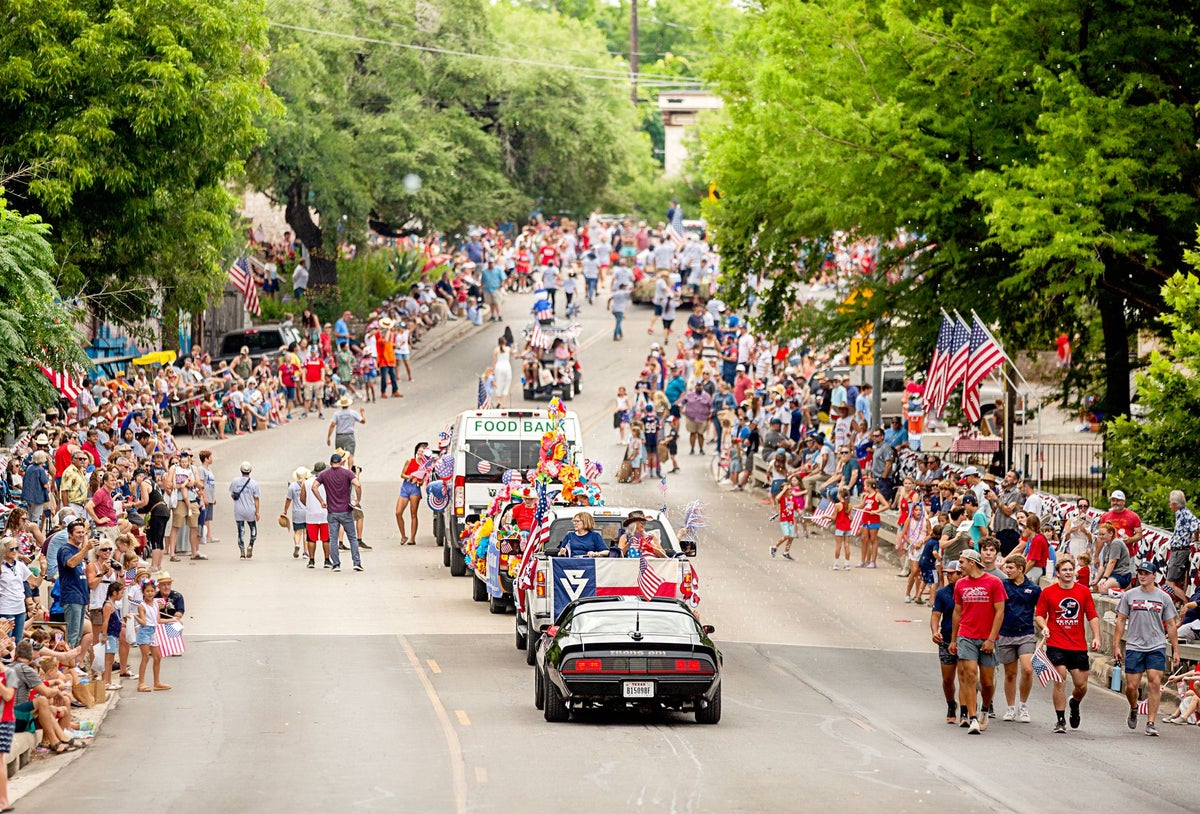
- Monday: The Gathering. A dinner that stretched the entire length of Main Street. Tables brought from church basements, VFW halls, and private backyards, pushed end-to-end until they formed a wooden spine down the center of the asphalt. Five hundred people eating brisket smoked by a man who hasn't spoken to the mayor since a zoning dispute in 2018. They sat together anyway.
- Wednesday: The Retrospective. Not a dry lecture on the Federalist Papers, but an exhibition of the town’s own archives. A collection of letters from local boys sent to the Pacific in 1943. The original ledger of the freedmen’s town established just outside the city limits in 1867. The uncomfortable truth of who was allowed to own land, and who wasn't, laid out on folding tables under the fluorescent lights of the community center.
- Friday: The Noise. A music festival featuring bands that travel in dented vans, playing country music that sounds like it was scraped out of the red dirt with a rusty shovel.
The real magic, however, wasn't on the official program. It was in the friction of the crowd.
The national narrative suggests that America is a powder keg, a collection of hostile factions waiting for a spark. If you watch the evening news, you are convinced that a gathering of rural Texans is an ideological monolith, a sea of identical hats and predictable opinions.
But spend an hour near the funnel cake stand on Thursday afternoon.
You see the retired schoolteacher who spent thirty years drilling grammar into the heads of every kid in the county. She is arguing with a twenty-something oilfield worker about whether the town should allow a lithium-ion battery storage facility to be built near the creek. They are loud. They are passionate. They are using words that would get them banned on social media.
Then the schoolteacher stops, pats the young man on the shoulder, and asks if his mother’s knee surgery went well.
That is the element missing from the national conversation about America's big birthday. We are obsessed with the grand experiment, the high-minded ideals written on parchment by men in powdered wigs. We forget that the experiment only works if the people who have to live together under those ideals actually know each other’s names.
The Invisible Stakes of Celebration
There is a distinct vulnerability in trying this hard.
When you throw a massive party in a place that the rest of the world ignores, you risk the ultimate humiliation: nobody showing up. The fear wasn't whispered, but it hung in the air like the humidity before a thunderstorm. What if the highway remained empty? What if the tourists stayed on the interstate, rushing toward the bigger cities with their air-conditioned museums and professional firework displays?
By Wednesday evening, that fear had evaporated.
The license plates in the grass parking lot behind the high school told a story that the census data couldn't capture. Oklahoma. Louisiana. New Mexico. California.
These weren't traditional tourists. These were the diaspora of the rural South. The people who had left twenty years ago for jobs in Aerospace or tech, coming back because their aunts, cousins, or grandfathers had called them and said, You need to see what we're doing this year.
They didn't find a pristine, postcard-perfect version of America. They found a town with cracked sidewalks, a bakery that closed early because the owner’s back was acting up, and a humidity that made everyone’s hair curl.
They also found something that cannot be purchased with a state tourism grant: a total absence of cynicism.
In the cities, irony is a survival mechanism. We protect ourselves from the disappointment of failing institutions by pretending we never cared about them in the first place. We mock the parades, we analyze the patriotism down to its problematic roots, and we stay inside behind our screens.
But standing on Main Street when the local high school band plays a slightly out-of-tune version of the national anthem, irony fails you. It feels thin. It feels lazy.
The Last Light on the Square
By Saturday night, the heat had finally broken, replaced by a dry wind that smelled of cedar and parched earth.
The grand finale wasn't a million-dollar laser show. It was a simple display of mortars launched from the old gravel quarry outside town. They burst over the water tower, painting the silver tank in shades of crimson and emerald.
Evelyn Martinez was no longer on her ladder. She was sitting on a lawn chair near the courthouse steps, her hands folded over a small purse. Her granddaughter was asleep against her shoulder, her face sticky with the residue of a cherry snow cone.
Every time a shell exploded, the light illuminated the faces of the crowd. There were wrinkles from decades of sun exposure, smooth skin of infants, faces that looked like they belonged in a 1930s dust bowl photograph, and faces that reflected the changing, diverse reality of modern Texas.
The country is old, tired, and complicated. It has secrets it doesn't like to talk about and promises it hasn't kept.
But as the final explosion thudded in the chest of everyone standing within five miles, the crowd didn't cheer immediately. There was a long, heavy silence—a moment where the smoke drifted across the stars, obscuring the sky before the wind caught it and cleared the air.
In that quiet, before the engines started and the lawn chairs were folded into trunks, you could see the truth of what this week had been. It wasn't a celebration of a perfect past. It was an act of defiance against an uncertain future. A small town staking its claim on the next two hundred and fifty years, using nothing but plywood, smoke, and the refusal to disappear.