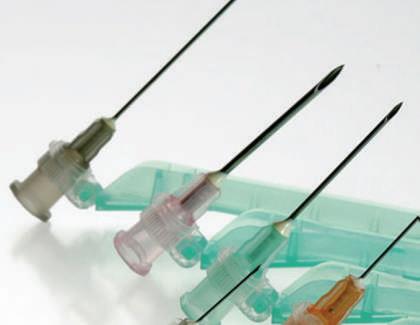
Every two weeks, Marcus sat at his kitchen table under the harsh glow of a fluorescent bulb, waiting for his partner to pinch a fold of skin on his thigh. His hands, weathered from thirty years of carpentry, usually didn’t shake. But they did on those nights. The ritual was always the same: the cold swipe of an alcohol wipe, the metallic click of an auto-injector, and then the sharp, burning sting of liquid medicine forcing its way under his skin.
It was a routine born of necessity. Marcus inherited heterozygous familial hypercholesterolemia, a genetic lottery ticket that meant his liver simply refused to clear low-density lipoprotein (LDL)—the "bad" cholesterol—from his bloodstream. For years, he swallowed the maximum possible dose of daily statins. His muscles ached, a common and deeply frustrating side effect of the standard treatment, yet his LDL levels remained stubbornly, dangerously high.
His arteries were quietly building up a thick, waxy plaque, narrowing the channels through which his blood had to flow. He lived with a constant, background hum of anxiety, knowing that a single ruptured plaque could trigger a sudden clot and end everything. When his doctor suggested adding a PCSK9 inhibitor, a highly effective biologic drug designed to clear LDL from the blood, Marcus felt a surge of hope. That hope dimmed slightly when he realized the medicine could only enter his system through the tip of a needle, twice a month, forever.
He is far from alone. Millions of people live in this high-risk purgatory. They swallow their daily pills, tolerate the muscle aches or the brain fog, and yet their cholesterol levels refuse to budge into safe territory. For these patients, the gold-standard statins are not enough. The alternative has been a lifetime of self-injections—a barrier that many patients simply cannot, or will not, cross due to needle phobias, high costs, or complex insurance hurdles.
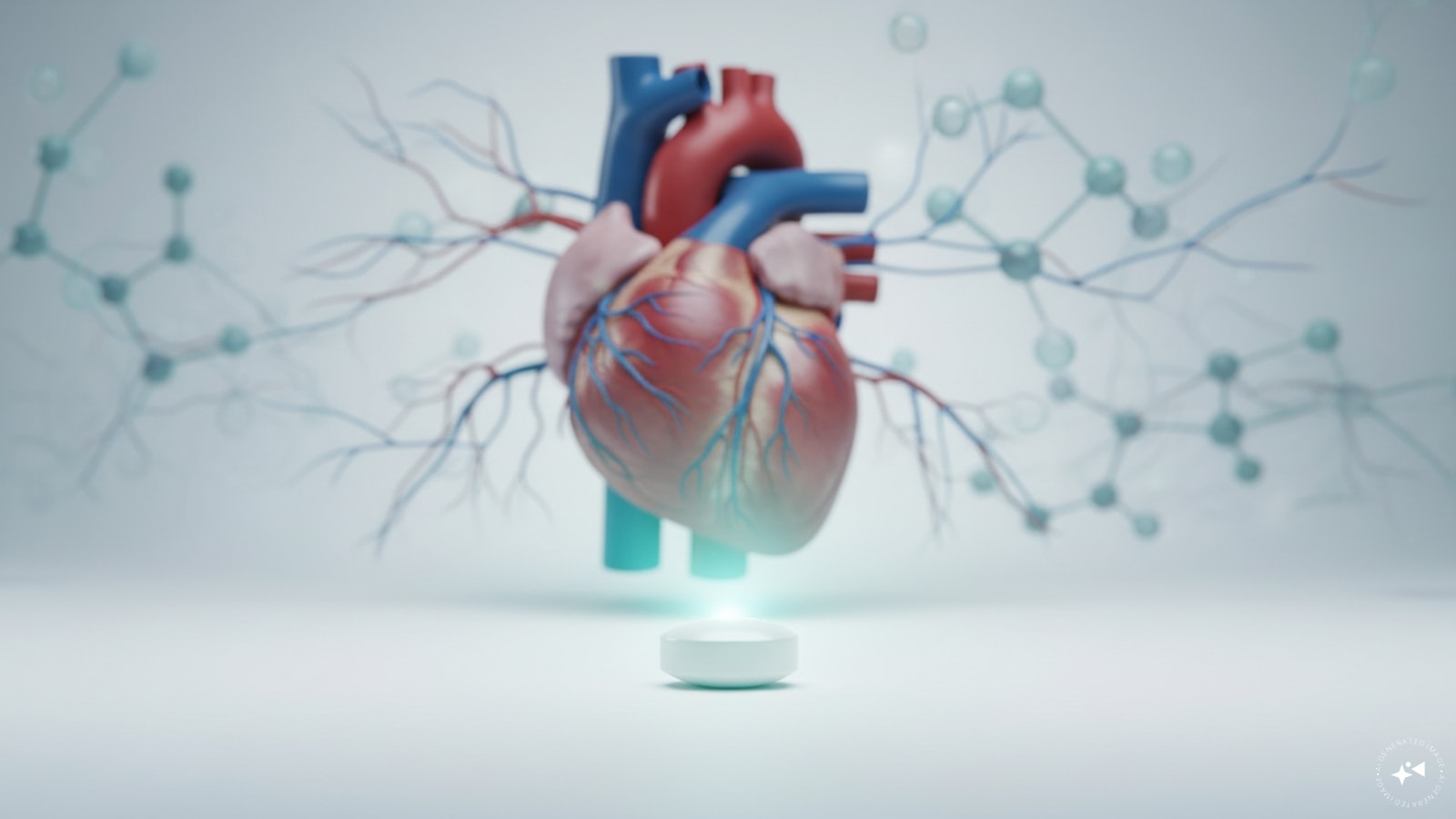
But the FDA’s decision to approve Merck’s new daily pill, Lipfendra (generic name enlicitide), represents a profound shift in how we treat high-risk cardiovascular disease. For the first time, the power of a PCSK9 inhibitor has been packed into a simple, once-daily 20-milligram tablet.
The Silent Traffic Jam in the Liver
To understand why this tablet matters, we have to look at what happens inside our cells. The liver is the body’s primary filtration system for cholesterol. It uses specialized docking stations, called LDL receptors, to grab circulating bad cholesterol from the bloodstream and pull it inside to be broken down.
Think of these receptors as a fleet of dedicated tow trucks. In a healthy body, they haul away the stranded vehicles, drop them off, and immediately head back out to the highway to clear more traffic.
But our bodies also produce a protein called PCSK9. This protein acts like a rogue wrecker company. Instead of letting the tow trucks do their jobs, PCSK9 locks onto the LDL receptors and drags them to the recycling bin, destroying them. With fewer tow trucks on the road, bad cholesterol builds up in the blood, eventually settling into the walls of our arteries.
For years, biotech companies fought back by developing massive, complex molecules called monoclonal antibodies. Drugs like Repatha and Praluent were designed to block PCSK9, saving the receptors so they could continue clearing cholesterol. Because these molecules are so large and fragile, they cannot survive the harsh, acidic environment of the human stomach. If you swallowed them, your digestive enzymes would tear them apart before they ever reached your bloodstream. They had to be injected directly into the fat tissue.
Chemists spent more than a decade trying to solve this puzzle. They needed a molecule small enough to survive the stomach, agile enough to be absorbed into the bloodstream, and precise enough to block the PCSK9 protein.
Enlicitide is the result of that obsessive pursuit. By engineering a small-molecule inhibitor that survives digestion, scientists have effectively turned a complex, injectable biological treatment into a simple pill.
The High-Stakes Proof in the Numbers
The FDA did not grant this approval lightly. It fast-tracked the drug under a priority review program, designed to speed up the availability of therapies that address urgent, unmet public health needs. The approval rests on the backs of two massive Phase III clinical trials, known as CORALreef Lipids and CORALreef HeFH, which together tracked more than 3,200 high-risk patients.
The results were stark.
In the first study, which focused on adults with a history of heart disease or those at extreme risk, patients were already taking the maximum amount of statins they could tolerate. Their baseline LDL levels hovered around 96 mg/dL. After adding the daily pill to their regimen, patients saw their LDL cholesterol plunge by an average of 56% compared to those taking a placebo.
In the second study, which looked specifically at patients with the inherited genetic condition heterozygous familial hypercholesterolemia, the results were even more dramatic. Their baseline LDL levels started much higher, averaging 119 mg/dL. Over twenty-four weeks, the daily pill slashed those levels by 59%.
Just as importantly, the trials showed that this massive drop was durable. Even after a year of continuous treatment, the cholesterol-lowering effect remained remarkably stable.
But medicine is always a trade-off. To get the molecule absorbed correctly through the gut, patients have to follow a strict routine: the pill must be taken on an empty stomach, typically after a six- to eight-hour fast, and patients must wait thirty minutes before eating or drinking anything else.
For some, the side effects also reared their heads. While the drug was generally well tolerated, patients with the genetic form of high cholesterol reported higher instances of diarrhea and dizziness compared to those taking a dummy pill. Yet, when researchers looked at how many people actually stopped taking the drug due to side effects, the numbers were nearly identical to the placebo groups.
Moving Beyond the Needle
When we talk about medical breakthroughs, we often focus on the science. We talk about proteins, receptors, and percentage drops. But the real barrier to health is often human behavior.
Cardiologists have long complained that injectable PCSK9 therapies are deeply underutilized. Part of the problem is cost and insurance bureaucracy, but a massive portion of it is simple human reluctance. People do not like needles. They forget to take their bi-weekly injections, or they actively avoid them.
A daily pill fits into the existing rhythm of life. It sits in a plastic organizer next to the morning coffee or on the nightstand. It turns a stressful medical procedure back into a mundane habit.
For Marcus, the approval of a daily tablet means he might finally be able to clear his arteries without the dread that has defined his alternate Thursdays for years. He can go back to being a carpenter, husband, and father, rather than a patient staring down an auto-injector.
The waxy buildup in our arteries is a slow, quiet threat, but the tools we use to fight it are finally catching up to the realities of how we actually live.