You are probably suffocating your hair follicles.
Every day, millions of people slather heavy plant oils directly onto their scalps. They do it in the name of hydration, growth, and shine. TikTok videos show creators drenching their heads in rosemary-infused castor oil, promising Rapunzel-like transformations. But if you talk to any reputable dermatologist or trichologist, they will tell you a very different story.
You are likely ruining your scalp health.
Most people treat their hair and their scalp as the exact same thing. They aren't. Your hair is dead tissue. Your scalp is living, breathing skin. Applying the same heavy oil to both is a recipe for flaking, irritation, and even hair loss.
Let's break down why hair oil and scalp oil are entirely different tools, the science behind why your scalp hates heavy oils, and how to actually use these products without triggering a dermatological disaster.
Your Hair and Your Scalp Are Two Completely Different Ecosystems
To understand why you cannot use these products interchangeably, you have to look at the anatomy of your head.
Your hair shaft is made of keratinized proteins. It has no biological activity. Once the hair leaves the follicle, it is dead. It cannot self-repair, and it does not produce its own moisture. The only way to keep it looking healthy is to lubricate the outer layer, known as the cuticle, to prevent friction, breakage, and water loss.
Your scalp is a completely different beast. It is living skin, packed with blood vessels, sweat glands, and sebaceous glands. It constantly produces its own natural oil, called sebum. Your scalp also hosts a complex microbiome of bacteria and fungi that rely on a very specific balance to stay healthy.
When you put a heavy hair oil on your scalp, you aren't moisturizing it. You are disrupting a delicate biological balance.
The Danger of Slathering Oil on Your Scalp
Your scalp skin does not need external oil for moisture. It already makes its own.
When you dump heavy plant oils like coconut oil, olive oil, or castor oil onto your scalp, you create an occlusive barrier. This barrier traps dead skin cells, sweat, and environmental dirt. Even worse, it feeds the microbes that live on your head.
The primary culprit behind dandruff and seborrheic dermatitis is a single-celled yeast called Malassezia. This yeast is a natural part of your scalp microbiome. It is lipophilic, meaning it feeds on fats. Specifically, Malassezia loves fatty acids with carbon chain lengths between 11 and 24.
Guess what almost all natural plant oils are made of? Exactly those fatty acids.
When you coat your scalp in coconut or argan oil, you are basically throwing an all-you-can-eat buffet for yeast. The yeast multiplies rapidly. It breaks down the oil into oleic acid, which penetrates your skin barrier and triggers an inflammatory response. The result is itching, redness, flaking, and scaling.
Over time, this chronic inflammation damages the hair follicles. If your follicles are inflamed and clogged with a paste of heavy oil and dead skin, they cannot produce healthy hair. Eventually, this leads to premature shedding and hair thinning.
If you have a history of dandruff, acne, or oily skin, putting pure plant oils on your scalp is the worst thing you can do.
The Science of Hair Oil and Why It Belongs on Your Strands
Your hair shaft, unlike your scalp, actually benefits from oil. But you have to use the right kind.
Hair oils are designed to lubricate the hair cuticle. This smooths down the overlapping scales of the hair shaft, reducing frizz, adding shine, and making detangling easier. They also help seal in moisture after washing.
We can split hair oils into two categories based on how they behave on the hair shaft.
Penetrating Oils
Some oils have a molecular structure small enough to bypass the cuticle and enter the inner part of the hair, known as the cortex.
The most famous example is coconut oil. It is rich in lauric acid, a medium-chain fatty acid with a straight, compact structure. This allows it to bind to hair proteins and physically enter the hair shaft. This is highly beneficial for preventing hygral fatigue, which is the swelling and deswelling of hair when it gets wet and dry.
Other penetrating oils include avocado oil and olive oil. These are great for dry, highly porous, or damaged hair that needs structural support.
Sealing Oils
These oils have larger molecules. They cannot penetrate the hair shaft, so they sit on top of it.
Jojoba oil is a prime example. Technically, jojoba is a liquid wax ester that closely mimics the natural sebum produced by your skin. It forms a lightweight, protective film over the hair shaft, locking in water and adding brilliant shine without weighing the hair down.
Argan oil and almond oil also act primarily as sealants. They are perfect for fine hair because they provide lubrication and frizz control without making the hair look greasy.
To get the best results, you should only apply these oils from the mid-lengths of your hair down to the ends. Keep them far away from your roots.
How Scalp Oils Actually Work
If scalp oils exist, why are we warned against using oil on the scalp? The difference lies in the formulation and the intent.
True scalp oils are not designed to moisturize. They are active treatments formulated to address specific issues like poor circulation, hair thinning, or fungal overgrowth. They are usually highly targeted, lightweight, and meant to be washed out.
Rosemary Oil for Growth
Rosemary oil has surged in popularity because of studies showing its efficacy in treating androgenetic alopecia. A landmark 2015 study published in Phytotherapy Research compared rosemary oil to 2% minoxidil. After six months, both groups showed a significant increase in hair count.
Rosemary oil works by improving microcirculation in the scalp, delivering more oxygen and nutrients to the hair follicles. However, you cannot apply pure rosemary essential oil directly to your skin. It is far too concentrated and will cause chemical burns. It must be diluted in a safe, lightweight carrier oil like jojoba, or purchased as a pre-formulated scalp serum.
Tea Tree Oil for Flaking
If you suffer from a dry, itchy scalp, tea tree oil is a potent antifungal and antibacterial agent. It helps keep Malassezia populations under control. Again, this is an active treatment, not a moisturizing agent. It should be used in tiny amounts, massaged into the scalp, and washed out thoroughly with shampoo.
Salicylic Acid and Scalp Exfoliation
Many modern scalp "oils" actually contain exfoliating acids. Salicylic acid is oil-soluble, meaning it can cut through sebum to clean out the hair follicles. These formulations are designed to be applied before shampooing to break down buildup and keep the scalp clean.
Choosing the Right Oil for Your Hair Type
You cannot use a one-size-fits-all approach. Your hair density, porosity, and scalp condition dictate what you should use.
If you have fine, straight, or low-porosity hair, avoid heavy oils entirely. Stick to ultra-light sealing oils like jojoba or squalane on your ends only. Heavy oils will weigh your hair down, making it look limp and greasy within hours.
If you have coarse, curly, or high-porosity hair, your hair shaft is naturally thirstier. The cuticle layers are more open, allowing moisture to escape easily. You can benefit from richer, penetrating oils like avocado or coconut oil to help retain moisture and protect the hair from mechanical damage during styling.
If you have an oily scalp with dry ends, you need a split routine. Use a clarifying scalp serum before you wash, and apply a lightweight sealing oil to your ends after you wash. Never let the two cross paths.
The Safe Way to Build an Oiling Routine
If you want to use oils safely without triggering dandruff or clogged follicles, follow this strict protocol.
First, identify your goal. If you are trying to stimulate hair growth, you are treating the scalp. If you are trying to stop breakage and add shine, you are treating the hair shaft.
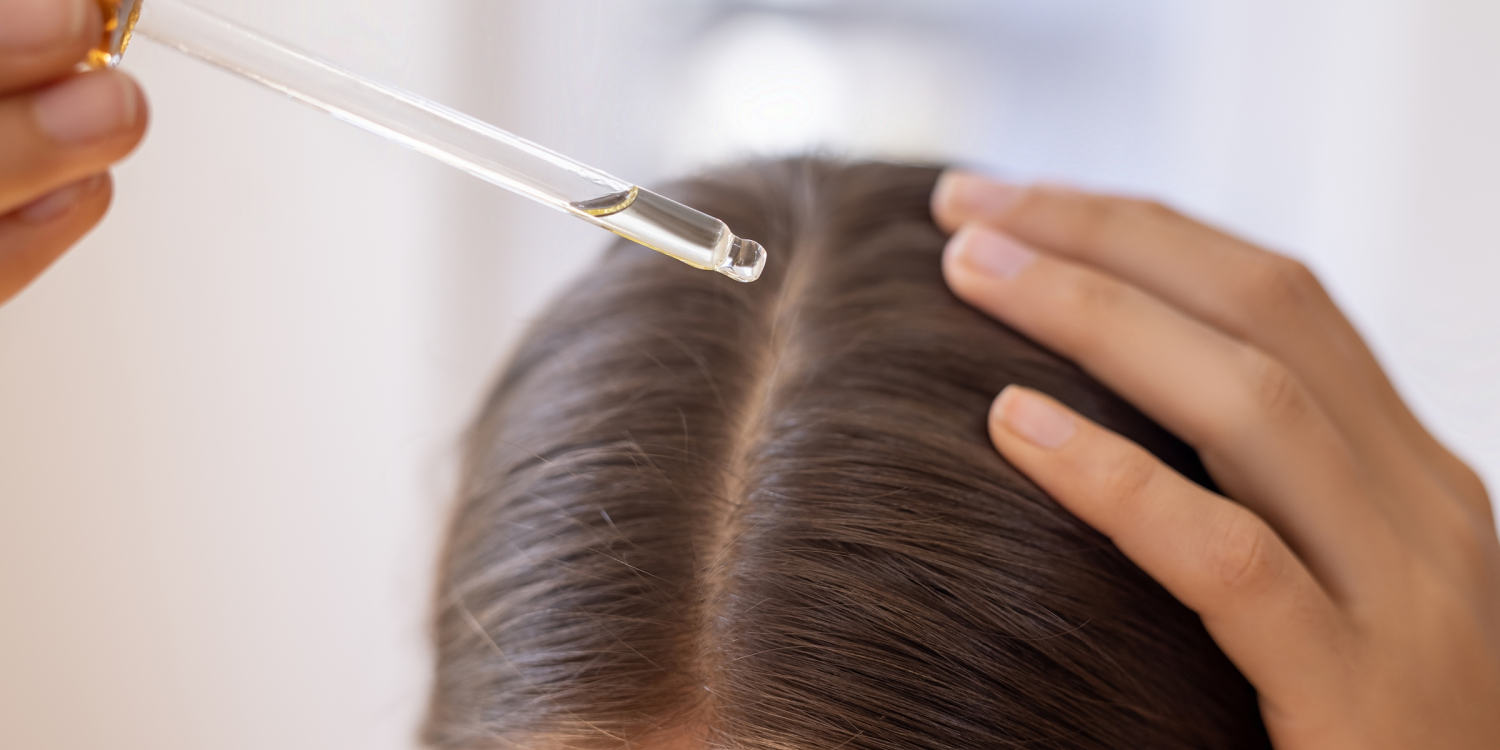
For scalp treatments, always apply the oil to a dry head before you shower. Massage a few drops of a targeted scalp serum into your skin using your fingertips. Do not use your nails, which can cause micro-tears. Let the oil sit for no more than four hours. Leaving oil on your scalp overnight is an invitation for yeast overgrowth and clogged pores.
Next, wash it out completely. You may need to double-shampoo to ensure no oily residue remains on your skin. Your scalp should feel clean and fresh, not coated.
For hair shaft treatments, apply your oil to damp hair after washing. Damp hair has already absorbed water; the oil acts as a barrier to keep that water from evaporating too quickly. Rub two to three drops of oil between your palms and smooth it through your mid-lengths and ends. Start with less than you think you need. You can always add more, but washing it out requires starting the whole shower process over again.
Stop treating your head as one single surface. Give your hair the lubrication it needs, keep your scalp clean and clear, and let your natural sebum do the rest of the work.