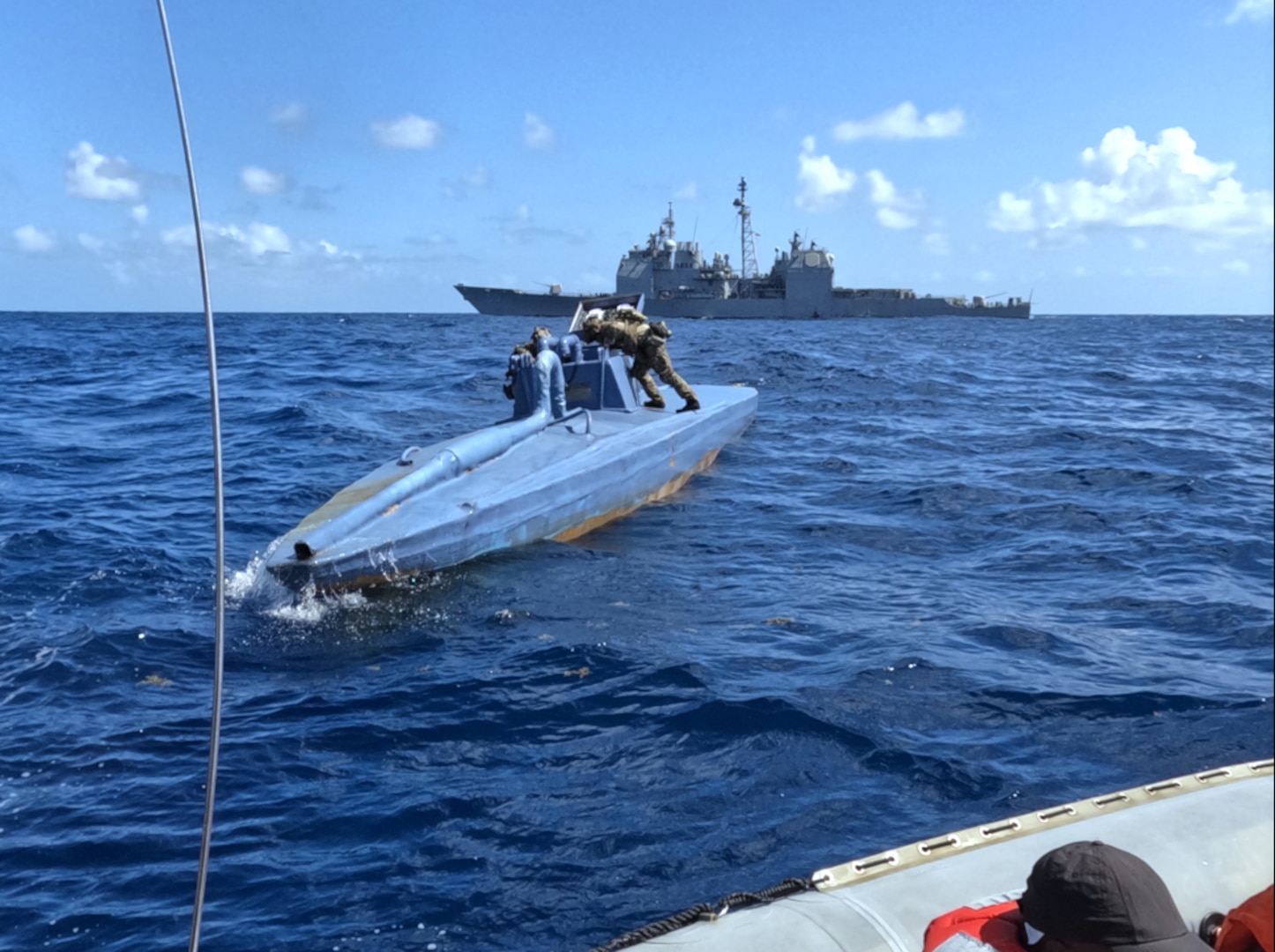
The current maritime friction between the United States and Iran has moved beyond traditional skirmishing into a crisis of international maritime law and kinetic logistics. When executive rhetoric labels a standing navy as "pirates," it signals a breakdown in the Westphalian system—the legal framework where states hold a monopoly on legitimate violence. This crisis is defined by a specific collision: the US application of "maximum pressure" via naval blockade versus the Iranian pursuit of "asymmetric deterrence" through proxy-led maritime disruption. Understanding the escalation requires analyzing the operational mechanics of the blockade, the legal ambiguity of non-combatant interdiction, and the economic friction points that dictate the risk tolerance of both Washington and Tehran.
The Triad of Maritime Interdiction Power
To evaluate the effectiveness of the current US naval posture, one must categorize the intervention into three distinct functional layers. These layers determine whether a blockade functions as a surgical economic tool or a blunt instrument of war.
- Kinetic Containment: The physical presence of Carrier Strike Groups (CSGs) to prevent the movement of crude oil and refined products. This relies on the "OODA loop" (Observe, Orient, Decide, Act) efficiency of the US Fifth Fleet.
- Legal Delegitimization: The reclassification of sovereign vessels as illicit actors. By applying labels usually reserved for non-state actors (e.g., "pirates"), the executive branch attempts to strip the Iranian navy of the protections afforded by the UN Convention on the Law of the Sea (UNCLOS), even though the US is not a formal signatory but treats it as customary international law.
- Insurance and Bottom-Line Friction: The true mechanism of a blockade is not always the sinking of ships but the inflation of Hull and Machinery (H&M) insurance premiums. When a region is declared a "listed area" by the Joint War Committee in London, the cost of transit often exceeds the profit margin of the cargo, effectively creating a "shadow blockade" without firing a shot.
The Mechanics of Asymmetric Escalation
The Iranian response to a conventional naval blockade does not involve a direct ship-to-ship engagement with the US Navy. Such a confrontation would result in a total loss of the Iranian surface fleet within 72 hours due to the disparity in vertical launch system (VLS) cells and integrated air defense. Instead, Tehran employs a "Cost-Imposition Strategy."
This strategy functions through a mathematical imbalance: the cost of a sophisticated interceptor missile (such as an SM-2 or SM-6) versus the cost of a loitering munition or an uncrewed surface vessel (USV). When the US Navy spends $2 million to neutralize a $20,000 drone, the blockade experiences "logistic exhaustion." This is the primary bottleneck for the US Fifth Fleet; the mission is limited not by intent, but by the depth of the magazine and the time required for a ship to return to a port for rearming.
The Problem of Dark Fleet Integration
The blockade faces a significant structural hurdle in the form of the "Dark Fleet"—a network of aging tankers with obscured ownership, frequently changing flags, and disabled Automatic Identification Systems (AIS).
- AIS Spoofing: Ships use sophisticated software to broadcast false GPS coordinates, making a tanker in the Persian Gulf appear to be docked in an unrelated port.
- Ship-to-Ship (STS) Transfers: Oil is transferred in international waters from an Iranian-sanctioned vessel to a "clean" vessel, laundering the origin of the product.
- Flag of Convenience (FOC) Hopping: Constant re-flagging under small island nations creates a legal quagmire for boarding parties, as the "right of visit" under international law is highly restricted unless piracy is suspected.
The executive's use of the term "pirates" is a tactical attempt to bypass these legal hurdles. Under international law, any nation can seize a pirate vessel. By rhetorically stripping the US Navy or the opposing force of their sovereign status, the parties are moving toward a "State of Exception" where standard rules of engagement are suspended.
The Strategic Failure of Rhetorical Extremism
Labeling a professional navy as "pirates" creates a dangerous precedent in maritime security. This isn't merely a semantic choice; it is a shift in the "Rules of Engagement" (ROE). If the US Navy is characterized as an extra-legal actor, it invites Iranian-aligned forces to treat US commercial interests with similar disregard for sovereign protection.
This creates a feedback loop of instability. The US Navy provides the "Global Public Good" of sea lane security. If the US shifts from being the guarantor of maritime freedom to an active interdictor of sovereign trade (regardless of the political justification), the global shipping industry loses its neutral arbiter. This leads to the "Balkanization of the Seas," where different regions operate under localized, conflicting legal frameworks, drastically increasing the complexity of global supply chains.
Quantifying the Blockade Impact on Global Energy
The efficacy of the US blockade can be measured through the "Brent-Urals Spread" or, in this case, the discount at which Iranian Light crude must be sold to attract buyers willing to risk US secondary sanctions.
- Risk Premium: The added cost per barrel to account for potential seizure.
- Compliance Drag: The administrative cost for banks and refineries to ensure they are not inadvertently financing a sanctioned entity.
- Sovereign Friction: The diplomatic cost paid by the US when interdicting ships destined for allies or neutral powers like India or China.
The blockade's success is inversely proportional to the price of oil. If the blockade successfully restricts supply, the global price of oil rises. This paradoxically increases the revenue for the remaining Iranian exports that slip through the net. Therefore, a blockade is only effective if the "Volume Loss" exceeds the "Price Gain."
Tactical Realities of Drone Warfare in Chokepoints
The Strait of Hormuz and the Bab el-Mandeb serve as the geographic constraints of this crisis. In these narrow waterways, the "Stand-off Distance"—the space between a threat and a naval asset—is dangerously compressed.
The shift toward USV (Uncrewed Surface Vessel) technology has fundamentally changed the risk profile. A "Swarm Attack" logic dictates that a defender must be 100% successful in interceptions, while an attacker only needs a single success to achieve a strategic victory. The psychological impact of a damaged US destroyer far outweighs the tactical loss of dozens of inexpensive drones. This asymmetry explains why the rhetoric from Washington has turned toward delegitimization; the conventional tools of naval power are being outmaneuvered by the economics of cheap, mass-produced technology.
The Cognitive Dissonance of Naval Policy
The US finds itself in a strategic bind. It must maintain the image of the invincible guarantor of trade while simultaneously engaging in a high-friction blockade that disrupts that very trade. By calling the Navy "pirates"—whether as a critique of their mission or a description of their targets—the executive branch erodes the internal morale and external legitimacy of the force.
A navy functions on the "Honor of the Flag." If the mission is framed as predatory rather than protective, the recruitment and retention of skilled personnel are compromised. Furthermore, the "Interoperability" with allied navies (like the Royal Navy or the French Navy) becomes strained when the mission parameters shift from defensive patrolling to aggressive interdiction under shaky legal definitions.
The Pivot to Regional Escalation
The blockade does not exist in a vacuum. It is the primary catalyst for regional escalation. Iran’s "Forward Defense" doctrine suggests that if they cannot export oil, no one in the region will. This creates a "Mutual Assured Destruction" (MAD) scenario for energy exports.
- Mine Warfare: The deployment of "influence mines" that react to the magnetic or acoustic signature of a ship. These are difficult to detect and extremely cheap to deploy.
- Proxy Activation: Utilizing groups in Yemen or Lebanon to strike at maritime targets far from the actual blockade zone, forcing the US to overextend its naval assets.
- Cyber-Maritime Sabotage: Attacking the port management software or the GPS systems of commercial vessels to cause groundings or collisions in narrow channels.
The Strategic Path Forward: De-escalation Through Precise Definition
The current trajectory leads toward a kinetic conflict that neither side can "win" in a traditional sense. For the US to stabilize the situation, it must move away from inflammatory rhetoric and toward a "Standardized Interdiction Framework."
- Multilateral Sanction Verification: Moving the blockade from a unilateral US action to a monitored international effort increases legitimacy and reduces the "piracy" narrative.
- Hardened Infrastructure: Investing in point-defense systems for commercial tankers (e.g., directed energy weapons or "hard kill" APS) to reduce the burden on the US Navy.
- Clarified Sovereignty: A formal declaration of the specific legal violations that trigger an interdiction, rather than relying on broad executive labels. This provides a predictable environment for global shipping.
The primary risk remains the "Incident at Sea"—a low-level commander making a split-second decision that results in a significant loss of life. In a high-tension blockade, the margin for error is non-existent. The strategic play is not to "win" the blockade through more ships, but to win the "Legal and Economic Narrative" by demonstrating that the interdiction is a pursuit of global stability rather than a disruption of it.
Failure to define the mission precisely will result in the US Navy being bogged down in a "Forever War at Sea," where the objective is ill-defined and the costs are unsustainable. The executive must align rhetoric with reality: if the goal is a ceasefire, the blockade must be used as a calibrated dial, not a blunt hammer. The moment the Navy is viewed as a rogue actor by its own leadership or the international community, the foundational strength of American sea power—its perceived legitimacy—evaporates.