The paint was still wet when the sun hit the alleyway. For fifty years, the rusted metal signpost at the corner of a bustling neighborhood in Karachi read ‘Rahman Gali.’ It was a name breathed into the daily rhythms of the city. Shopkeepers used it to direct delivery drivers. Mothers used it to tell their children how far they could wander. It was an anchor in a sea of urban chaos.
Then, over a single weekend, the letters changed. A few strokes of a brush erased the old identity. The street became ‘Ram Gali.’
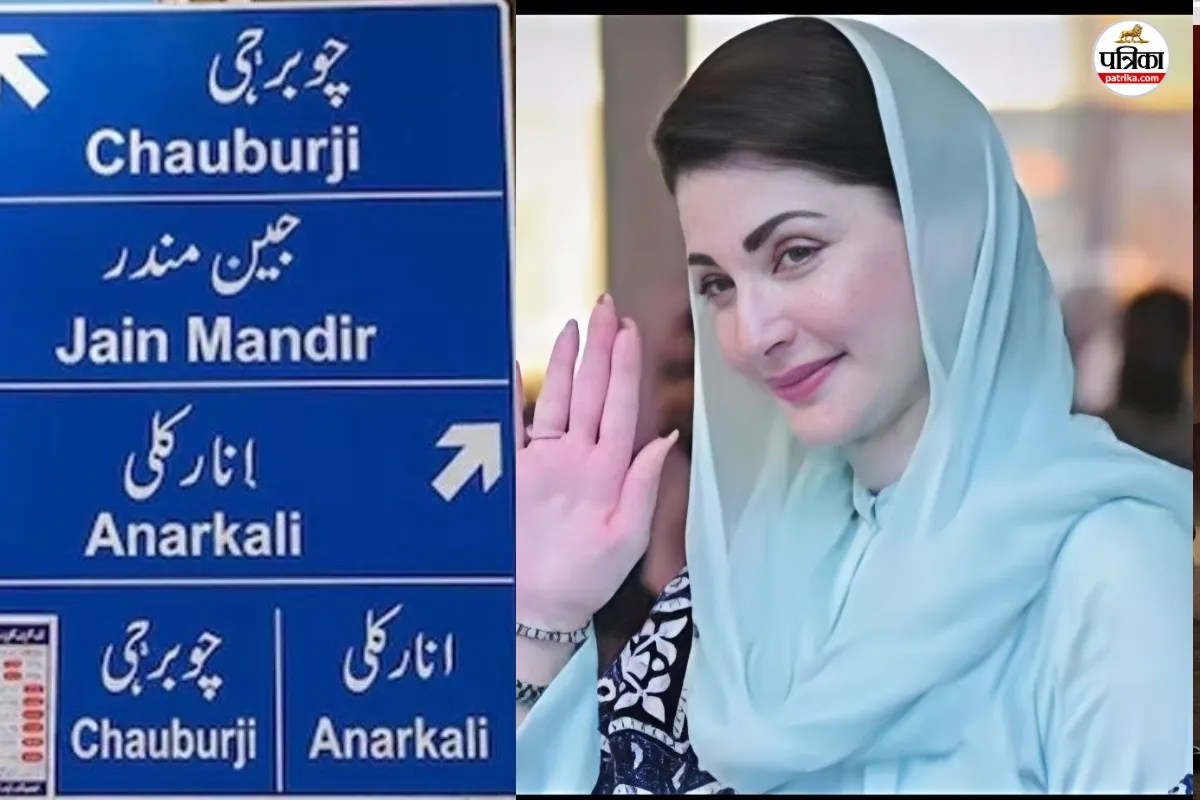
This is not an isolated incident of a rogue painter or a simple bureaucratic typo. Across Pakistan, from the labyrinthine markets of Lahore to the dusty bypasses of smaller provincial towns, names are shifting. Streets, neighborhoods, and old landmarks are quietly trading their Islamic identifiers for Hindu ones, and vice versa. It is a reverse current in a region where history usually flows in the exact opposite direction.
To understand why a street name matters, you have to understand how identity works in this part of the world. It is never just about a map. It is about ownership.
The Ghost in the Geography
Consider a hypothetical resident. Let us call him Tariq. Tariq has run a small tea stall on the corner of this specific alley since the late 1980s. He knows every crack in the pavement. He knows the exact time the afternoon shadow hits the concrete. When the sign changed, Tariq did not just lose a familiar word. He felt a sudden, destabilizing jolt of dislocation.
"It feels like waking up in someone else's house," he might tell you over a steaming cup of chai.
The standard news reports cover these events with dry, geopolitical analysis. They talk about municipal boards, local council votes, and historical reclamation projects. They treat the map of Pakistan like a chessboard. But for the people living on these streets, the stakes are deeply intimate.
The subcontinent's history is a heavy, suffocating blanket. When Partition ripped British India into two separate nations in 1947, it did not just draw lines through fields and rivers. It drew lines through memories. Millions of people crossed the newly minted borders in a frenzy of blood and panic. Hindus and Sikhs fled west to east; Muslims fled east to west.
When they left, they left their names behind.
For decades after 1947, the Pakistani state engaged in a systematic process of Islamization. Towns named after Hindu deities or Sikh gurus were systematically rebranded. Lyallpur became Faisalabad. Krishan Nagar in Lahore became Islampura. The goal was simple: to make the physical reality of the country match its religious ideology. The past was scrubbed clean, or so everyone thought.
What we are witnessing now is the return of the repressed.
Why the Ink is Running Backward
The sudden resurgence of names like 'Ram Gali' in the heart of urban Pakistan baffles outsiders. Why now? Why would a nation that spent three generations cementing a specific religious identity suddenly allow the old names to creep back onto the signposts?
The answer lies in a volatile mix of digital transparency, shifting local politics, and a quiet, generational desire to reclaim a lost, cosmopolitan past.
Municipal records in Pakistan are notoriously chaotic. For decades, they existed only in crumbling, yellowed ledgers locked in the backrooms of local government offices. If a neighborhood was officially renamed in 1965, the official paperwork might have said one thing, but the local property deeds still used the pre-Partition names.
With the digitization of land records over the last decade, a bureaucratic glitch turned into a cultural reckoning.
When local authorities began uploading old land maps into modern databases, the old names reappeared on digital screens. Suddenly, the official, historical truth collided with the fabricated political reality of the late twentieth century. In many cases, local courts and municipal bodies were forced to recognize that the legal titles of these lands were tied to their original, pre-Partition names.
But the bureaucracy only provides the mechanism. The true fuel for this fire is human emotion.
The Hidden Power of a Postcard
Imagine receiving a letter. The envelope is addressed to an old family home, but the street name listed is one you have never heard before. You look out the window, and the world looks exactly the same, but the language used to describe it has shifted beneath your feet.
There is a profound vulnerability in admitting that our national identities are fragile. In Pakistan, the conversation around minority rights and historical preservation is fraught with tension. To some, restoring an old Hindu name to a street feels like an act of betrayal, an erasure of the Islamic identity the country was built upon. To others, it is an act of profound justice—a way of acknowledging that history did not begin in 1947.
The tension plays out in micro-doses every day.
A delivery rider stops his motorcycle at the edge of the alley. He looks at his phone, confused. The digital map tells him he is at 'Ram Gali,' but the elderly man sitting on the porch insists this is, and always has been, 'Rahman Gali.' They argue for a moment, two generations clashing over a single strip of asphalt. One relies on the ancient, digital ghost of the land; the other relies on the lived experience of the last fifty years.
This friction creates a strange, dual reality. People are living in two places at once. They occupy a physical space defined by modern political boundaries, but their addresses belong to a vanished empire.
The Map is Not the Territory
We often treat history as something safely locked away in textbooks. We assume the past is dead because the people who lived it are gone. But in the older quarters of South Asian cities, the past is a living, breathing entity that refuses to stay buried. It hides in the architecture. It lingers in the dialect. It waits under layers of green paint on a street sign.
The renaming of these streets is not a sign of a massive, sweeping political shift toward secularism. It would be a mistake to read too much grand strategy into it. Instead, it is a reminder that human geography is stubborn. You can change the laws, you can move the borders, and you can rewrite the school curricula, but the land remembers what it was called.
The ink on the new signposts will eventually dry. The residents will grow accustomed to the new words, just as they grew accustomed to the old ones after the fires of 1947 died down.
On the corner of the alley, Tariq pours another cup of tea. A customer hands him a few rupees and asks for directions to the main road. Tariq pauses for a fraction of a second, his mind balancing the weight of the name he grew up with against the name newly painted on the wall. He points his finger toward the busy intersection ahead, choosing to describe the landmarks instead of naming the path. Some truths are too heavy for a signpost to carry.