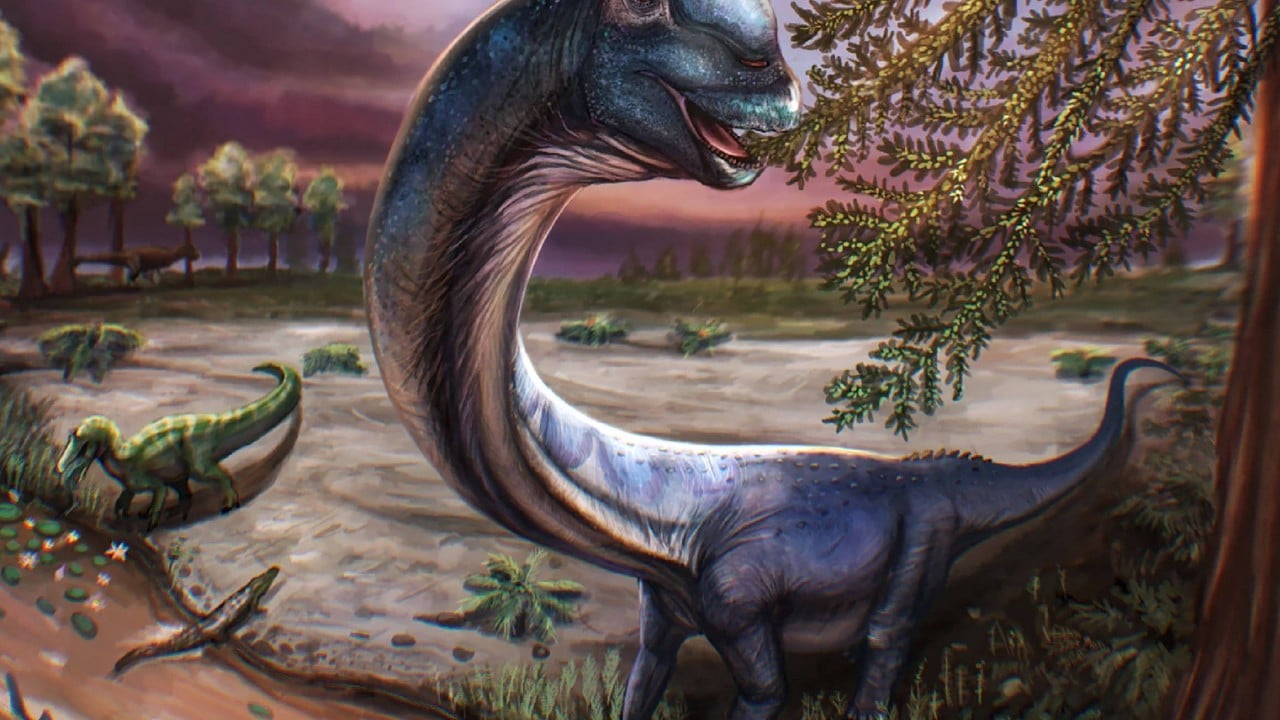
Thailand just put itself on the global dinosaur map in a massive way. For years, when people thought of giant long-necked dinosaurs, they looked toward the badlands of Argentina or the American West. That changed when researchers in Kalasin province identified Nagatitan khonkeanensis. This isn't just another fossil find. It’s a giant that rewrites what we know about the distribution of sauropods during the Early Cretaceous period.
If you're wondering why a pile of old bones in a Thai province matters to anyone outside of a university lab, it’s about scale and geography. Nagatitan is the largest dinosaur ever found in Southeast Asia. We're talking about a creature that could reach lengths of 25 to 30 meters. It lived roughly 100 to 110 million years ago. This discovery proves that the Khorat Plateau was once a lush, thriving highway for some of the biggest animals to ever walk the Earth.
Meet the Nagatitan khonkeanensis
The name Nagatitan isn't just a random string of syllables. It pays homage to the Naga, the mythical serpent-like creature of Thai folklore that is said to inhabit the Mekong River. The second part, "titan," clearly signals its membership among the giants. This beast belongs to the Titanosauria group. These were the heavyweights of the dinosaur world, known for their massive bodies, long necks, and tails that could crack like whips.
Researchers from the Department of Mineral Resources and the Sirindhorn Museum spent years meticulously excavating the Phu Phan Man site. What they found was a treasure trove of tail vertebrae, limb bones, and ribs. These aren't fragile little shards. They're massive, heavy chunks of petrified history that require cranes and specialized equipment to move. It's hard to grasp the sheer bulk of a Nagatitan until you're standing next to a femur that's taller than a grown man.
Why size matters in the Khorat Plateau
You can't talk about Thai dinosaurs without talking about the Khorat Plateau. This region in Northeastern Thailand is a geological goldmine. The rock layers here, specifically the Khok Kruat Formation, have been spitting out fossils for decades. But Nagatitan is the crown jewel.
Earlier finds in Thailand, like Phuwiangosaurus, were impressive, but Nagatitan is on another level of "huge." It suggests that the environment in Southeast Asia during the Early Cretaceous was incredibly productive. You don't get animals this big without a massive amount of vegetation to fuel them. Think of Nagatitan as a biological vacuum cleaner, stripping entire canopies of leaves every single day.
Its presence here challenges the old idea that the truly gargantuan titanosaurs were mostly restricted to Gondwana (the southern supercontinent). Nagatitan shows that these giants were well-established in what is now Southeast Asia, likely migrating across land bridges that have since disappeared.
The technical bits that get paleontologists excited
I spoke with researchers who pointed out that the bone structure of Nagatitan shows unique features in the caudal vertebrae—the tail bones. These specific shapes help scientists differentiate it from its cousins in China or South America.
- Pneumaticity: The bones have air sacs. This made the skeleton lighter without sacrificing strength.
- Stance: Its wide-gauge trackway suggests a stable, sprawling walk to support its multi-ton weight.
- Teeth: Spoon-shaped teeth found nearby indicate it was a generalist eater, not a picky one.
The struggle of Thai paleontology
Don't let the headlines fool you into thinking this was an easy win. Excavating a dinosaur in a tropical climate is a nightmare. Unlike the dry deserts of Utah where bones sit on the surface, Thai fossils are often buried under thick vegetation and layers of hard, red sandstone.
Monsoon seasons stop work for months. Humidity can cause newly exposed bones to crack if they aren't treated immediately with chemical stabilizers. The team at the Sirindhorn Museum deserves serious credit. They’ve been working with a fraction of the budget that big Western museums have, yet they're producing world-class results.
The Nagatitan discovery also highlights a major problem: fossil poaching. Whenever a big find like this hits the news, the black market for "dragon bones" heats up. Thailand has been tightening its laws, but the best defense is education. When local villagers understand that a Nagatitan on display brings more tourism revenue than a few bone shards sold to a collector, the fossils stay in the ground where they belong.
What this means for your next trip to Kalasin
If you're a science nerd or just someone who likes cool stuff, you need to get to the Sirindhorn Museum. It's located in Sahatsakhan District. They don't just have Nagatitan; they have one of the best-preserved dinosaur sites in the world right there. You can actually see the "dinosaur graveyard" where bones are still partially embedded in the rock.
It's a visceral experience. Standing over a pit of 100-million-year-old giants makes you feel small in the best way possible. It’s a reminder that our time on this planet is just a blip.
How to see the Nagatitan fossils
You don't need a PhD to appreciate this. Most of the Nagatitan material is currently being studied, but significant portions are being prepared for public display.
- Check the Sirindhorn Museum schedule: They often have temporary "open lab" days where you can see technicians cleaning the Nagatitan bones.
- Visit the Phu Phan Man site: It’s rugged, but it’s where the magic happened.
- Support local tourism: Stay in Kalasin. Eat the local food. The more the local economy benefits from paleontology, the more funding these digs get.
Stop ignoring Southeast Asian history
For too long, the narrative of dinosaur evolution was centered on North America and Europe. Nagatitan khonkeanensis is a loud, 30-ton reminder that Southeast Asia was a major player in the Mesozoic era. This discovery isn't just about one big dinosaur. It's about a whole ecosystem we're only just beginning to understand.
We’re likely going to find more. The Khorat Plateau hasn’t given up all its secrets yet. There are likely even bigger predators and more bizarre herbivores waiting under the red soil.
If you want to keep up with these finds, follow the official bulletins from the Thai Department of Mineral Resources. They’re the ones on the ground, literally digging up the past. Don't just read the clickbait titles. Look at the actual bone maps. The scale of Nagatitan is something you have to see to believe. Go visit Kalasin and see for yourself why this giant has everyone talking.