The Western press loves a simple script. A "critic" vanishes in a coup-prone nation, and the headlines immediately assemble the standard kit of moral outrage. They call it a crackdown. They call it the death of democracy. They frame the disappearance of a former minister as a sudden, inexplicable rupture in the rule of law.
They are wrong.
By hyper-focusing on the individual—the "junta critic"—media outlets ignore the structural rot that makes these events inevitable. We are conditioned to view these incidents through the lens of human rights alone, failing to see them as the brutal, logical conclusion of a state trying to reassert its monopoly on violence after decades of failed liberalization. If you think this is just about silencing one man, you haven't been paying attention to how power actually functions in the Sahel.
The Lazy Consensus of the Political Kidnapping
The standard narrative surrounding the abduction of figures like Clément Dembélé or other former officials is that a "peaceful" political class is being eaten by a "lawless" military. This assumes the political class was functioning efficiently before the fatigues showed up.
It wasn't.
For thirty years, Mali’s "democratic" era was characterized by a specific brand of elite consensus that functioned more like an extractive cartel than a representative government. When the military seized power, they didn't just take over a government; they inherited a failed state where the lines between political opposition, criminal enterprise, and foreign influence had become hopelessly blurred.
When a former minister is taken by "armed men," the knee-jerk reaction is to scream "human rights violation." While technically true, it is a superficial observation. The deeper reality is that in a state of exception—which Mali has occupied for years—the legal system is not a shield; it is a weapon. The junta isn't breaking the rules so much as they are acknowledging that the old rules were a fiction maintained for the benefit of international donors.
Why the Human Rights Angle Fails to Explain the Sahel
Mainstream reporting suggests that if the military would simply stop arresting critics, Mali would stabilize. This is a fantasy. It ignores the security-sovereignty paradox.
- Security: The state must secure its borders against jihadist insurgencies that now control massive swaths of territory.
- Sovereignty: To do this, the state believes it must eliminate internal "noise"—any political actor who could serve as a proxy for foreign interests (specifically France or the broader EU).
From the perspective of the current leadership in Bamako, a "critic" isn't a brave voice for truth; they are a tactical vulnerability. When you are fighting an existential war against Al-Qaeda affiliates and ISIS-Sahel, the luxury of a wide-open political discourse is the first thing to go. Is it right? No. Is it logical from a power-preservation standpoint? Absolutely.
Critics argue that these abductions prove the junta is weak. I argue the opposite. These moves are a display of terrifying strength. They are signals to the remaining political elite: The era of protected status is over. ## The Foreign Proxy Trap
We need to talk about the "Former Minister" tag. In West African politics, "Former Minister" is often shorthand for "someone with deep ties to the old colonial patronage network."
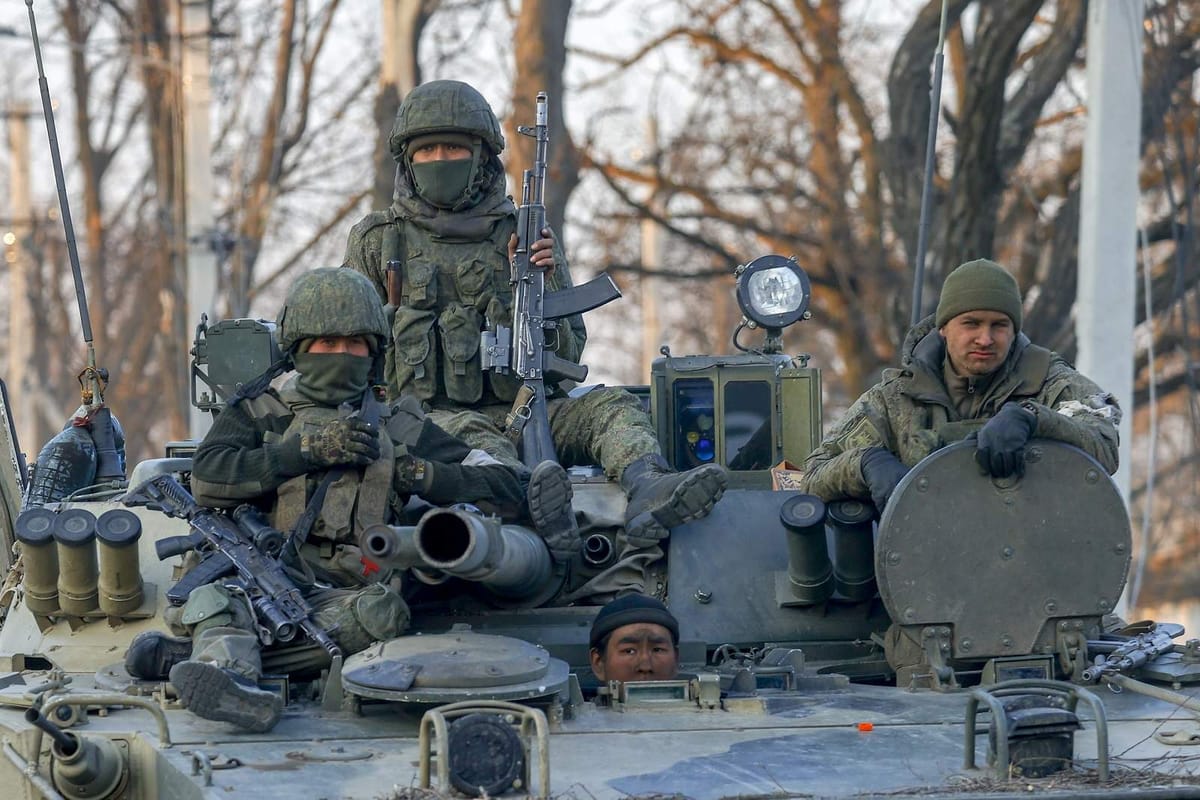
When the Western media highlights the disappearance of an elite figure, they rarely ask who that person was talking to in Paris, Brussels, or Washington. In the current climate of Malian nationalism, any perceived collaboration with foreign entities is viewed as high treason. The junta has pivoted toward Russia (via the Africa Corps, formerly Wagner) not just for guns, but for a model of governance that prioritizes "stability" over "rights."
If you want to understand why these abductions happen, stop looking at the penal code and start looking at the geopolitical alignment. The "armed men" are the physical manifestation of a clean break from the West. They are the enforcement arm of a new, multipolar reality where the disapproval of the UN Security Council carries less weight than a shipment of Russian drones.
The Failure of "Democracy Promotion"
For years, billions were poured into "strengthening democratic institutions" in Mali. I’ve watched these programs firsthand. They involve nice hotels, powerpoint presentations on "transparency," and high-level meetings with the very ministers who are now being abducted.
The result? The institutions remained paper-thin. The "democracy" we are mourning was a facade that collapsed the moment the soldiers walked into the presidential palace.
The current crackdowns are the hangover from that failed experiment. You cannot build a "landscape" (to use a word I despise) of civil liberty on top of a foundation of total insecurity. When the state cannot protect a village from being burned by militants, the city-dwelling intellectual’s right to complain becomes a secondary concern for the masses. This is the uncomfortable truth the "contrarian" must face: A significant portion of the population prefers a strongman who stays to a democrat who flees.
The Brutal Reality of the Transition
What the competitor's article calls a "disturbing trend" is actually a consolidation phase.
In any revolutionary or coup-led transition, there is a period where the new regime must liquidate the influence of the old guard. They aren't looking for a "dialogue." They are looking for total submission.
- Step 1: Discredit the old political parties.
- Step 2: Nationalize the narrative (us vs. the terrorists/imperialists).
- Step 3: Remove the bridge-builders—the people who can talk to both the street and the former colonizers.
The men being taken from their homes are Step 3. They are the "bridge-builders" who represent a path back to the status quo. By removing them, the junta ensures there is no way back. There is only the path forward, deeper into a localized, militarized autocracy.
Stop Asking if it's Legal; Start Asking if it's Effective
The "People Also Ask" sections of the internet want to know: "Is Mali safe?" or "Will there be elections in 2026?"
These are the wrong questions. The right question is: "Can a centralized military government hold a fractured nation together better than a corrupt civilian one?"
The data is grim. Violence has increased. Displacements are up. But the junta's grip on the narrative has never been tighter. By disappearing critics, they control the vibe of the capital. They eliminate the possibility of a "Bamako Spring."
If you are waiting for the "international community" to step in and save these individuals, you are delusional. The international community has no leverage left. They withdrew their troops. They cut their aid. They played their hand and lost. The "armed men" in Bamako know this. They aren't hiding their faces because they fear a Hague indictment; they are barely hiding them because they want you to know exactly who is in charge.
The Cost of the New Order
The downside to this contrarian view is obvious: it creates a graveyard of talent. When you abduct your ministers and silence your critics, you lose the technocratic expertise needed to actually run a country. You end up with a government of loyalists who are great at checking IDs at roadblocks but terrible at managing a national power grid or a central bank.
Mali is trading its intellectual capital for a sense of sovereign pride. It is a high-stakes gamble that usually ends in economic stagnation. But for a colonel in Bamako, a stagnant economy is a small price to pay for a secure throne.
The tragedy isn't that a critic was taken. The tragedy is that the world is shocked by it. This isn't a glitch in the system. This is the system. The era of the West African liberal consensus is dead, buried under the weight of its own incompetence and the cold reality of the new Great Game.
Stop looking for the "rule of law" in a place where the law was always a suggestion. Start looking at the scoreboard. The junta is winning because they realized before anyone else that in the new world order, a balaclava is more effective than a ballot box.