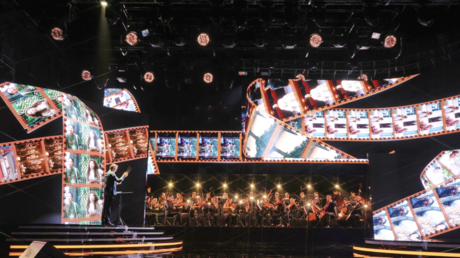
For its 45th anniversary edition, the legendary Jazz à Vienne festival in France has chosen to anchor its programming around a towering ghost—Miles Davis. It is a brilliant marketing move, but it masks a deeper crisis in the live music economy. By dedicating much of its milestone lineup to the late trumpeter, the festival highlights a systemic problem facing major European jazz events. They are running out of bankable, living icons capable of filling an ancient Roman amphitheater night after night.
The Safe Bet on a Haunting Presence
Programming a festival around an artist who passed away in 1991 tells us everything about the current state of music curation. Miles Davis was no stranger to the ancient stone bleachers of Vienne. His performances there, particularly his final appearances in the early 1990s, are woven into the identity of the event. Organizers are banking on nostalgia, staging major tribute ensembles and multi-generational collaborations to recreate that historic electricity.
But nostalgia is a finite resource. The core demographic that remembers seeing Davis live is aging out of the festival market. Ticket sales across the industry show that younger listeners do not respond to legacy branding in the same way. The challenge for Jazz à Vienne isn't just celebrating 45 years of survival; it is proving that a genre rooted in spontaneous reinvention can survive when its primary selling point is the past.
The Brutal Economics of the Amphitheater
To understand why the festival relies so heavily on a historical figure, you have to look at the sheer scale of the venue. The Théâtre Antique de Vienne holds over 7,000 spectators. Filling those stone steps for two weeks straight requires an immense amount of commercial leverage.
A standard modern jazz quartet, no matter how critically acclaimed, cannot generate that kind of draw. Consequently, programmers are forced into a difficult balancing act. They must book crossover pop, soul, and hip-hop acts to subsidize the pure jazz nights, or they must lean into massive, conceptual tributes. The Miles Davis tribute acts serve as a bridge. They offer the prestige of high art alongside a recognizable brand name that guarantees baseline ticket sales.
Festival directors across Europe face the same mathematical trap. Rising production costs, inflated artist fees, and shifting consumer habits have squeezed margins to a razor-thin wire. A single rainy night or a low-selling headline slot can throw an entire seasonal budget into a deficit. Relying on Davis is a defensive play. It stabilizes the schedule with an universally respected intellectual property.
The Disconnect Between History and Innovation
There is an inherent irony in using Miles Davis as a shield against financial risk. Davis spent his entire career fleeing from his own past. He famously detested the idea of classical repertory jazz, once walking out on ceremonies meant to honor his older work because he was entirely focused on what he was playing next week.
By turning his catalog into a museum piece for an anniversary celebration, the festival risks doing exactly what Davis fought against. It prioritizes the preservation of an old sound over the chaotic, often unprofitable funding of the new. The true heirs to Davis's legacy are not the musicians playing meticulously arranged versions of "Kind of Blue" or "Bitches Brew." They are the radical outsiders experimenting with electronic textures and non-traditional rhythms in small, half-empty clubs.
Those artists, however, don't fill 7,000-seat Roman amphitheaters.
The Blueprint for Survival
If Jazz à Vienne wants to reach its 50th edition without becoming a pure heritage park, the curation strategy has to shift from reverence to risk. Relying on dead legends provides a short-term cushion but accelerates long-term stagnation.
- Subsidize the unknown: Use the profits from massive crossover pop nights to fund avant-garde stages where younger artists can fail and experiment without corporate pressure.
- Redefine the tribute: Instead of recreating specific albums, commission young composers to aggressively dismantle old catalogs, blending them with modern club music and global styles.
- Shrink to expand: Create intimate, late-night venues within the festival footprint that don't require massive ticket sales to break even, mirroring the underground environments where jazz actually evolves.
The festival's devotion to Miles Davis honors a beautiful chapter in its history. But if the music is to remain vital, the industry must stop treating jazz as a closed book. The stone walls of Vienne have echoed with the sounds of geniuses for nearly half a century. To keep those walls talking, the programmers must eventually trust the voices of the living just as much as the ghosts of the past.