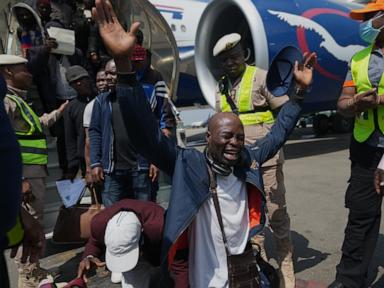
The tarmac at Murtala Muhammed International Airport in Lagos does not welcome you back with a gentle embrace. It hits you. It is a wall of thick, humid air heavy with the scent of jet fuel, burning refuse, and the collective anxiety of twenty million people trying to survive.
Chidi stood on that tarmac with a single counterfeit leather suitcase and forty-two dollars in his pocket. Five years earlier, he had boarded a flight out of this exact city with three thousand dollars, a degree in economics, and a burning conviction that Nigeria was a sinking ship. He had headed to Johannesburg. South Africa was supposed to be the promised land, the economic engine of the continent, a place where a young man with hustle could breathe. You might also find this related story useful: The Anatomy of Escalation: How Lebanon Torpedoes the US-Iran Memorandum.
Instead, he spent five years looking over his shoulder.
He survived the xenophobic riots of 2019, hiding in a locked storeroom while mobs outside chanted slogans about foreigners stealing local jobs. He survived the tightening grip of visa bureaucracies that turned legal migrants into undocumented targets overnight. When the final wave of violence hit, Chidi gave up. He signed up for a voluntary repatriation flight. He chose to come home. As extensively documented in detailed articles by The Guardian, the implications are significant.
He thought the hardest part was behind him. He was wrong.
The Geography of Hope
To understand why thousands of Nigerian migrants have made the painful decision to return home over the last few years, you have to understand the math of desperation.
Migrants do not leave their homelands on a whim. They leave because of a calculation. If the risk of staying—measured in unemployment, inflation, and lack of opportunity—outweighs the risk of crossing a border, they move. For a long time, South Africa represented the ultimate equation of hope. It boasted a highly developed infrastructure, a massive financial sector, and a constitution that promised human rights to all.
But equations change.
Over the past decade, South Africa’s economic landscape fractured. Unemployment soared past 30 percent. Inequality, a legacy of apartheid that the country never truly shook, deepened. When a society feels resources shrinking, it almost always looks for a scapegoat. In the informal settlements of Johannesburg and the townships of Pretoria, that scapegoat became the foreign shopkeeper, the Zimbabwean laborer, the Nigerian entrepreneur.
Consider the psychological toll of that reality. Imagine waking up every morning knowing that the language you speak, the accent you carry, makes you a target. Chidi told me about the silence of his final months in Hillbrow. He stopped speaking Igbo in public. He wore muted colors. He tried to become a ghost.
When the Nigerian government began charting flights to bring its citizens back, it felt like a rescue mission. It felt like salvation. The narrative was simple: come back to the soil that knows your name. Come home, where you are not a stranger.
But geography does not cure structural decay.
The Mirage of the Return
The problem with running away from a burning house is that you eventually have to look at the ground beneath your feet.
When returned migrants step off the planes in Lagos or Abuja, the immediate euphoria of safety evaporates within forty-eight hours. The realization sets in with a quiet, crushing weight. The very monsters they ran away from half a decade ago are not only still here—they have grown larger.
Let us look at the raw numbers that define modern Nigeria. Inflation has reached historic highs, hovering stubbornly around 30 percent. The naira, the national currency, has experienced multiple devaluations, turning life savings into pocket change in a matter of months. Youth unemployment is not just a statistic; it is a visible presence on every street corner, manifested in the armies of young men hawking plastic trinkets in gridlocked traffic.
When Chidi returned to his family home in Surulere, he found his mother cooking with charcoal because the price of cooking gas had tripled. His brother, an electrical engineer, had been driving an unauthorized taxi for two years just to pay rent.
The economic ecosystem Chidi returned to was actually more hostile than the one he had fled.
This is the cruel irony of the returnee experience. The migrant returns with the stigma of failure. In many Nigerian communities, moving abroad is seen as the ultimate achievement. It is a collective investment. Families sell land, take out loans, and empty their savings to send one son or daughter "Overseas." When that person returns with nothing but a suitcase, the silence from the community is deafening.
There are no welcoming committees. There are only questions. Why didn't you make it? What did you do wrong?
The Trap of the Informal Grind
To survive, returnees are forced into Nigeria’s massive informal economy. This is not the structured corporate world Chidi envisioned when he earned his degree. It is a chaotic, hyper-competitive survival game.
He tried to start a small business. He wanted to use the skills he learned managing a retail store in Johannesburg to open a logistics and delivery service in Lagos. He needed two motorbikes and a small office space.
Then came the hidden taxes.
In Lagos, you do not just pay the government. You pay the area boys—local gangs who control specific streets. You pay the transport unions. You pay the electricity officials to keep your power on, because the national grid collapses with predictable regularity, forcing you to run a diesel generator that eats up 40 percent of your daily revenue.
Within three months, Chidi’s forty-two dollars, augmented by a humiliating loan from his younger brother, was gone.
The structural issues that drive Nigerians away—the lack of stable electricity, the systemic corruption, the absence of credit facilities for small businesses—are the exact same barriers that prevent returnees from reintegrating. The country welcomes them back with rhetoric about patriotism, but its institutions treat them with absolute indifference.
The Diaspora Dividend in Reverse
We often hear global economists talk about the "diaspora dividend"—the billions of dollars sent back home in remittances that keep developing economies afloat. In Nigeria, remittances are a vital lifeline, often outstripping foreign direct investment.
But no one talks about the reverse dividend.
When a migrant returns empty-handed, a financial pipeline is permanently severed. The family members who relied on Chidi to send home a few hundred rands every month to pay for malaria medication or school fees are now supporting Chidi instead. The safety net has become the burden.
The psychological shift is profound. It leads to a specific kind of paralysis. You are physically safe from the xenophobic violence of a foreign land, but you are economically suffocating in your own. You are caught in a twilight zone of belonging nowhere. In South Africa, you were the Amakwerekwere—the derogatory term for foreigners. In Nigeria, you are the one who went away and failed to bring back the gold.
The Highway of No Return
One evening, sitting in a dimly lit buka in Yaba, drinking a bitter stout to wash down a plate of pepper soup, Chidi looked at his hands. They were calloused now, rougher than they had been when he left university.
He told me about a group chat he belongs to on WhatsApp. It is a group of about eighty men and women who were on his repatriation flight.
"How many of them are still here?" I asked.
He laughed. It was a dry, humorless sound. "More than half are already planning to leave again."
"To South Africa?"
"No," he said, shaking his head. "Canada. The UK. Anywhere. Even the desert. Some are talking about going through Niger to Libya, to try the boats to Europe. They know the Mediterranean is a graveyard. But they look at Lagos, they look at their families eating one meal a day, and they think: a quick death at sea is better than a slow death on land."
The human mind is resilient, but it requires a horizon. It requires a belief that tomorrow might be slightly different from today. When you strip that horizon away, people will choose the most dangerous paths just to feel like they are moving.
The tragedy of the Nigerian returnee is not just that they came back to poverty. It is that their return exposes the ultimate lie of the modern global economy: that home is always a sanctuary.
Sometimes, home is just the place where you run out of options.
Chidi finished his drink and stood up, adjusting his collar against the sudden evening rain. He had to walk three miles back to Surulere because the minibus fares had doubled that afternoon due to a sudden fuel scarcity. He blended into the crowd of thousands of others walking along the highway, his face indistinguishable in the neon glow of the billboards advertising banking apps and luxury apartments that none of them would ever afford. He was back where he started, walking the same streets, breathing the same air, chasing the exact same ghost of a future that had eluded him across an entire continent.