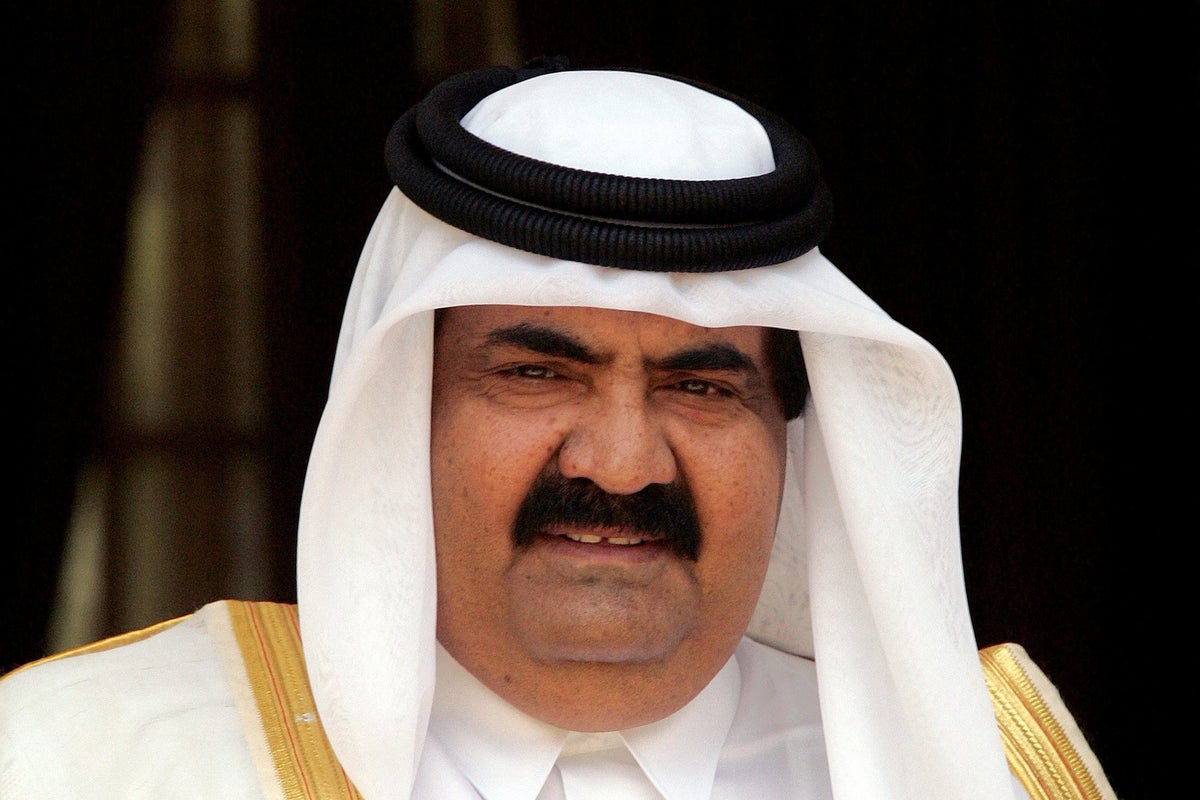
The media obituary is a predictable art form. When Sheikh Hamad bin Khalifa Al Thani, the former Emir of Qatar, passed away, the global press rolled out the standard narrative template: "The visionary leader who transformed a sleepy pearl-diving backwater into a global powerhouse." It is a neat, cinematic story of a single man shaping history through sheer force of will.
It is also an intellectual lazy shortcut.
The Western obsession with attributing systemic economic shifts to singular "visionary" rulers misses the entire mechanism of how modern petrostates actually function. Sheikh Hamad did not build Qatar through unique economic wizardry. He sat on top of a highly specific, geographically blessed hydrocarbon lottery and made the exact logical moves that any rational actor with absolute power and a team of Western management consultants would make.
To understand the real mechanics of Gulf capital, we have to look past the hagiography. The true story of Qatar’s rise is not a tale of heroic leadership. It is a case study in aggressive sovereign asset management, lucky geological timing, and the ruthless exploitation of regional instability.
The North Field Lucked Out, Not the Ruler
Let's look at the actual data. The foundation of Qatar’s immense wealth is the North Field, the world’s largest non-associated natural gas field. It was discovered in 1971 by Shell.
For two decades, Qatar did virtually nothing with it. Why? Because the technology to efficiently freeze, transport, and re-gasify natural gas at scale—Liquefied Natural Gas (LNG)—was prohibitively expensive and logistically nightmarish.
When Sheikh Hamad seized power from his father in a bloodless palace coup in 1995, he did not invent LNG. He happened to take the throne at the exact moment global engineering hit a tipping point. Mobil (now ExxonMobil) was desperate to lock down massive reserves, and Chubu Electric in Japan was hunting for a stable, long-term supply of clean energy to fuel its post-industrial economy.
The coup was not an ideological revolution; it was a boardroom restructuring. The previous Emir, Sheikh Khalifa, was conservative with spending, preferring to stack cash in overseas bank accounts rather than fund the massive capital expenditure required to build LNG trains. Sheikh Hamad simply did what any aggressive corporate raider does: he leveraged the company to the hilt to fund infrastructure projects that were already engineered and waiting for capital.
I have watched sovereign wealth funds and private equity firms mimic this exact playbook for decades. You find an under-leveraged asset, kick out the cautious management team, borrow billions against the asset’s future cash flows, and take credit for the macro-economic wave that lifts your boat. It is effective corporate strategy. It is not a miracle.
The Sovereign Wealth Fund Illusion
The crowning achievement of the Hamad era is frequently cited as the Qatar Investment Authority (QIA), the sovereign wealth fund that snapped up trophy assets across London, New York, and Paris. Harrods, the Shard, chunks of Barclays, and Volkswagen—the Western press looked at these acquisitions with a mix of awe and anxiety.
But what did these acquisitions actually achieve?
If the goal of a sovereign wealth fund is pure financial return, the QIA’s early strategy was deeply flawed. Buying iconic real estate and minority stakes in legacy European banks is an expensive way to buy prestige, not yield. It is what finance insiders call "trophy hunting."
Imagine a scenario where a fund invests $10 billion into a diversified, unglamorous index of global equities and mid-market infrastructure projects versus buying a single, high-profile skyscraper in Manhattan. The unglamorous index wins on risk-adjusted returns nearly every time. But you cannot put an unglamorous index on the front page of the Financial Times to announce your arrival on the global stage.
The QIA was never a pure investment vehicle; it was a geopolitical insurance policy. The objective was to make Western powers so financially dependent on Qatari capital that they would be forced to defend the tiny peninsula if its larger neighbors, Saudi Arabia or Iran, ever decided to swallow it whole.
This strategy worked, but it came with an immense, hidden premium. The cost was the misallocation of hundreds of billions of dollars into low-yielding, highly illiquid Western assets instead of building a resilient, self-sustaining domestic economy. Today, Qatar remains entirely dependent on foreign labor, foreign food imports, and a single commodity. If global LNG prices tank due to a surge in US shale or Australian supply, those luxury department stores in London cannot keep the lights on in Doha.
The Geopolitical Double Game
The competitor narrative praises Sheikh Hamad for his nimble diplomacy, positioning Qatar as a neutral mediator that hosted Al Jazeera, brokered peace deals, and maintained ties with everyone from the US military to Hamas and the Taliban.
This is framed as sophisticated statecraft. In reality, it was a high-stakes hedge that ultimately backfired, culminating in the devastating 2017-2021 blockade by its Gulf neighbors.
You cannot run a foreign policy based on institutionalized duplicity indefinitely. Hosting the largest US military base in the region (Al Udeid) while simultaneously funding media networks that broadcast anti-Western rhetoric across the Middle East is not a sustainable diplomatic model. It is an unstable equilibrium.
The 2017 blockade by Saudi Arabia, the UAE, Bahrain, and Egypt proved that Qatar’s diplomatic "independence" was a luxury bought with cash that its neighbors could revoke at any moment. While Qatar survived the blockade by burning through its financial reserves and forging hasty alliances with Turkey and Iran, the crisis exposed the fundamental vulnerability of the state. The aggressive, contrarian foreign policy of the Hamad era did not make Qatar secure; it made it a target.
Dismantling the People Also Ask Premise
When people ask, "How did Qatar become so rich so fast?" they are looking for a lesson in economic development. They want a blueprint.
The brutal, honest answer is that the blueprint cannot be replicated. You cannot export the Qatari model because you cannot export a population ratio where citizens make up less than 12% of the total population, supported by a massive, disenfranchised migrant workforce that possesses zero political or civil rights.
The Qatari economic model is built on an extreme form of rentier capitalism that defies standard economic theory. It functions because the state distributes hydrocarbon rents to a tiny, elite citizen class to buy social peace, while outsourcing all actual labor to a revolving door of foreign nationals.
To call this a "developed economy" is to misunderstand the term entirely. A developed economy is one where human capital, innovation, and productivity drive growth. Qatar’s economy is an extraction machine attached to a luxury wealth management office.
The Real Trade-Off
The contrarian approach to analyzing Qatar requires admitting the dark side of this hyper-growth model. The obsession with speed and global status led to massive systemic vulnerabilities:
- Total Food Insecurity: Qatar imports roughly 90% of its food. A prolonged maritime blockade or a disruption in global shipping lanes creates an immediate existential crisis.
- The Rentier Trap: By guaranteeing every citizen a government job, high salaries, and free land, the state has systematically disincentivized domestic entrepreneurship and private-sector innovation.
- Demographic Imbalance: Relying on an 88% foreign workforce means the state is permanently managing an unstable social structure where the actual builders of the country have no stake in its long-term future.
Sheikh Hamad bin Khalifa Al Thani was an effective manager of a historic commodity boom. He leveraged his country’s geographic luck to buy global relevance and short-term security. But stop calling it an economic miracle. It was an exercise in aggressive corporate finance, executed with absolute power, funded by a massive underground gas reservoir that he did not put there.
The real test of a nation's architecture is not how much cash it can accumulate during a boom, but whether it can survive when the world stops buying its core product. The transition away from fossil fuels is accelerating. The luxury real estate portfolios in Europe will not save Doha when the global energy matrix shifts permanently. The bills for thirty years of prestige-driven spending are quietly coming due.
Stop praising the autocrat for the luck of the drill. Look at the balance sheet. Look at the structural fragility. The empire built on gas is far more fragile than the obituaries care to admit.