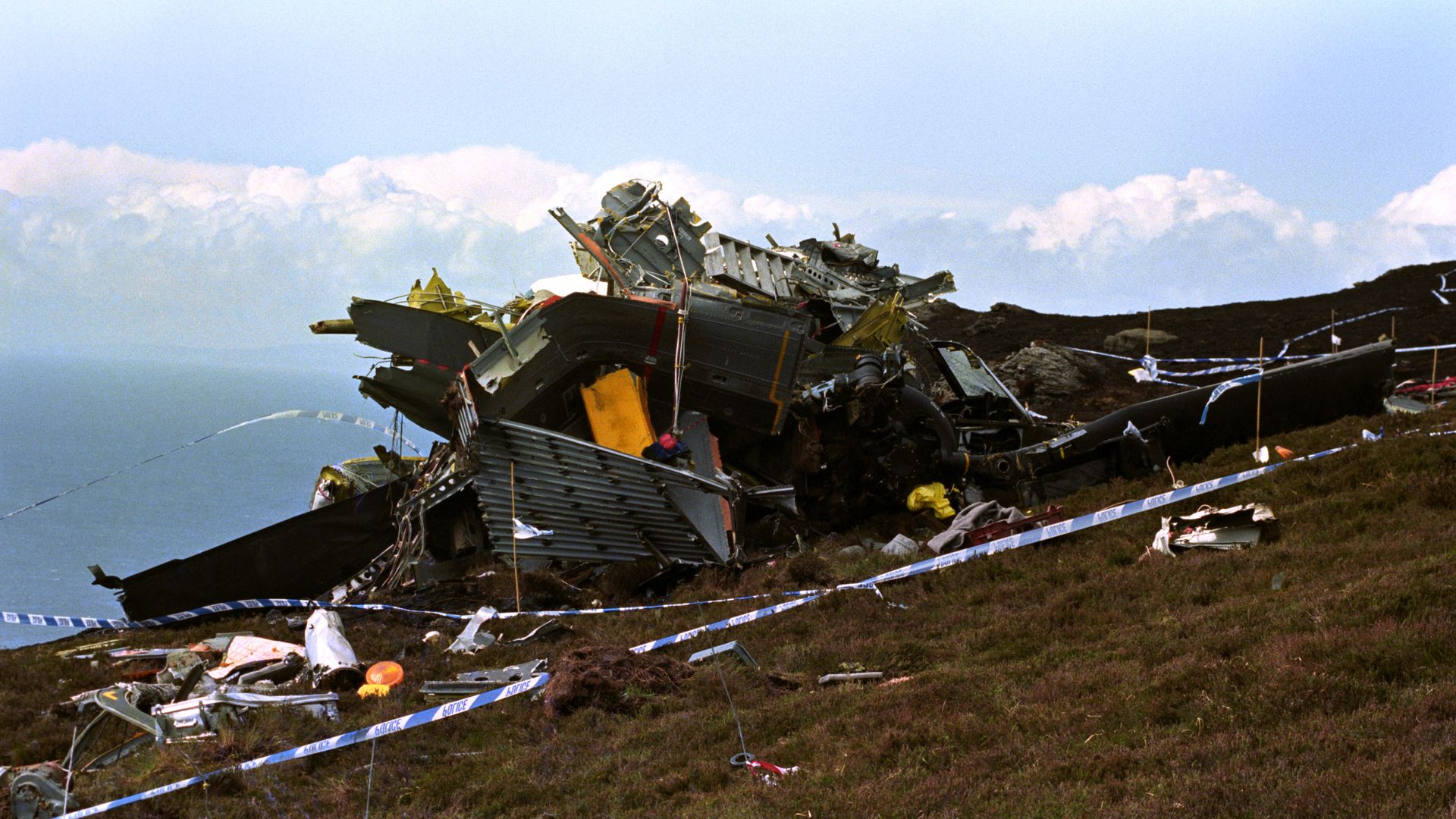
The High Court dismissal of the Chinook Justice Campaign legal challenge highlights a systemic barrier in military aviation accountability: the supremacy of procedural limitation periods over substantive safety claims. By blocking a new judicial review into the 1994 crash of RAF Chinook HC-2 (ZD576) on the grounds of delay, the court confirmed that statutory timeframes operate as an absolute shield for state entities, regardless of the severity of the alleged airworthiness failures.
To evaluate why this litigation failed and how future military accountability campaigns must adapt, we must deconstruct the case through three distinct analytical lenses: the statutory limitation bottleneck, the shifting burden of proof from the 2011 review, and the systemic risk profile of military procurement during the transition to digital flight management systems. Meanwhile, you can find related events here: The Quiet Crisis in Kathmandu and the PM Who Walks Away.
The Chronological Decoupling of Fact and Law
The core failure of the litigation brought by the Chinook Justice Campaign (CJC)—representing more than 55 family members of 25 of the 29 victims—lies in the temporal gap between the discovery of technical evidence and the initiation of formal legal proceedings.
[1994: Crash] ---> [1995: Board of Inquiry (Gross Negligence)] ---> [2011: Mull of Kintyre Review (Verdicts Overturned)] ---> [2026: High Court Dismissal]
To map the cause-and-effect relationship that led to the July 2026 dismissal, we must analyze the structural timeline of the investigation: To understand the complete picture, we recommend the detailed report by NPR.
- June 2 1994: RAF Chinook HC-2 crashes into the Mull of Kintyre, killing 25 intelligence personnel and four crew members.
- 1995 RAF Board of Inquiry: Air Chief Marshals rule "gross negligence" on the part of pilots Flight Lieutenants Jonathan Tapper and Richard Cook. This finding rested on the assumption of pilot error in poor visibility, despite zero flight data recorder evidence.
- 2011 Mull of Kintyre Review: Conducted by Lord Philip, this independent review concluded that the finding of gross negligence was unjustified. The review vacated the blame placed on the pilots but did not establish a definitive technical cause.
- July 2026 High Court Ruling: Mr. Justice Butcher refuses permission to bring a claim, citing that the campaign could and should have acted immediately following the 2011 review rather than waiting 14 years.
The legal mechanism that defeated the CJC is the principle of "laches" and the strict statutory limits governing judicial reviews. Under UK planning and administrative law, applications for judicial review must be filed promptly, and in any event, no later than three months after the grounds to make the claim first arose. While courts retain discretion to extend this period under exceptional circumstances, Mr. Justice Butcher ruled that the CJC had failed to show "cogent grounds" to justify a 14-year delay since the 2011 Philip Review.
The Airworthiness Conflict: Hardware vs. Software in 1994
The substantive argument put forward by the CJC's legal team was that those on board were placed on an aircraft "known to be unsafe." To understand the engineering context of this claim, we must examine the specific integration challenges of the Chinook HC-2 fleet in the early 1990s.
The HC-2 upgrade introduced the Textron Lycoming T55-L-712F engine, governed by a first-generation digital engine control system known as FADEC (Full Authority Digital Engine Control). The transition from mechanical linkages to software-controlled fuel metering introduced several critical failure modes:
| System Component | Mechanical Legacy (HC-1) | Digital Upgrade (HC-2) | Failure Mode Identified in Testing |
|---|---|---|---|
| Engine Control | Hydro-mechanical governor | FADEC software | Unscheduled engine accelerations ("runaways") and sudden flameouts. |
| Cockpit Instruments | Analog gauges | Glass cockpit integration | Signal noise causing erroneous warnings and instrument freezes. |
| Flight Control Linkages | Standard hydraulic actuators | Modified control balance | Mechanical binding or "spurious inputs" from the digital control units. |
The Boscombe Down testing facility, responsible for military aircraft clearance, had suspended test flights of the Chinook HC-2 in early 1994 due to a lack of confidence in the FADEC software. The test pilots refused to fly the aircraft because the safety-critical software could not be verified to the required engineering standards.
The Ministry of Defence (MoD) bypassed these concerns by issuing a safety waiver to operationalize the fleet. This administrative decision represents the "known unsafe" variable in the CJC's legal argument.
The cause-and-effect cascade is clear:
- Unverifiable FADEC code led to a suspension of testing at Boscombe Down.
- Operational pressure prompted the MoD to bypass standard certification pathways.
- The aircraft was deployed to transport high-value intelligence personnel despite unresolved software anomalies.
The Limitation Act Bottleneck and the Practical Purpose Defense
The MoD successfully defeated the CJC's application by using a two-pronged defense strategy: time-barring (statutes of limitation) and the "practical purpose" doctrine.
The Time-Barring Defense
Under the Limitation Act 1980, personal injury and fatal accident claims generally carry a three-year limitation period from the date of the incident or the date of knowledge of the injured party. For public law challenges (such as demanding a new public inquiry), the standard is even tighter.
Mr. Justice Butcher's ruling identified 2011 as the point where the claimants had sufficient "date of knowledge." Because the Philip Review of 2011 made all airworthiness and certification files public, the court ruled that any systemic failure to investigate was fully discoverable at that moment. The 14-year gap between 2011 and 2026 created an insurmountable barrier to establishing that the delay was reasonable.
The "Practical Purpose" Doctrine
The MoD argued that a new investigation would serve no practical purpose due to the degradation of evidence over 32 years. The physical wreckage is gone, the technical logs are incomplete, and key witnesses are either deceased or have experienced cognitive decline.
Under English administrative law, a court will not compel a public body to undertake an investigation if the utility of the outcome is highly speculative. The court agreed with the MoD that establishing a definitive mechanical or software-based root cause of the crash in 2026 is an engineering impossibility.
The Strategic Path Forward for Aviation Accountability Campaigns
The dismissal of the High Court claim leaves the Chinook Justice Campaign with zero viable domestic legal remedies within the UK judicial system. To continue the pursuit of accountability, the campaign must pivot from domestic administrative law to international human rights frameworks and legislative lobbying.
1. Extraterritorial Human Rights Litigation
The campaign's next logical step is to petition the European Court of Human Rights (ECHR) under Article 2 (Right to Life) of the European Convention on Human Rights.
Under Article 2, the state has an "investigative obligation" to conduct an effective, independent, and prompt investigation into any death where there is an arguable claim that the state's systemic failures or negligence played a role.
The legal challenge at the ECHR will center on whether the 2011 Philip Review met the criteria of an "effective" investigation. Because the 2011 review did not determine the cause of the crash, the campaign can argue that the UK state has failed to fulfill its positive procedural obligation under Article 2.
2. The Military Aviation Authority (MAA) Bypass
Future advocacy campaigns dealing with military aviation accidents must avoid the civil courts entirely during the early stages of a dispute. Instead, resources should be channeled toward triggering the independent investigatory powers of the Military Aviation Authority (MAA), which was established in 2010 specifically to prevent the conflict of interest inherent in the MoD acting as both operator and regulator.
Rather than seeking judicial reviews of past investigative failures, campaigns must build technical dossiers aimed at forcing the MAA to issue Air Safety Information Leaflets or execute safety audits under the Military Academic Regulations (MAA Regulatory Publications). This shifts the battleground from legal technicalities (where the MoD has a structural advantage) to technical engineering standards where the MoD is held accountable to objective safety codes.



