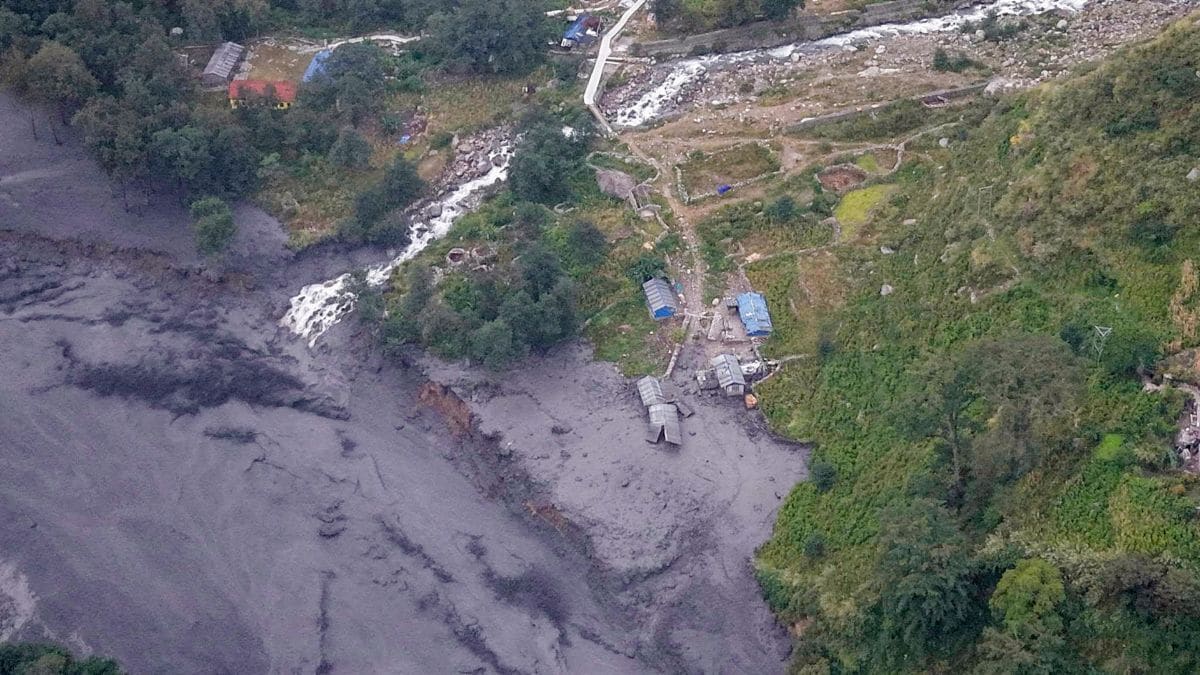
Water does not knock. It arrives as an uninvited weight, heavy with the silt of ancient stone and the panic of a thousand melting tributaries.
Ask anyone who has walked the high valleys of the Himalaya during the monsoon's furious climax, and they will tell you about the sound first. It is not the comforting rush of a babbling brook. It is a low, subterranean groan, a grinding roar that vibrates through the soles of your boots long before you see the water. It is the sound of boulders the size of houses rolling over one another, pushed by a liquid monster that refuses to negotiate. If you enjoyed this piece, you might want to look at: this related article.
Over one hundred and fifty tourists are currently finding out what happens when that monster decides to sever the thread between civilization and the clouds.
Six bridges. Just six. In a landscape defined by towering verticality, a bridge is not merely a piece of infrastructure. It is a lifeline. It is the punctuation mark in a sentence written across terrifying abysses. When those spans of steel, timber, and reinforced concrete snap under the sheer kinetic battery of flash floods, isolation settles over the remote settlements like an early frost. For another look on this event, refer to the recent coverage from National Geographic Travel.
Consider a hypothetical trekker named Maya, sitting on a wooden porch somewhere in the high districts. She came for the crisp air, the prayer flags snapping in the wind, the humbling majesty of snow-dusted peaks that pierce the blue. She wanted perspective. She got it, but wrapped in a terrifyingly immediate package.
Her morning tea cools on the table. The footbridge she crossed three days ago—a swaying masterpiece of engineering spanning a milky-turquoise torrent—is gone. It didn't just wash away; it was erased. In its place is a raw, churning brown chasm, spitting spray fifty feet into the air.
Stranded.
The word itself sounds clean, almost clinical. In reality, being stranded in the remote reaches of Nepal during a catastrophic weather event is an exercise in profound helplessness. Cell towers flicker and die as power lines snap like dry twigs. The local teahouse owners, whose hospitality is as legendary as the mountains themselves, quietly begin rationing lentils and rice. They have seen this before, but each time the sky opens with this specific, apocalyptic fury, the variables change. Climate volatility has rewritten the rules of the monsoon. The predictable rains of our parents' generation have mutated into sudden, localized cloudbursts that liquefy hillsides and turn gentle streams into battering rams.
Down in the valleys, the rescue apparatus grinds into motion, but it is a race against geography. Helicopters cannot fly through blinding sheets of rain or navigate canyons choked with fog and turbulence. Emergency responders face washed-out roads where entire mountainsides have simply unzipped themselves and slid into the gorges.
We read numbers on screens. Over one hundred and fifty tourists. Six bridges collapsed. Remote settlements isolated.
They are cold statistics. They are designed for headlines. But numbers possess a strange anesthesia; they numb our capacity for empathy by reducing human suffering to arithmetic.
To understand the weight of these flash floods, you have to look past the tally and stare directly at the silence. The silence of families thousands of miles away refreshing weather apps that haven't updated in twelve hours. The silence of a valley cut off from medicine, fuel, and reassurance. The quiet resilience of villagers sharing their remaining hearth fire with strangers who speak entirely different languages but share the exact same primal fear.
Nature does not care about our itineraries. It does not pause for our vacation schedules or respect our geopolitical boundaries. It operates on deep time, carving valleys, dropping mountains into rivers, and reminding us, with terrifying regularity, that we are merely guests moving across a restless crust.
Yet, within that isolation, something else happens.
Communities do not fracture when the bridges fall; they compress. Porters, lodge owners, guides, and travelers form a tight, interdependent micro-society where currency loses its meaning and shared survival becomes the only metric that matters. Someone offers an extra blanket. Someone else rations their water flask. In the absence of infrastructure, human empathy becomes the only bridge left standing.
The waters will eventually recede. The sun will break through the heavy monsoon haze, painting the wet pine forests in brilliant, steaming greens. Engineers will return with cables and concrete, stringing new paths across the abysses. The tourists will hike out, telling stories of narrow escapes over cups of sweet milk tea in Kathmandu.
But the mountain remembers. And so should we.
The video below captures the raw, unpredictable power of swollen Himalayan waterways during peak monsoon conditions.
The river still runs brown and heavy through the gorge, carrying the ghost of the forest down toward the plains. The path ahead is broken, but the instinct to cross it remains.